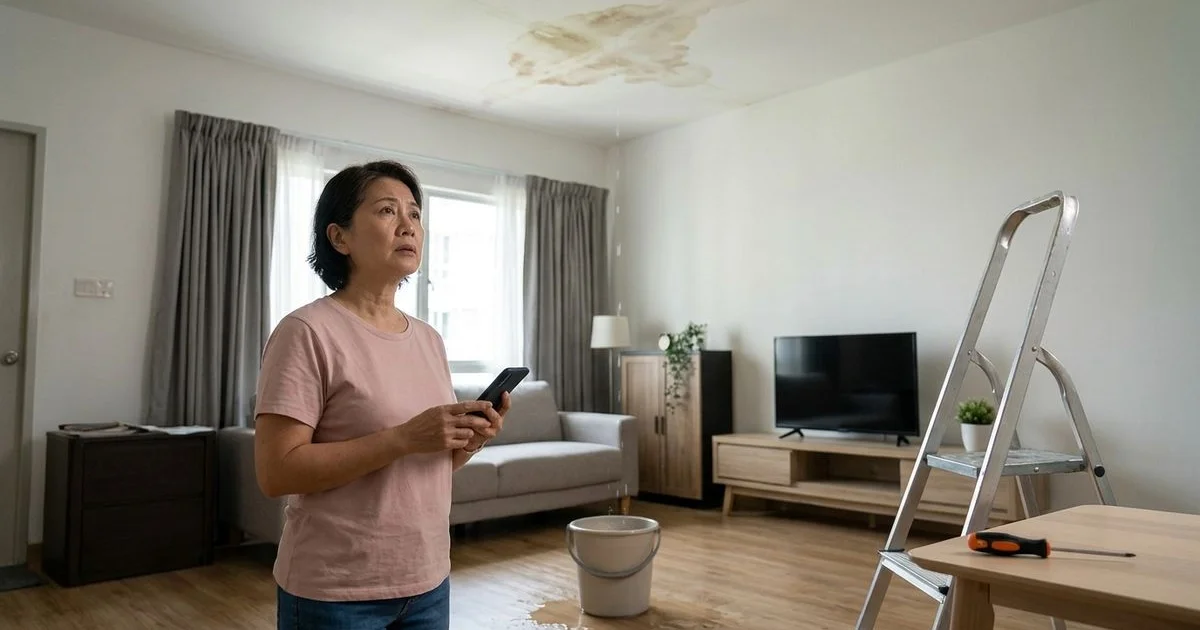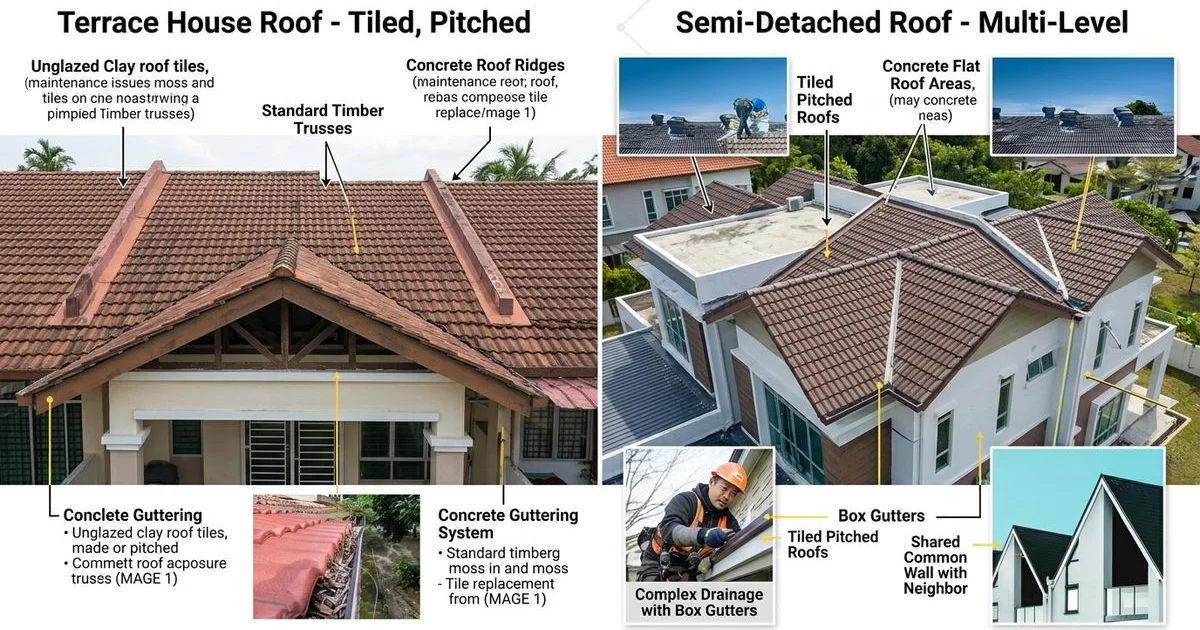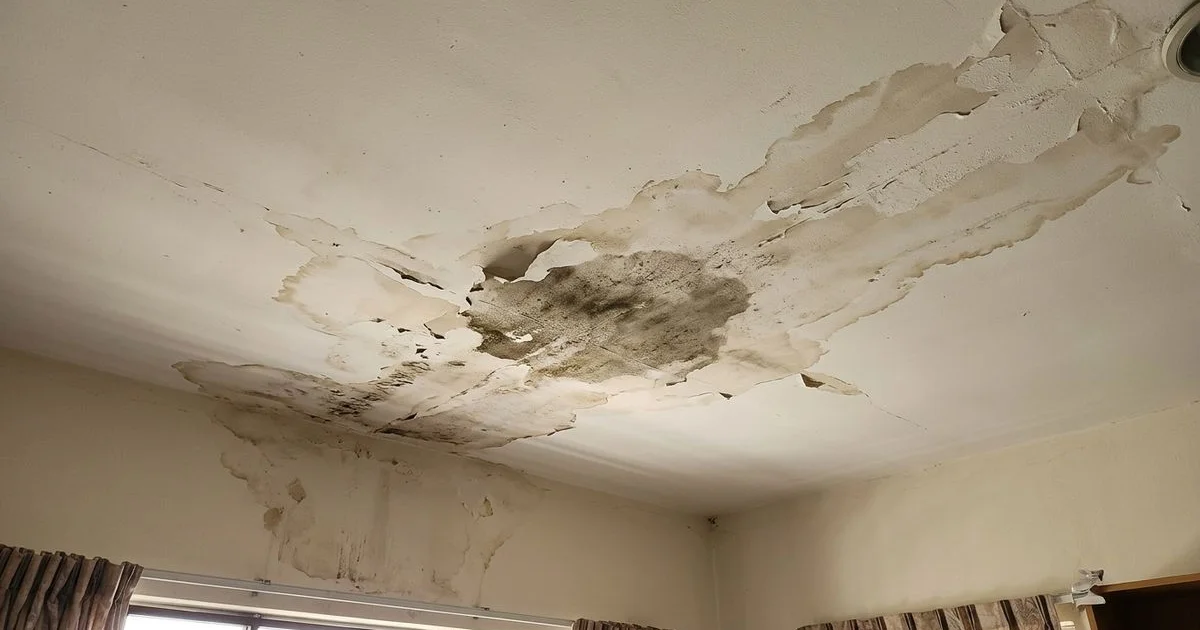
We often see property owners panicking over a stained ceiling during the peak of the November monsoon. That anxiety is completely understandable. Concrete flat roofs are a classic architectural feature on Malaysian shophouses and modern residential extensions. They provide great usable space.
Our team knows, from inspecting hundreds of properties, that these roofs are notoriously prone to water ingress. This vulnerability is especially evident in our tropical climate, where meteorological reports confirm annual rainfall routinely exceeds 2,500 mm across the Klang Valley.
We will break down the specific reasons why these surfaces fail so frequently. The following sections will show you the exact no-hack solutions professionals use to stop the water without tearing your building apart.
Why Concrete Flat Roofs Leak So Often in Malaysia
The main culprit is always poor drainage. Pitched roofs shed water immediately, but flat roofs rely on very subtle slopes and specific drainage outlets. Over time, constant UV exposure creates a massive thermal load. Concrete surfaces expand during our 60-degree Celsius daytime peaks and contract rapidly when night falls.
Our technicians frequently find that this daily movement creates hairline cracks across the structural slab. These micro-cracks act as direct entry points for rainwater. During the northeast monsoon, heavy downpours can flood a roof for hours.
Traditionally, contractors fixed this by hacking. They removed the entire existing screed and waterproofing layer down to the bare bone, then rebuilt everything. This approach disrupts daily life, costs a fortune, and is rarely necessary today.
To understand the core problem, you must look at the three common failure points on Malaysian properties:
- Ponding Water: Incorrect screed gradients leave water sitting in pools, which eventually degrades any surface material.
- Failed Expansion Joints: The flexible sealants between concrete slabs degrade under intense tropical sunlight within just a few years.
- Clogged Outlets: Leaves and debris block the limited drainage points, turning the roof into a shallow swimming pool.
Understanding No-Hack Waterproofing Methods
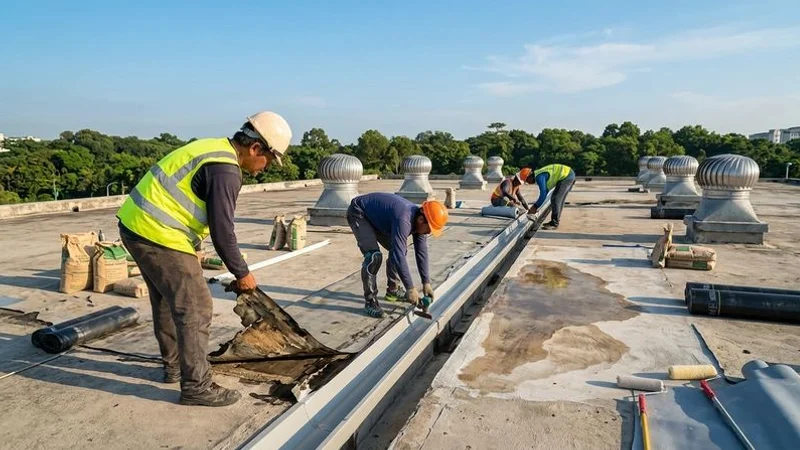
No-hack waterproofing covers any technique that stops water ingress without demolishing your existing roof structure. These modern systems seal cracks from within, apply a continuous waterproof barrier on top, or inject expanding materials straight into the concrete.
Our clients appreciate that these methods achieve a completely watertight roof in a fraction of the time and cost of traditional hacking. You get a lasting solution without the noise, dust, and structural risk. Here are the most effective no-hack methods dominating the Malaysian market in 2026.
PU (Polyurethane) Injection
PU injection grouting serves as a highly targeted way to stop active leaks dead in their tracks. The process starts with contractors drilling small holes directly into the identified leak points on the ceiling below. They then inject an expandable polyurethane resin, such as Pentens PU-300 or Sika Injection, under high pressure.
Our injection specialists rely on this method because the resin travels through the tiniest voids within the concrete. The material expands up to 30 times its original volume upon reacting with moisture, creating a dense, flexible seal.
This method works best for several specific scenarios:
- Active dripping leaks visible from the ceiling below the flat roof.
- Water seeping aggressively through construction cold joints.
- Leaks developing around PVC pipe penetrations and floor traps.
PU injection treats the root cause rather than just masking the surface. The material bonds permanently with the concrete while remaining flexible enough to handle future structural movement. Based on 2026 pricing data, you can expect to pay around RM 45 to RM 60 per injection point for a standard residential fix.
Liquid Waterproof Membrane
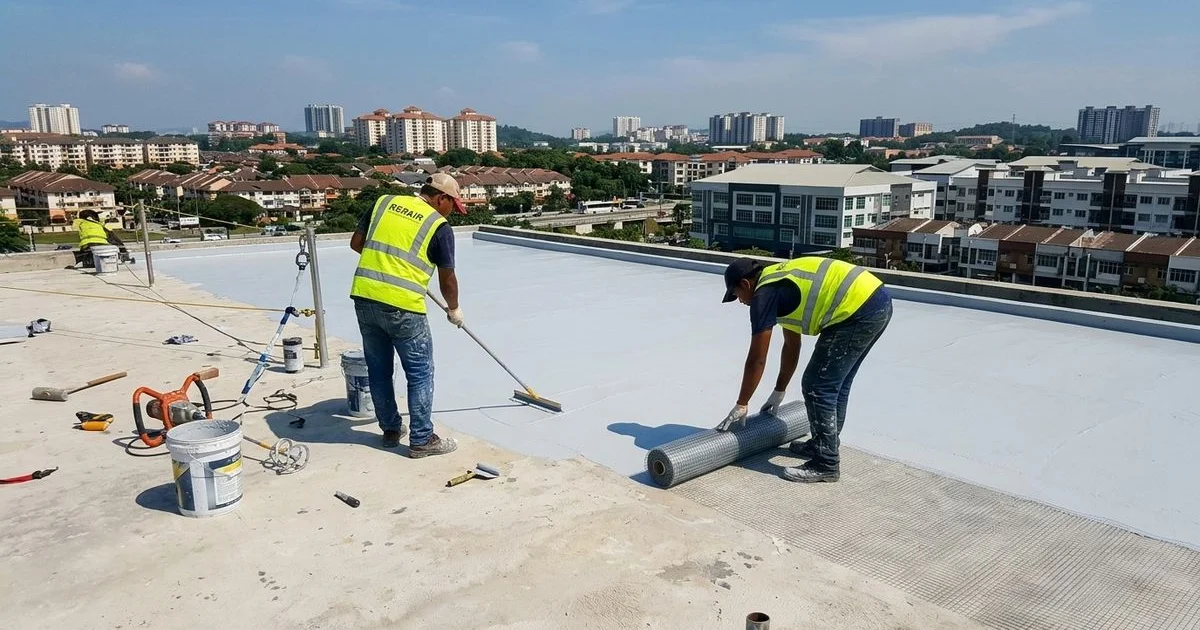
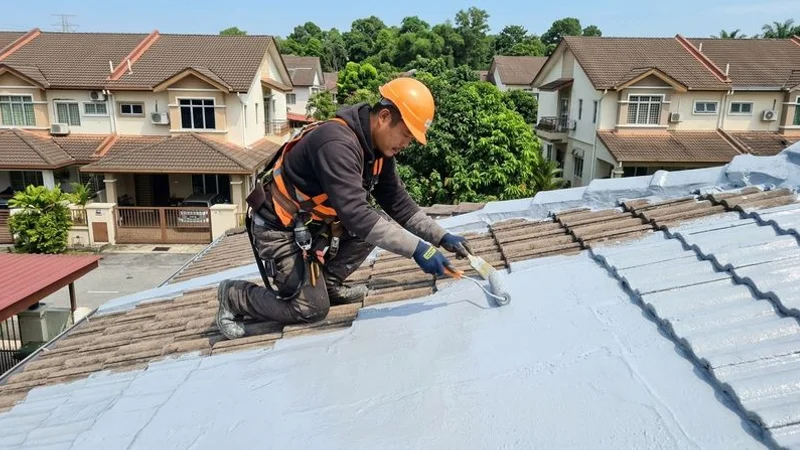
Liquid membranes form a seamless, monolithic barrier right over your existing roof surface. Contractors apply polyurethane, acrylic, or cementitious coatings after a rigorous session of high-pressure cleaning and priming.
Our preferred approach for exposed Malaysian roofs is a pure polyurethane (PU) liquid membrane. PU easily handles the thermal shock of our climate and resists ponding water much better than standard acrylic alternatives.
Key benefits of polyurethane liquid membranes include:
- Zero Seams: The liquid cures into a continuous rubber-like sheet with no vulnerable joints.
- Crack Bridging: High-quality 2026 formulations like Nippon Flex 200 or SikaCoat can stretch and bridge hairline cracks up to 2 mm wide.
- Speed: A professional crew can finish a standard terrace house roof in just two to three days.
We typically see professional installation costs for polyurethane membranes ranging from RM 10 to RM 15 per square foot. This makes it an incredibly cost-effective alternative to a full tear-off replacement.
Torch-On Membrane (Modified Bitumen)
Torch-on waterproofing uses pre-manufactured bituminous sheets bonded directly to the prepared roof surface. Technicians use a heavy-duty gas torch to melt the underside of the sheet, fusing it permanently to the concrete substrate.
Our commercial clients often choose this method for large-scale flat roofs. Industry specifications for 2026 highlight two dominating types: APP (Atactic Polypropylene) and SBS (Styrene-Butadiene-Styrene). APP membranes resist intense heat exceptionally well, making them the superior choice for exposed tropical rooftops.
Torch-on systems excel in environments requiring heavy durability:
- Large commercial and industrial flat roofs.
- Rooftops that experience regular maintenance foot traffic.
- Areas demanding maximum puncture resistance and a proven 15 to 20-year lifespan.
You do not need to hack the existing screed to install a torch-on system, but it does demand extensive surface preparation. Expect to invest between RM 8 and RM 10 per square foot for a professional APP torch-on application.
Step-by-Step: The No-Hack Waterproofing Process
Understanding the exact workflow helps you set realistic expectations for your property. Our project managers always emphasize that careful preparation dictates the ultimate success of any coating.
Here is what a typical no-hack roof waterproofing project involves from start to finish:
- Thermal Inspection: Technicians use infrared moisture meters to map out hidden water pooling beneath the surface before any work begins.
- Surface Preparation: High-pressure water jetting removes dirt, stubborn algae, and loose debris. Contractors then scrape away any flaking paint or failed previous coatings.
- Targeted Crack Treatment: Specialists route out significant cracks and fill them with a flexible sealant. Active leaks get immediate PU injection treatment.
- Primer Application: A specialized bonding primer goes down to ensure the new membrane grips the concrete aggressively.
- Membrane Application: The team applies the chosen liquid or torch-on system in multiple coats. They embed a fiberglass reinforcement mesh at all joints, corners, and parapet walls.
- Curing and Water Test: The finished roof undergoes a mandatory flood test for 24 to 48 hours to guarantee absolute watertightness.
When Hacking Is Actually Necessary
Modern no-hack methods successfully resolve the vast majority of flat roof leaks. However, some severe situations make complete demolition and rebuilding unavoidable.
Our structural engineers will recommend full hacking if they discover severe deterioration in the concrete slab itself. If the protective screed crumbles into sand upon touch, it simply cannot support a new liquid membrane.
You must also consider hacking under these specific legal and structural conditions:
- Corroded Reinforcement: Exposed, rusting iron bars mean the structural integrity is compromised and requires deep concrete repair.
- Reverse Slopes: If the concrete was poured with incorrect falls causing permanent water ponding, contractors must lay a new screed to correct the drainage.
- Strata Law Compliance: Under Section 142 of the Strata Management Act 2013, inter-floor leakage is legally presumed to originate from the upper parcel. If severe pipe deterioration inside the slab causes the leak, hacking the floor to replace the plumbing is legally required.
Refusing access for these necessary inspections can result in fines up to RM 50,000 under the Strata Management Act. A reputable specialist will document these structural failures clearly before suggesting a costly hacking procedure.
Cost Comparison: Hacking vs No-Hack
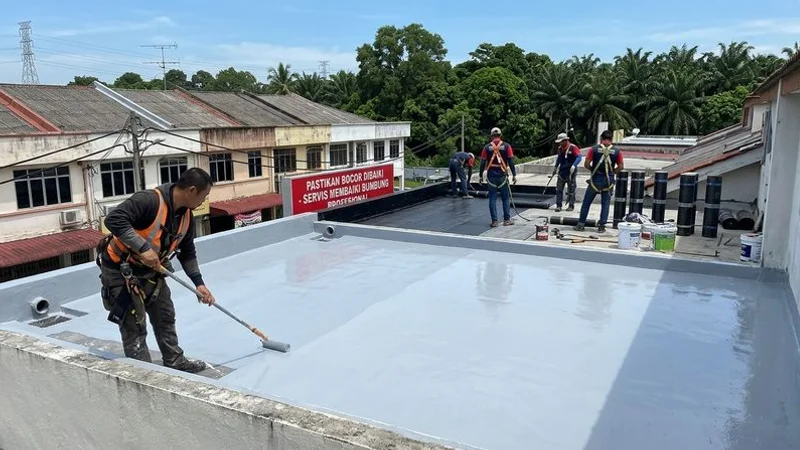
Property owners always ask about the bottom line. The financial difference between destroying a roof and applying a modern overlay is massive.
Our estimation team compiled these average 2026 costs for a standard 1,000 square foot terrace flat roof in the Klang Valley:
| Waterproofing Method | Estimated Total Cost (RM) | Project Duration | Disruption Level |
|---|---|---|---|
| Full Hacking & Re-screeding | 15,000 to 25,000 | 10 to 14 Days | Extremely High |
| Polyurethane Liquid Membrane | 10,000 to 15,000 | 3 to 5 Days | Low |
| Torch-On Membrane (APP) | 8,000 to 10,000 | 3 to 5 Days | Low to Medium |
| PU Injection (Localised Leaks) | 2,000 to 4,000 | 1 to 2 Days | Very Low |
The savings speak for themselves. You keep your business running or stay in your home comfortably while the technicians complete the essential repair work.
Choosing the Right Contractor
Finding the right material only solves half the problem. You need a highly capable applicator to ensure the system performs exactly as promised.
Our industry experience shows that improper application causes the vast majority of premature membrane failures. When selecting a roof waterproofing specialist, you must verify their specific qualifications and field experience.
Always demand the following credentials before signing a contract:
- CIDB Registration: Ensure the company holds a valid Construction Industry Development Board (CIDB) license for specialized waterproofing works.
- Manufacturer Certification: Ask if trusted brands like Sika, Nippon, or Pentens formally certify the contractor to apply their specific commercial products.
- Detailed Diagnostics: Reject any contractor who provides a quote without stepping onto the roof to perform a physical assessment.
- Written Warranty: Secure a formal 5 to 10-year warranty that covers both the chemical materials and the installation workmanship.
Protect Your Flat Roof Before the Next Monsoon
Concrete flat roof leaks never resolve themselves. The water ingress simply accelerates as the intense monsoon season progresses.
Our technicians see minor damp spots turn into major structural emergencies requiring professional roof repair within a single rainy season. Modern no-hack solutions provide a fast, financially smart way to seal your property tightly.
Take action before the heavy November rains arrive. Contact a certified waterproofing expert today to schedule a thorough thermal inspection of your roof.
Razif Ibrahim
Licensed Roofing Contractor
Lead roofing contractor with 20+ years of experience serving the Klang Valley.