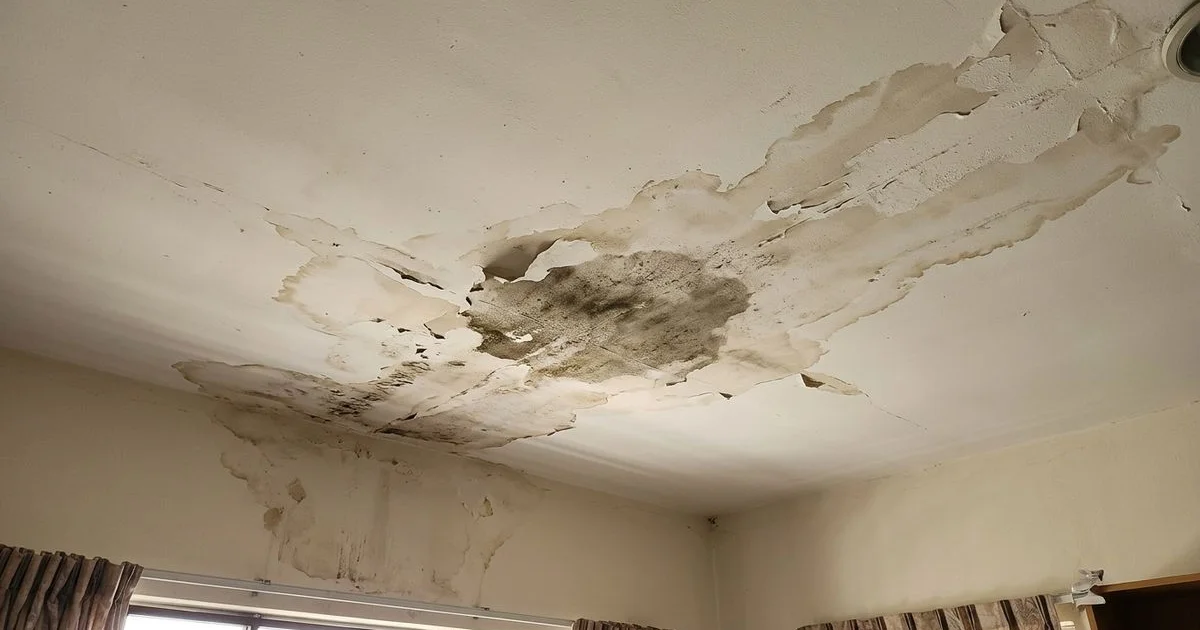
We constantly see facility managers and homeowners panicking over a ceiling stain right after the first heavy monsoon downpour. Malaysia sees up to 2,500mm of annual rainfall, meaning average sealants often fail within months.
You need a permanent fix before that wet patch turns into structural rot.
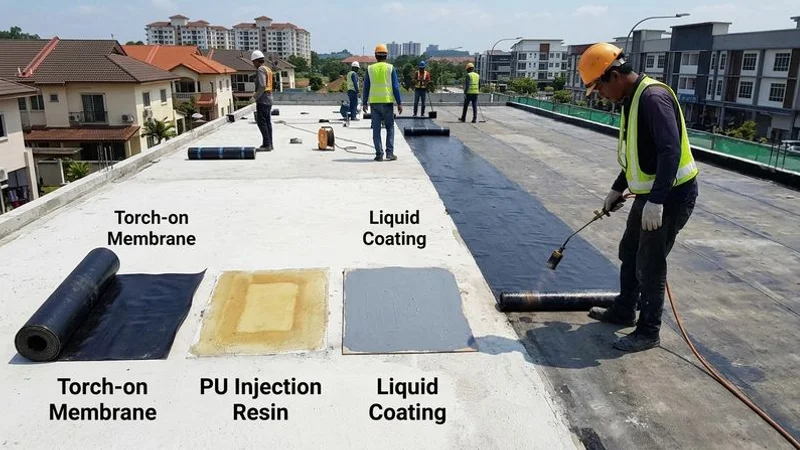
Our team has evaluated the exact performance of different applications across countless properties. This comparison breaks down Torch-On Membrane vs PU Injection vs Liquid Coating: Which Waterproofing Method Is Best?
We will show you the exact data, specific material costs, and field-tested advice to help you choose the right fix.
Quick Comparison Table
| Feature | Torch-On Membrane | PU Injection | Liquid Coating |
|---|---|---|---|
| Cost Basis (MY Market) | RM45 to RM85 per sqm | RM45+ per injection point | RM35 to RM70 per sqm |
| Common Brands | Obaproof TO-1000, TopGuard | Pentens T-100, Jishan A-308 | Nippon Flex 200, SikaCoat |
| Expected Lifespan | 10 to 20 years | 5 to 10 years | 5 to 15 years |
| Primary Use Case | Flat roofs, large areas | Cracks, joints, localised leaks | Irregular surfaces, repairs |
| Installation Timeline | 2 to 5 days | 1 to 3 days | 1 to 3 days |
| Site Disruption | High (open fire and heat) | Low | Low to Medium |
| UV Resistance | Excellent | Good (requires topcoat) | Good to Excellent |
| Foot Traffic Rating | Excellent | Poor (needs protective screed) | Moderate |
Torch-On Membrane: The Heavy-Duty Standard
How the Process Works
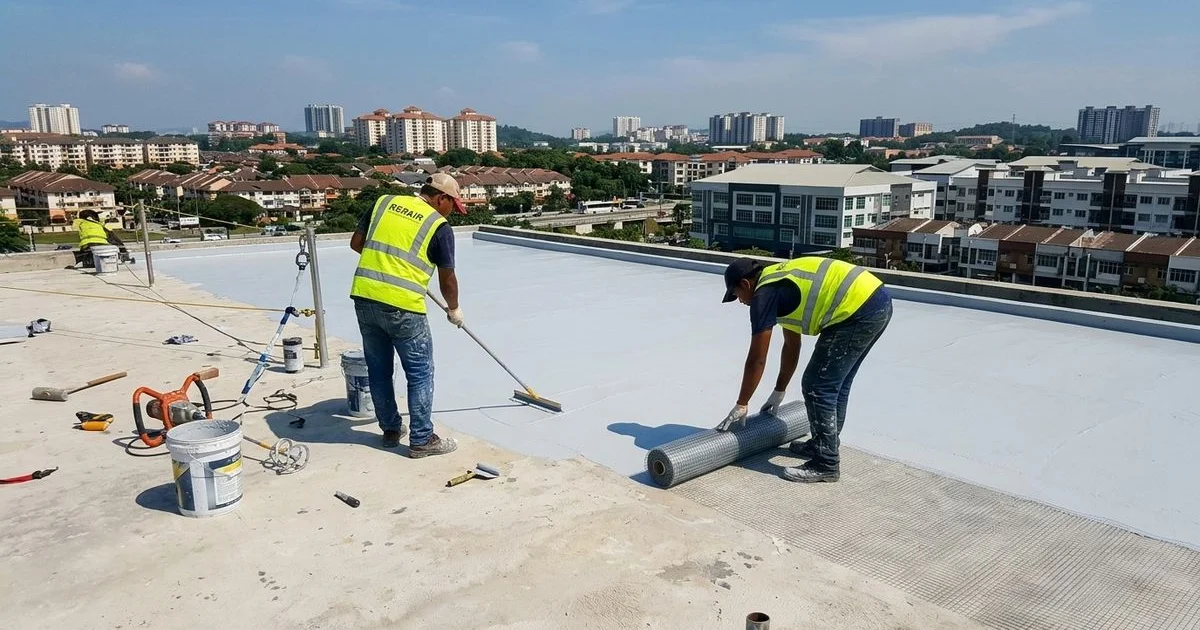
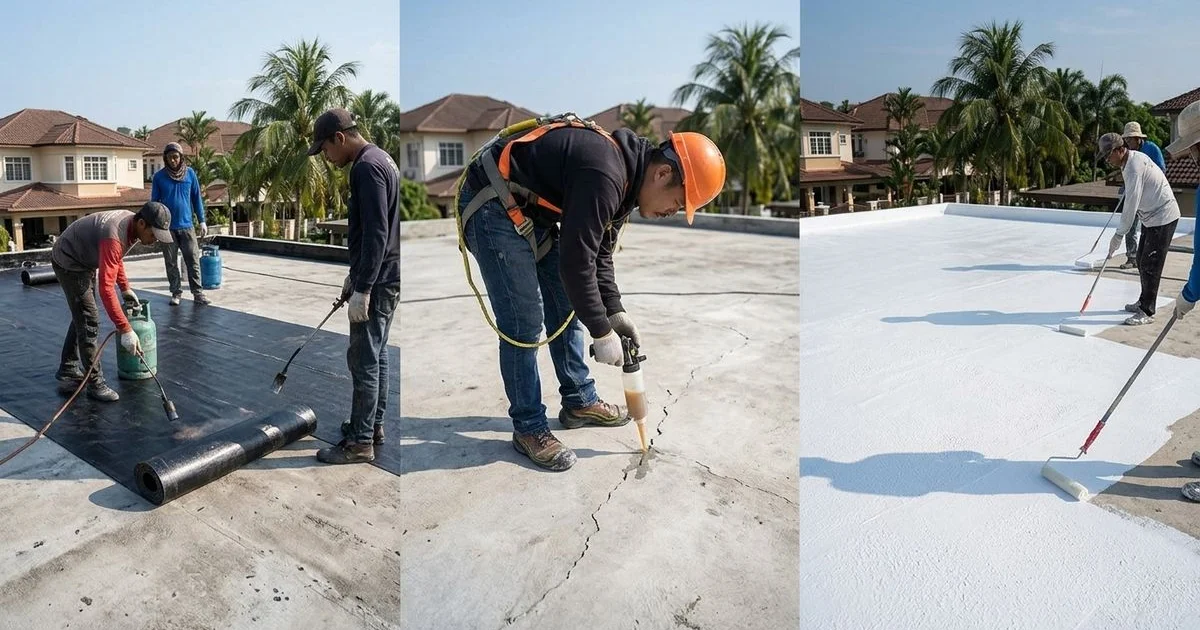
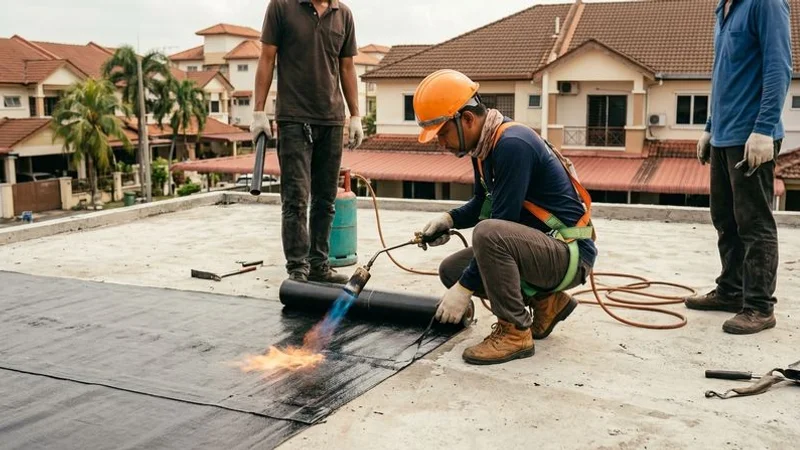
Our crews rely on torch-on membrane for expansive concrete slabs. Heating rolls of reinforced bitumen sheeting with a gas torch creates a continuous and seamless waterproof barrier.
The intense heat melts the bitumen underside. This material bonds directly to the substrate as it cools to form an impenetrable layer.
Proven Advantages
- Exceptional durability: Properly installed materials can last 15 to 20 years in the intense heat of Malaysia.
- Brand reliability: Commercial-grade options like Obaproof TO-1000 provide a proven track record of success.
- Superior puncture resistance: The reinforced membrane easily withstands foot traffic and equipment placement.
- Seamless coverage: Overlapping the thick sheets eliminates the small gaps that cause secondary leaks.
Critical Limitations
- High initial investment: Material and skilled labour costs are higher, and contractors often charge a minimum trip fee starting around RM1,500 just to transport the heavy equipment.
- Strict safety requirements: The open flame demands highly trained installers to prevent severe fire hazards.
- Extensive surface preparation: Installers must clean, dry, and prime the concrete completely before applying the heat.
- Moisture trapping risks: Any water left underneath during application will boil, causing the membrane to bubble and fail.
Ideal Applications
- Large flat concrete roof areas exceeding 50 square metres.
- Rooftop car parks and high-traffic walkways.
- New construction waterproofing for commercial sites.
- Properties requiring maximum long-term longevity.
PU Injection: Precision Leak Stopping
The Injection Mechanism
We regularly use PU injection grouting to target active concrete leaks without hacking up your expensive floor tiles. Liquid resin is pumped directly into structural voids using an 1100W high-pressure grouting machine.
The resin reacts rapidly with existing moisture and expands as it cures. This chemical reaction creates a flexible, watertight seal deep within the concrete matrix.
Professional Application Secrets
Contractors typically drill injection points at a 45-degree angle to intersect the crack perfectly. The drill hole diameter must be exactly 2mm larger than the mechanical packer being used.
Our standard practice involves flushing the pump with a cleaning agent first. Polyurethane is extremely water-sensitive, and any residual moisture sitting inside the equipment will ruin the application before it even begins.
Major Advantages
- Targeted repair protocol: You treat the exact location of the leak without disturbing the surrounding tiles.
- Minimal site disruption: Technicians can often inject the ceiling from below to avoid complex roof access issues.
- Cost-effective pricing: Companies usually charge per point, often starting around RM45 each, making small fixes very affordable.
- Rapid emergency results: The expanding foam stops active water flow within hours of injection.
System Limitations
- Incomplete surface coverage: This method seals specific cracks but does not coat the wider slab.
- Accurate diagnosis required: Missing the primary water entry point means the leak will simply divert to another crack.
- UV degradation risk: Exposed polyurethane degrades under direct sunlight and requires a protective topcoat.
- Multi-session requirements: Complex fracture networks frequently require two or three separate injection rounds to seal completely.
Best Use Cases
- Concrete slab cracks causing direct ceiling drips.
- Leaking construction joints between concrete pours.
- Pipe penetration leaks in bathrooms.
- Emergency leak stopping during the monsoon season.
Liquid Coating: Versatile and Accessible
The Application Process
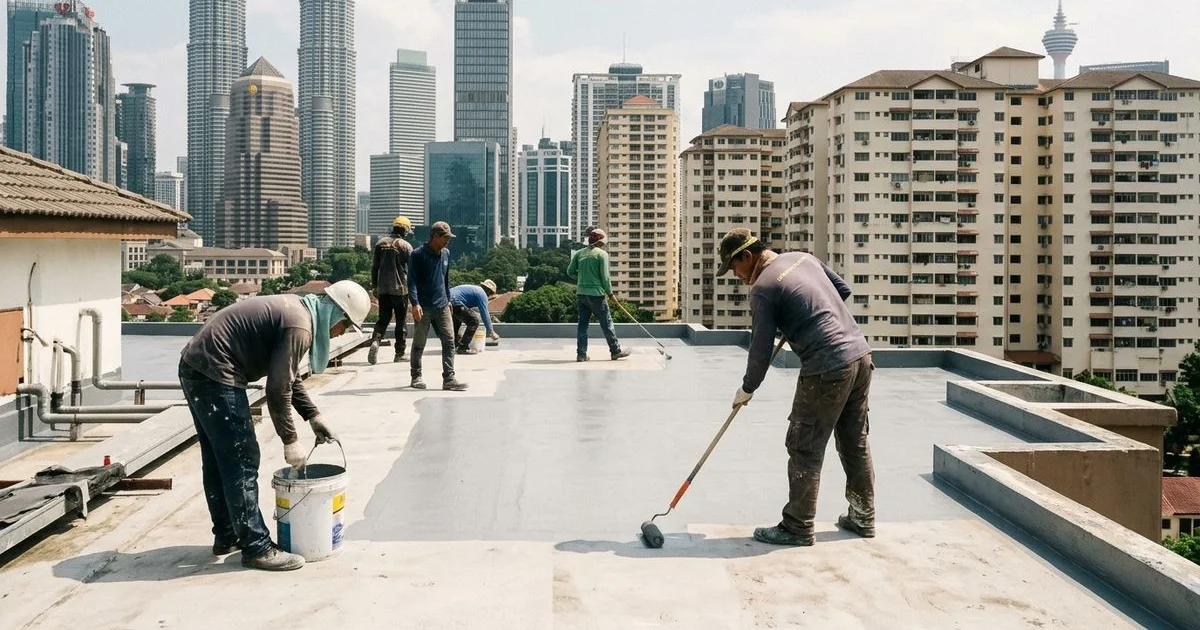
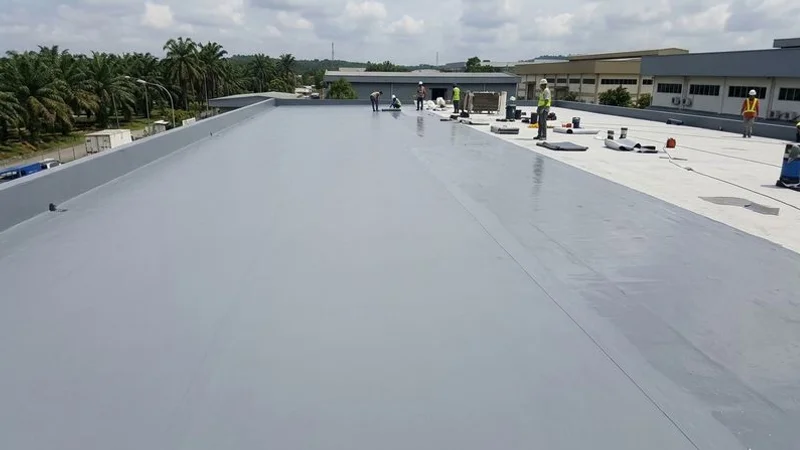
We frequently apply liquid waterproofing coatings to irregular surfaces or older metal roofs. These thick liquids cure to form a seamless, elastic layer directly over the existing substrate.
Popular options in Malaysia include acrylic-based formulas like Nippon Flex 200, which currently retails around RM120 for a 5kg pail. Applicators use standard rollers or spray equipment to embed reinforcing fabric between multiple wet layers.
Critical Weather Dependencies
Curing time is the biggest hurdle for this method in tropical climates. Most liquid coatings demand 24 to 48 hours of completely dry conditions to set properly.
Our teams closely monitor the rain forecast during the wet months. High ambient humidity, which frequently tops 70 percent in Malaysia, will drastically extend the required drying window.
Core Advantages
- Straightforward application: Workers do not need heavy machinery or open flames to apply the coating.
- Total shape conformity: The liquid easily flows into crevices and around complex pipe penetrations.
- Excellent repair capability: You can apply these coatings directly over stable, existing waterproofing systems.
- Reduced safety risks: The cold application process completely eliminates worksite fire hazards.
Potential Drawbacks
- Inconsistent thickness: Applying too little material reduces protection, while applying too much wastes money and ruins the cure time.
- Lower physical strength: Liquid layers are generally thinner and less puncture-resistant than heavy bitumen rolls.
- Varying product quality: Cheap coatings may peel in two years, while premium brands like SikaCoat can last over a decade.
- Lengthy installation times: Waiting for multiple separate coats to dry extends the total project duration.
Top Applications
- Pitched roof repairs where heavy rolls cannot safely sit.
- Highly irregular surfaces with multiple drains and edges.
- Budget-conscious repairs for areas under 50 square metres.
- Protective sealing for metal and zinc roofs, including rusted roof repair.
Which Method Should You Choose?
Opt for Torch-On Membrane If:
- You manage a large flat concrete roof area.
- You want the absolute longest-lasting solution available.
- The roof surface is completely accessible and flat.
- You plan to retain ownership of the property long-term.
Select PU Injection If:
- You have a highly specific, identifiable leak point.
- You want to avoid hacking up your existing floor tiles.
- The problem stems from isolated construction joints.
- You need an immediate fix during heavy rainfall.
Choose Liquid Coating If:
- Your roof features an irregular surface or many pipe penetrations.
- You need to work within a strict maintenance budget.
- The target area is relatively small.
- Your roof is constructed from metal.
Combining Methods for Superior Results
We highly recommend combining treatments for complex commercial properties or severe residential leaks.
A dual-method approach often looks like this:
- PU injection to instantly stop active water flow through deep concrete cracks.
- Torch-on membrane applied over the entire flat slab for permanent top-down protection.
Another highly effective combination includes:
- PU injection to permanently seal structural wall joints.
- Liquid coating painted over the injection zones to create a secondary surface barrier.
A qualified roof waterproofing contractor will evaluate the site before suggesting a blended approach based on your specific budget.
Securing an Accurate Quotation
We warn every client to thoroughly review their contractor estimates before signing anything.
A legitimate, professional quotation must explicitly state:
- The exact application method and specific product brand name.
- The precise number of coats or material layers included.
- The specific surface preparation steps the crew will take.
- The exact length of the warranty period for both materials and workmanship.
- The exact protocol if the repair fails during the coverage window.
Vague quotes stating “general waterproofing works” are a massive red flag. The difference between a RM35 per sqm acrylic paint job and a RM85 per sqm commercial bitumen installation is massive.
Final Advice
We strongly advise against a one-size-fits-all approach to building maintenance. Choosing between Torch-On Membrane vs PU Injection vs Liquid Coating: Which Waterproofing Method Is Best? requires a site-specific assessment.
A cheap coating will fail instantly if your structural joints are already shifting.
Our goal is to match the exact repair method to your specific leak source, budget, and long-term property plans. To ensure a permanent fix, always demand the following from your service provider:
- Clear documentation of the root cause.
- A verifiable warranty covering both materials and labour.
- An itemised breakdown of all material brands being used.
Do not accept a generic quote that refuses to list the exact application method.
For a professional assessment of your roof repair and waterproofing needs, contact an experienced contractor who can inspect your property.
We will provide a detailed, itemised quotation to fix your leaks permanently. Reach out today to schedule your comprehensive site inspection.
Razif Ibrahim
Licensed Roofing Contractor
Lead roofing contractor with 20+ years of experience serving the Klang Valley.