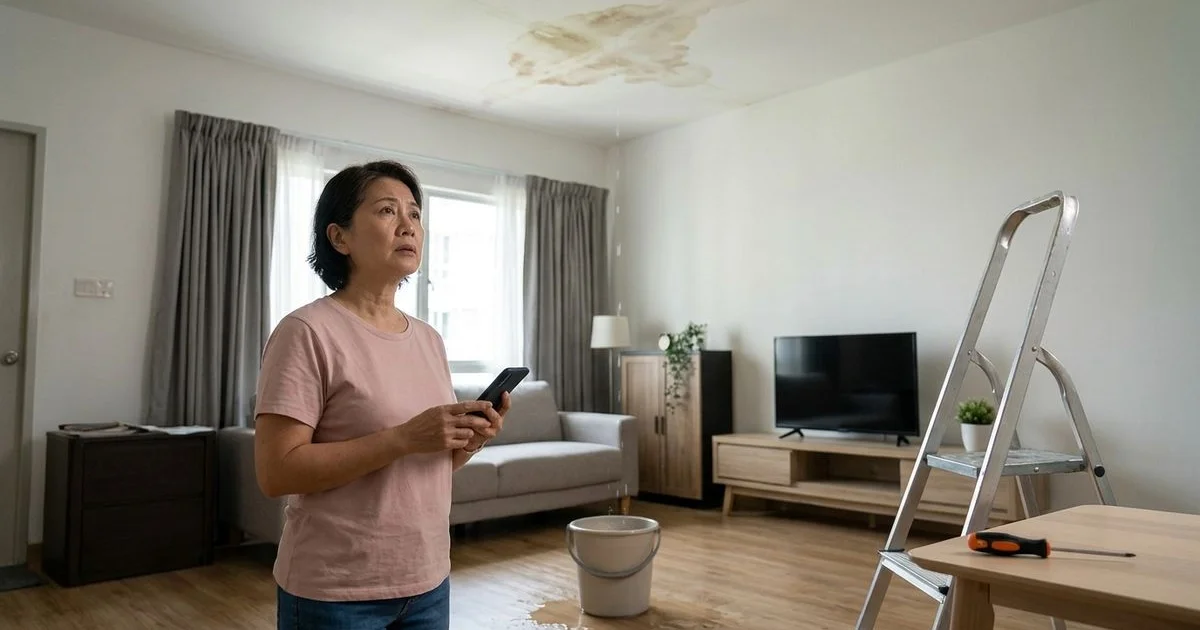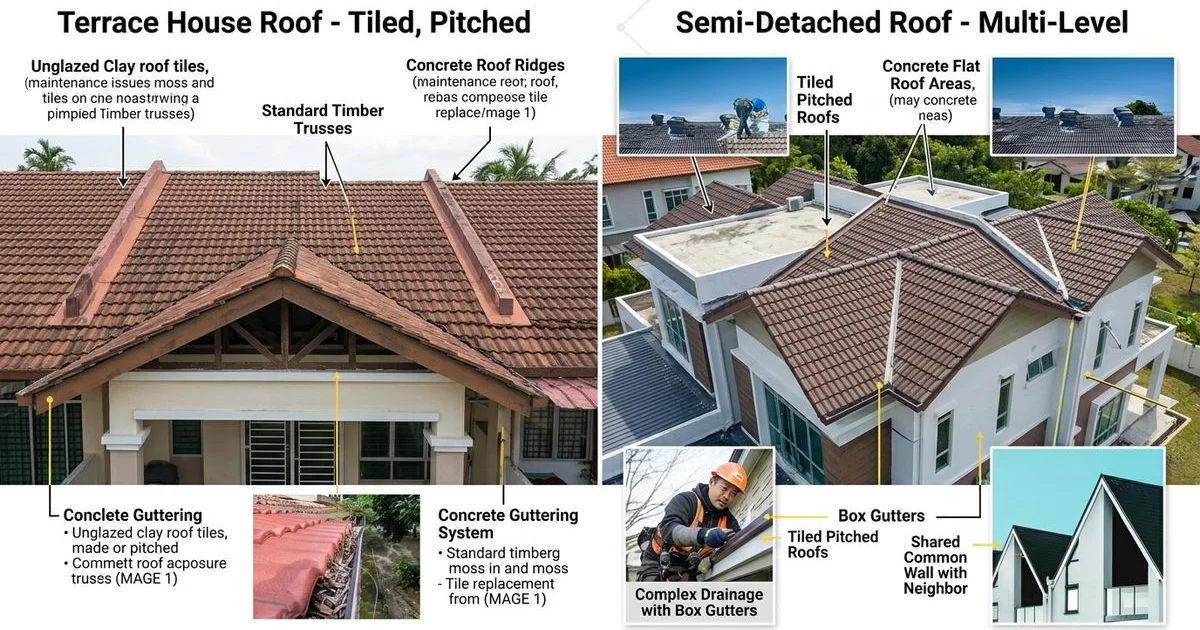
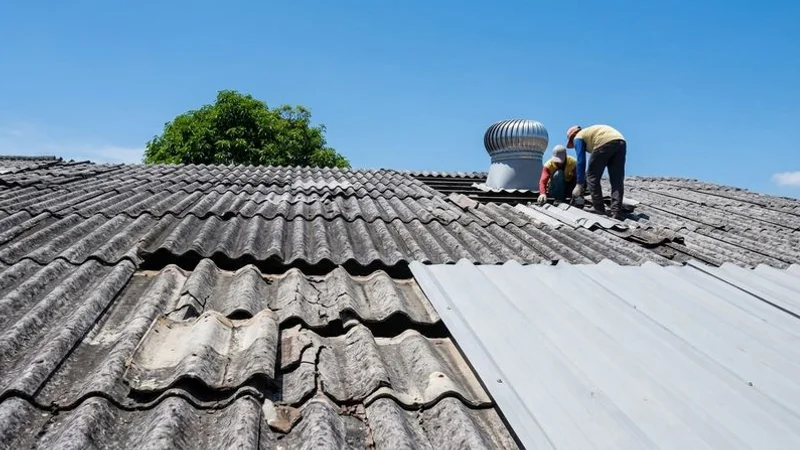
As a professional roof repair service team, we frequently observe a frustrating cycle across local residential areas. Homeowners often miss the 7 Warning Signs Your Roof Needs Repair Before Monsoon Season, leading to panic when heavy rains finally arrive. That oversight transforms simple maintenance tasks into costly emergency structural rescues.
According to historical weather patterns tracked by the Malaysian Meteorological Department (MetMalaysia), the transition phases between monsoons are particularly brutal. Sudden, high-intensity squalls will quickly expose any compromised materials on your property, while a single cracked tile easily floods a ceiling cavity during a heavy downpour.
Let’s examine the specific red flags you should look for right now to protect your interior spaces.
Why Monsoon Season Is the Worst Time to Discover Roof Problems
Every year, thousands of Malaysian homeowners face the same nightmare. The monsoon rains arrive, and suddenly ceilings are dripping, walls are stained, and valuable furniture gets ruined. Most of these disasters could be prevented with a simple inspection weeks before the heavy rains begin.
Malaysia experiences two distinct weather patterns that test structural limits. The Northeast Monsoon strikes from November to March, while the Southwest Monsoon brings varied rainfall from late May to September. Sustained heavy downpours during these months will find every single weakness in your property’s exterior.
A minor gap that seems harmless during a dry July afternoon will transform into an active leak when battered by continuous rain. Our technicians consistently see repair costs triple during the peak wet season due to emergency call-out fees and extensive interior water damage. Delaying basic upkeep creates a massive financial risk for property owners.
The True Cost of Delayed Maintenance
We compiled a quick comparison to illustrate the stark difference between planned maintenance and emergency responses.
| Factor | Pre-Monsoon Maintenance | Emergency Monsoon Repair |
|---|---|---|
| Inspection Cost | RM150 to RM400 flat rate | High emergency call-out fees |
| Contractor Availability | Readily available | Wait times often exceed two weeks |
| Repair Environment | Dry conditions allow proper sealant curing | Wet surfaces prevent permanent waterproofing |
| Collateral Damage | Zero interior damage | Expensive plasterboard and paint destruction |
1. Cracked, Chipped, or Missing Roof Tiles
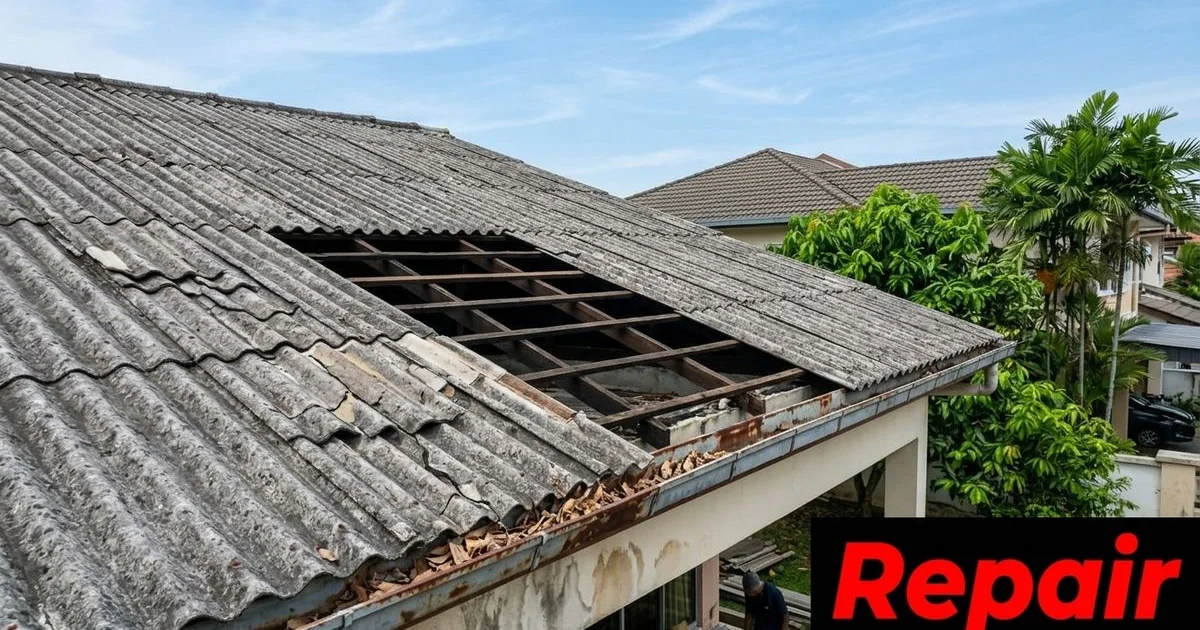
This remains the most obvious indicator of damage, yet many property managers completely overlook it. Concrete tiles from popular local brands like BMI Monier become brittle over decades of exposure to the intense Klang Valley heat and UV radiation. Walk around your property and scan the highest peaks.
If you spot gaps, missing pieces, or damaged roof tiles shifted out of alignment, water will definitely find its way inside during the next storm. We highly recommend using binoculars for a safer, closer look at the second-story slopes. A single missing tile permits litres of water to pour directly into your attic space during a heavy squall.
Here are the specific tile defects that require immediate replacement:
- Faded or chalky surface coatings indicating severe UV degradation
- Shifted rows that no longer interlock correctly
- Broken bottom corners where water runoff concentrates
- Sandy grit accumulating in gutters from eroding concrete materials
Paying RM50 to RM150 to replace a few broken tiles is a minor expense based on current local hardware pricing. That small investment prevents thousands of ringgit in structural repairs later.
2. Water Stains on Your Ceiling or Walls
Brown or yellowish discolourations on your ceiling serve as a classic telltale sign of an active moisture breach. These spots prove that water has already seeped through the exterior structure, saturated the wooden battens, and soaked into your plasterboard. Even if a stain feels dry to the touch, the pathway for water remains wide open.
That seemingly dry patch will expand rapidly once the transitional squalls arrive. Pay close attention to the edges of rooms, around electrical light fixtures, and directly in the corners where walls meet the ceiling overhead. These vulnerable junctions are the exact spots where roof repair becomes absolutely essential to save your interior finishes.
Our crews frequently handle standard gypsum board replacements, which currently cost around RM5.50 per square foot just for the raw material. You must also factor in the added expenses of repainting, matching the existing texture, and hiring an electrician to reset any damaged downlights.
3. Sagging or Bowing Ceiling Sections
A drooping ceiling represents a critical structural hazard that requires an immediate professional response. Water weighs exactly one kilogram per litre, and a saturated cavity quickly accumulates a massive amount of hidden weight. As moisture pools in the darkness above, it completely destroys the structural integrity of standard plasterboards.
We have responded to numerous emergency calls where a waterlogged ceiling collapsed entirely onto a living room floor. That scenario ruins expensive electronics, destroys custom furniture, and poses a serious physical danger to anyone standing below.
If you see a noticeable dip or a ballooning bubble in the paint, do not attempt to poke it without preparing a large collection bin underneath. Contact an experienced roofing contractor right away to drain the cavity and locate the source of the breach. This structural failure never improves on its own.
4. Mould or Moss Growth on Roof Surfaces
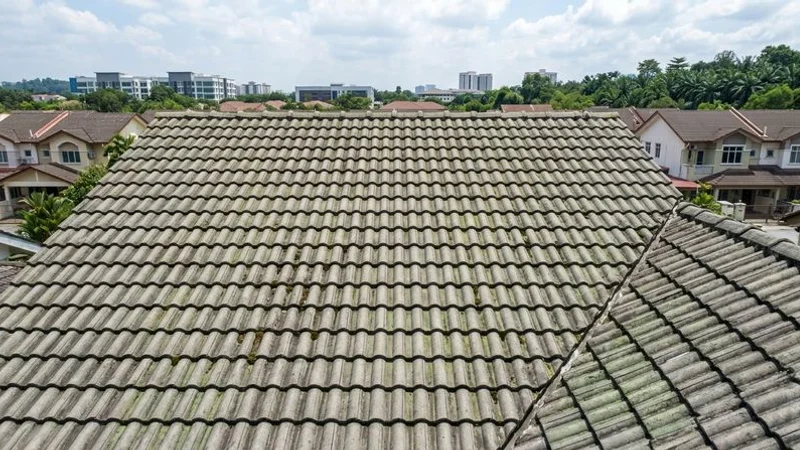
Malaysia’s persistent 80 percent humidity creates the perfect breeding ground for invasive moss and fungal spores. While a light dusting of green algae on external concrete might look like a purely cosmetic issue, it actively destroys the material underneath. Thick moss acts like a sponge, trapping rainwater directly against the porous tile surface for days after a storm passes.
As the root systems expand, they physically wedge themselves between the overlapping edges of the tiles. This subtle lifting action breaks the watertight seal and creates tiny pathways for driving rain to infiltrate the wooden framework below.
We suggest a proactive approach to organic growth. Hiring a professional cleaning service to apply a fungicidal wash extends the lifespan of your materials significantly.
Best Practices for Roof Cleaning
- Never use high-pressure power washers on older concrete tiles to protect the surface glaze
- Apply targeted chemical treatments that kill moss safely at the root level
- Trim back overhanging tree branches that drop acidic leaves and block sunlight
- Ensure your contractor installs zinc strips at the ridge to prevent future algae buildup
5. Damaged or Clogged Gutters and Downpipes
Your exterior drainage network acts as the primary defense system against foundation flooding. When clogged and leaking gutters fill up with fallen palm fronds, angsana leaves, and accumulated dirt, rainwater has nowhere to go. This blockage forces heavy runoff to overflow the metal edges, stream straight down your painted walls, and pool aggressively around the concrete footings.
We regularly inspect properties where neglected gutters caused severe rising damp issues inside the ground-floor walls. Verify that all horizontal channels remain firmly attached to the fascia boards, display no signs of rust holes, and maintain a slight downward pitch directed to the drain.
All vertical PVC downpipes must channel the heavy runoff at least a metre away from the base of the building. Routine debris clearing is a highly effective part of your comprehensive roof repair strategy. Replacing a ruined gutter system costs upwards of RM1,000, while scooping out wet leaves takes only a few minutes.
6. Flashing Damage Around Vents, Chimneys, and Edges
Metal flashing strips seal the awkward joints and complex transitions on your exterior structure. These thin layers of zinc or aluminium are historically the most common failure points we encounter during residential inspections. The Malaysian climate forces these metals into a brutal daily cycle of thermal shock.
Flashing absorbs intense heat during a 35-degree afternoon, expanding significantly, before contracting violently when a sudden 24-degree rainstorm hits. Over several years, this constant movement snaps the hardened polyurethane sealants and pulls the metal completely away from the masonry.
Check the condition of the seals around these specific high-risk zones:
- Plumbing vent pipes exiting the ceiling
- Satellite dish mounts anchored into the surface
- The valleys where two angled roof slopes intersect
- The edges where flat concrete meets vertical brickwork
If the protective caulking looks cracked, brittle, or entirely missing, water will easily bypass the barrier. Investing in professional roof waterproofing completely eliminates these vulnerabilities before the wet season begins.
7. Unusually High Energy Bills
A sudden spike in your monthly electricity statement often points to hidden moisture destroying your thermal barriers. Wet fibreglass insulation completely loses its ability to block heat transfer from the blazing sun above. When that thick protective layer fails, the 32-degree daytime heat radiates straight into your living space.
Your air conditioning units must then work twice as hard to maintain a comfortable indoor temperature. Tenaga Nasional Berhad (TNB) recently updated its tariff structure for domestic users. If your struggling AC pushes your monthly consumption over the 1,500 kWh threshold, you face a steep penalty.
We frequently see homeowners paying 37.03 sen per kWh for that excess usage, compared to the standard 27.03 sen base rate. If your cooling costs have escalated without a change in your daily habits, a compromised attic space is the likely culprit.
What to Do If You Spot These Signs

Waiting for the weather to change is the most dangerous decision you can make after spotting a structural defect. The local contracting industry becomes overwhelmed the moment the Northeast Monsoon officially arrives.
We recommend acting immediately to secure a spot on a reputable company’s schedule. A focused response prevents minor drips from escalating into major home restoration projects.
Follow this straightforward action plan to protect your property:
- Document the visible damage with clear, date-stamped photographs from multiple angles.
- Schedule a professional assessment so an expert can evaluate the hidden attic structures.
- Demand a written quotation that itemizes all required materials and labour costs.
- Finalize the repair schedule a minimum of four weeks before the historical start of the heavy rains.
- Apply localized waterproofing membranes to flat concrete sections that historically suffer from water ponding.
Why Recognizing the 7 Warning Signs Your Roof Needs Repair Before Monsoon Season is Critical
Tackling emergency leaks in the middle of a November thunderstorm guarantees maximum expense and high stress. Local repair crews are booked solid, specific replacement tiles become scarce, and executing safe repairs on a slick, wet surface is incredibly dangerous.
A comprehensive residential inspection booked in August or September typically costs just RM150 to RM400 based on current local contractor rates. Compare that minor service fee to the thousands of ringgit required for emergency patching, complete drywall replacement, and restoring ruined electrical systems.
Conclusion
We know how easy it is to ignore the 7 Warning Signs Your Roof Needs Repair Before Monsoon Season when the sun is shining. However, taking a few minutes to inspect your property today secures your comfort for the wet months ahead.
Our team has witnessed far too many avoidable disasters caused by simple procrastination.
Do not wait for a dripping ceiling to dictate your maintenance schedule. Contact a certified roofing professional this week to book your pre-monsoon inspection and safeguard your most valuable asset.

Razif Ibrahim
Licensed Roofing Contractor
Lead roofing contractor with 20+ years of experience serving the Klang Valley.