A Hidden Threat Above Your Head
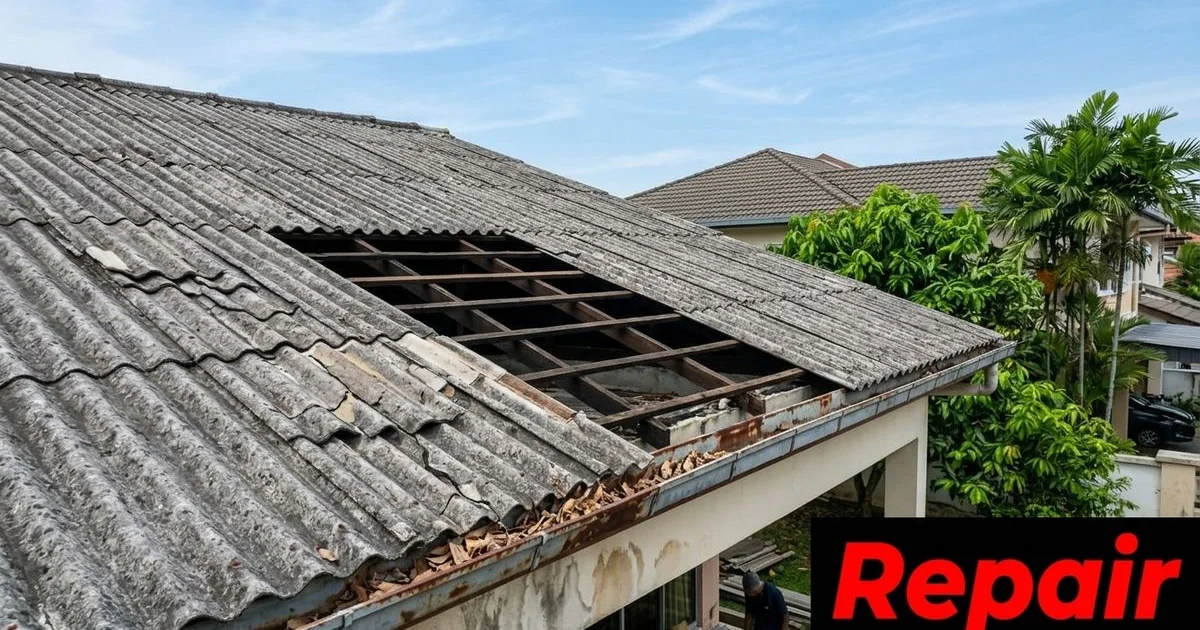
Facility managers and homeowners often prioritise visible roof leaks, completely missing the silent structural decay happening right beneath the tiles. Our professional service team sees this oversight play out in properties across Malaysia every single month. Knowing the signs of termite damage to your roof truss saves buildings from catastrophic failure.
The statistics are alarming.
Recent 2026 Rentokil Initial Malaysia data indicates termites cause an estimated RM40 million in structural damage annually across the country. We regularly encounter severe safety risks where pests compromise the entire structural skeleton of a building. Let us examine the specific warning indicators and outline a practical action plan.
How Termites Reach Your Roof Truss
Many property owners wonder how soil-dwelling insects end up in a second-story attic. We know the answer lies in their specific biology and local building materials. The Asian Subterranean Termite (Coptotermes gestroi) is responsible for over 80% of all structural infestations in Malaysia.
These pests build their colonies deep underground and travel upward using specific pathways:
- Mud tubes along external walls
- Internal vertical plumbing pipes
- Concrete columns
- Foundation cracks as narrow as 1mm
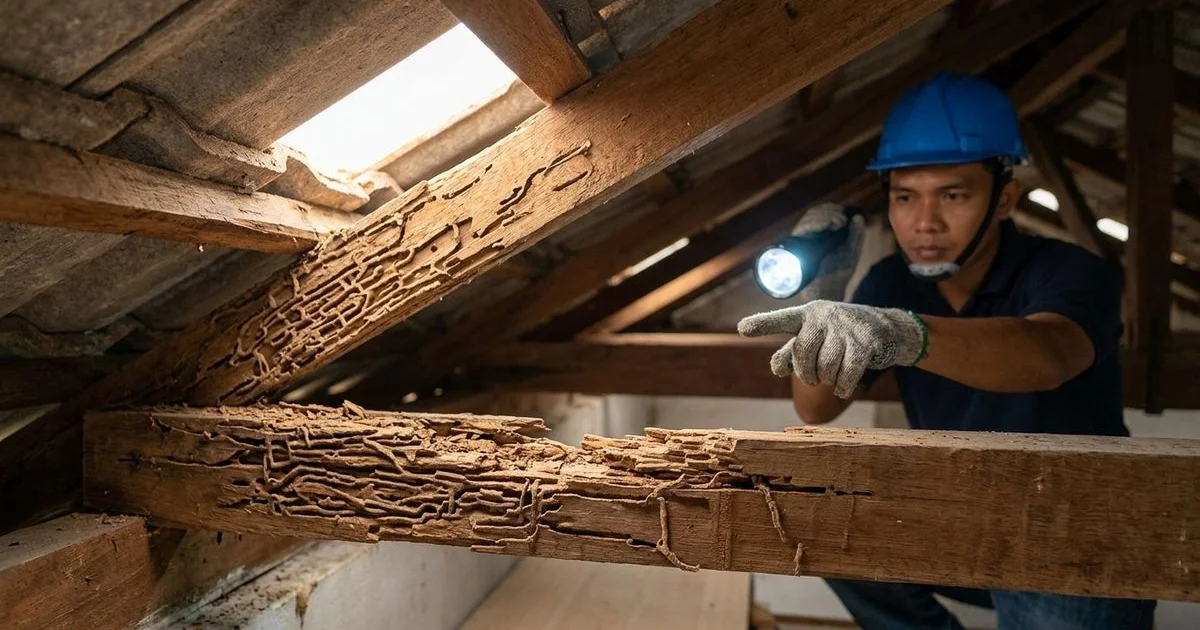
Our teams frequently track these hidden pathways straight up to the timber roof structure. Once they reach the attic, they target lower-density woods like Meranti. They consume the wood from the inside out.
We have seen completely hollowed beams snap under the weight of a single technician. This feeding pattern leaves a thin outer shell that looks perfectly solid to the naked eye. A truss member can appear completely intact from the outside while being hollow within.
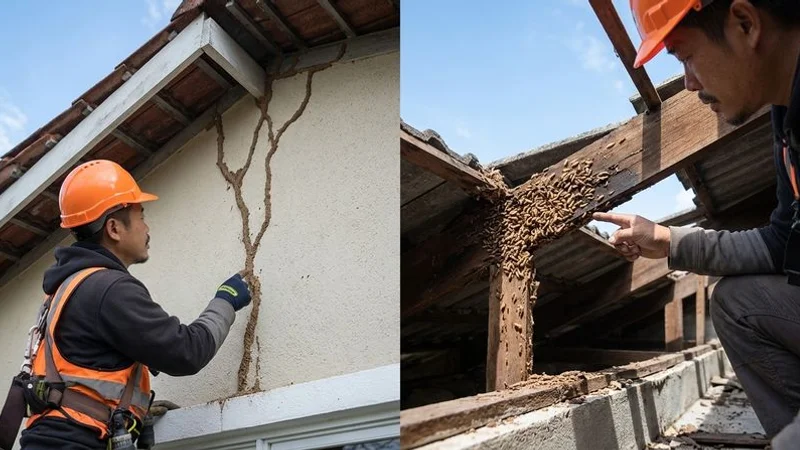
7 Warning Signs of Termite Damage to Your Roof Truss
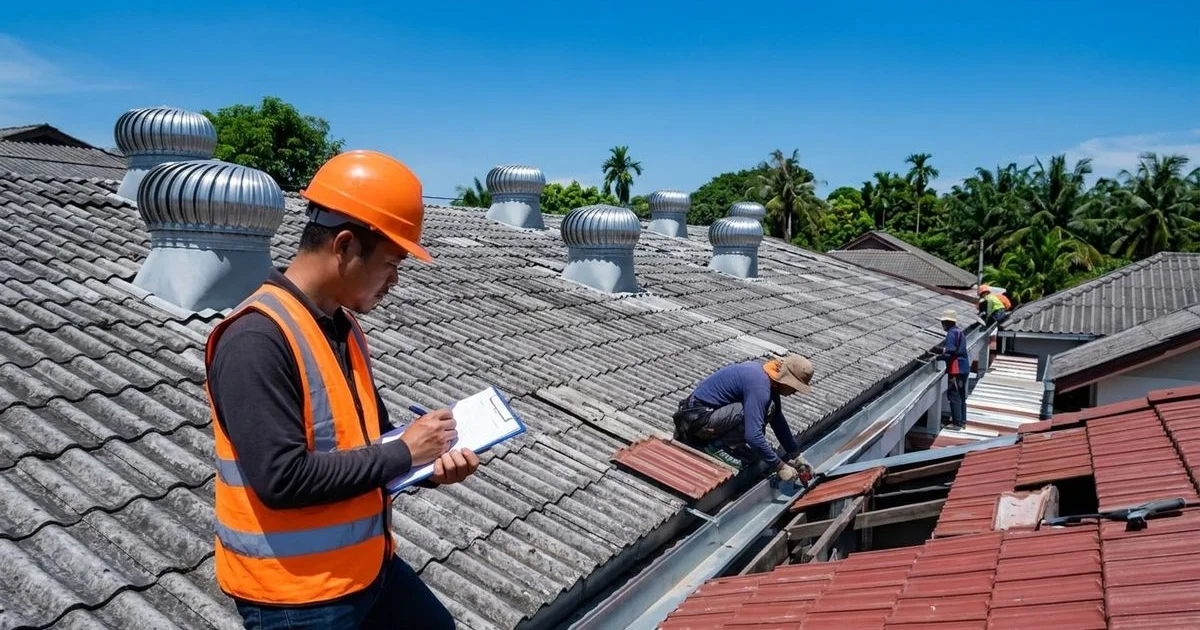
Identifying a termite problem early requires knowing exactly what to look for during a routine inspection. Our technicians use a specific checklist when assessing commercial and residential properties. The following indicators reveal active or past infestations that demand immediate attention.
1. Mud Tubes on Walls or Columns
The most obvious sign of termite activity is the presence of mud tubes. We define these as small tunnels of dried soil and saliva that act as protected highways for the colony. Check these specific high-risk areas:
- External walls near the soil line
- Internal walls in the uppermost storey of your building
- Dark storage cupboards backing onto external concrete walls
- Vertical plumbing pipes running through the structure
Even old or empty mud tubes prove that termites have mapped a route into your building. Our inspectors always treat abandoned tubes as a major red flag for potential structural damage nearby.
2. Sagging or Uneven Roof Line
Step outside and observe your roof ridge line from a distance. We consider a straight, level ridge to be a primary indicator of a sound structure. Any dipping or unevenness suggests that one or more truss members have failed.
This visible distortion requires an immediate professional assessment from a structural engineer or licensed contractor. Our structural engineers treat a sagging roof line as proof that the truss has already lost significant load-bearing capacity.
3. Cracking in Ceiling Plaster
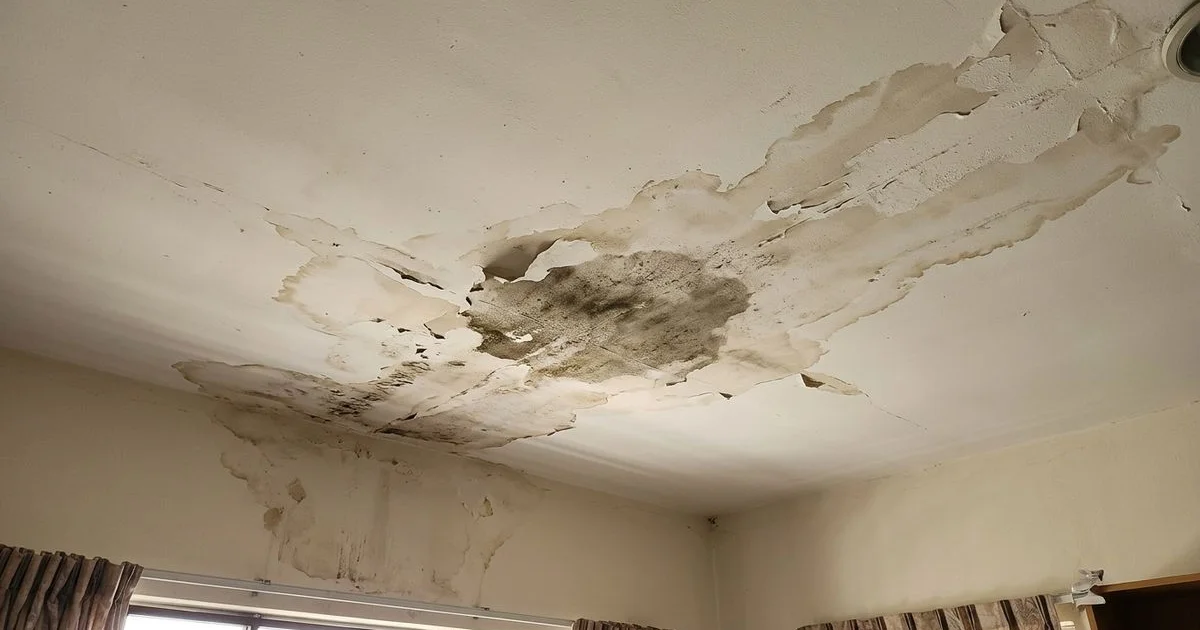
When roof trusses deflect, they transfer movement directly to the ceiling below. Our repair crews often trace attic problems back to sudden visible cracks in the plaster. Look for these specific crack patterns:
- Along the centre of large rooms where the truss span is longest
- At the exact junction between the ceiling and walls
- Radiating outward from ceiling-mounted light fixtures
- Linear lines that mirror the truss layout above
Building settlement causes minor cracks, but sudden or rapidly worsening fissures indicate severe overhead movement. We strongly recommend a roof cavity inspection if these cracks appear during the rainy season.
4. Hollow-Sounding Timber
Access your roof cavity through a manhole and tap the exposed timber with a screwdriver handle. We train our new staff to listen for a distinct, resonant tone on healthy wood. Termite-damaged timber sounds remarkably hollow and papery upon impact.
Focus your tapping on the bottom chord of the trusses. Our field reports show this horizontal member is often the first structural piece attacked, but you should also check where trusses meet the top wall plate.
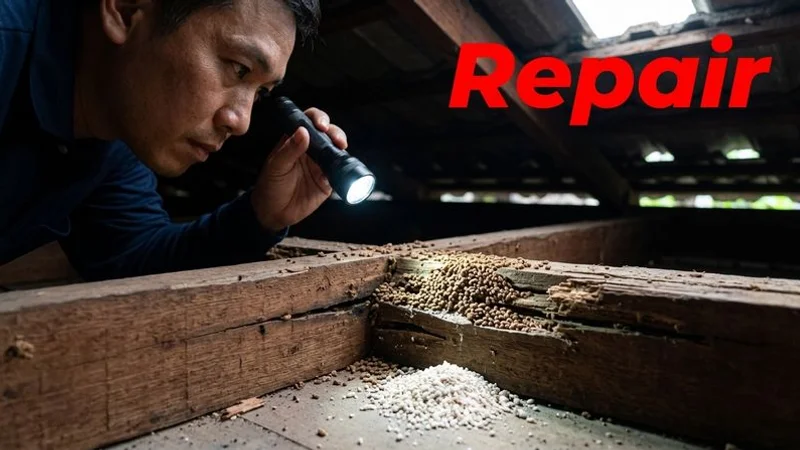
5. Frass or Sawdust-Like Material
Drywood termites are less common than subterranean species in Malaysia, but they still pose a threat. We regularly identify their presence by the small droppings they push out of infested wood. These droppings, called frass, resemble tiny hexagonal pellets or fine sawdust.
Piles of unexplained granular material on ceiling boards demand professional pest control analysis. Our experts use laboratory magnification to distinguish termite frass from ordinary construction dust.
6. Doors and Windows That Stick
Termite damage to roof trusses causes the entire building frame to shift slightly. We often receive calls about sticking doors that directly link back to a failing roof structure. This sudden difficulty in opening windows happens because the overhead load redistributes unevenly.
If multiple doors start jamming at the same time on your upper floor, take immediate action. Our structural teams view synchronised jamming as a critical warning of impending truss failure.
7. Visible Termite Wings or Swarmers
Mature colonies release winged reproductive termites, called alates, to establish new nests. We typically see these swarms in Malaysia during warm, humid evenings just after heavy rain. Finding discarded wings near window sills or light fixtures means an active colony is very close.
A wing accumulation on your top floor is a strong indicator of a roof-level infestation. Our pest specialists advise against simply vacuuming the wings without ordering a full inspection.
Why Termite Damage to Roof Trusses Is Urgent
Unlike standard wear and tear, termite-damaged timber can fail without any additional warning. We categorise pest-related structural decay as a true property emergency for several critical reasons:
- Progressive weakening: Termites consume wood continuously, 24 hours a day.
- Load redistribution: A failing member forces adjacent beams to carry more weight, risking a chain reaction.
- Monsoon vulnerability: The Malaysian monsoon season from November to March saturates roof tiles.
- Repair cost escalation: Early detection allows for targeted reinforcement of individual beams.
Heavy, wet tiles easily crush a hollowed-out timber truss, turning damaged roof tiles into a dangerous structural hazard. Delaying action forces complete structural overhauls.
Our cost analysis shows that demolition and full roof truss replacement for a standard detached home often exceeds RM 20,000. Catching the problem early keeps repair budgets manageable.
What to Do If You Suspect Termite Damage
Finding evidence of termites requires a calm and systematic response. We guide property managers through a strict protocol to contain the threat and assess the damage safely. Follow these specific steps to protect your property and your wallet:
- Contact a licensed pest control company: Ensure the provider holds a valid Pesticide Applicator License (PAL) certified under the latest 2026 Department of Agriculture Malaysia standards.
- Engage a structural expert: Hire a contractor experienced in roof truss repair to assess the remaining load-bearing capacity.
- Avoid store-bought sprays: Retail bug sprays cause subterranean termites to retreat and attack a different section of the building.
- Halt roof access: Do not store items in the attic or allow technicians to install heavy equipment until the structure is cleared.
- Document the damage: Take clear photos for your records, keeping in mind that most Malaysian home insurance policies explicitly exclude pest damage.
Implementing these rules prevents accidental roof collapses during the inspection phase. Our emergency responders enforce this exact sequence on every commercial job site.
Treatment and Repair Approach
Fixing a compromised roof requires coordinating pest elimination with structural reinforcement. We manage this two-pronged approach to ensure the building is both safe and completely pest-free.
Pest Elimination
The active colony must be completely eradicated before any new timber is installed. Our licensed pest control partners in Malaysia rely on specific, highly effective methods:
- Baiting systems: Stations using insect growth regulators, like Hexaflumuron or Bistrifluron (found in the popular Xterm system), destroy the entire colony within four to six weeks.
- Soil treatment: Liquid termiticides create an active chemical barrier around the building perimeter.
- Direct foam treatment: Technicians inject fipronil-based non-repellent foams directly into the hollowed timber to neutralise active workers immediately.
Structural Repair
Once the pest control company issues a clearance certificate, the physical restoration begins. We utilise several engineering techniques depending on the severity of the decay:
- Sistering: Contractors bolt fresh, treated timber alongside the weakened beams to restore rigidity.
- Steel reinforcement: Adding galvanised steel plates or brackets strengthens compromised joints.
- Full truss replacement: Severe damage requires cutting out the entire wooden framework, often necessitating a complete roof replacement.
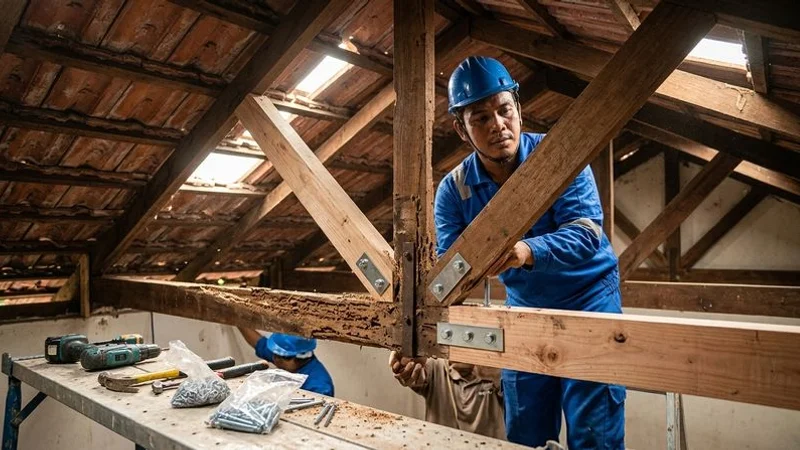
Many Malaysian contractors now replace ruined timber with Light Gauge Steel Roof Trusses to permanently eliminate future termite risks. Our structural engineers oversee these material upgrades to ensure absolute safety.
Prevention for the Future
Protecting your newly repaired roof demands a proactive maintenance schedule. We emphasise that one-time treatments do not guarantee permanent immunity from tropical pests. Implement these specific safeguards to secure your investment:
- Schedule annual assessments with a licensed pest control provider.
- Maintain the chemical soil barrier surrounding your foundation every five years.
- Improve attic ventilation to reduce the damp, warm conditions that attract flying swarmers.
- Book routine roof inspections to identify broken tiles and water ingress immediately.
- Fix plumbing leaks inside wall cavities before the moisture draws subterranean colonies upward.
Taking these steps removes the core environmental factors that allow termites to thrive. Our facility management clients save thousands of Ringgit simply by treating prevention as an annual operational expense.
Spotting the signs of termite damage to your roof truss demands swift action to prevent a minor repair from becoming a total structural collapse.

Razif Ibrahim
Licensed Roofing Contractor
Lead roofing contractor with 20+ years of experience serving the Klang Valley.