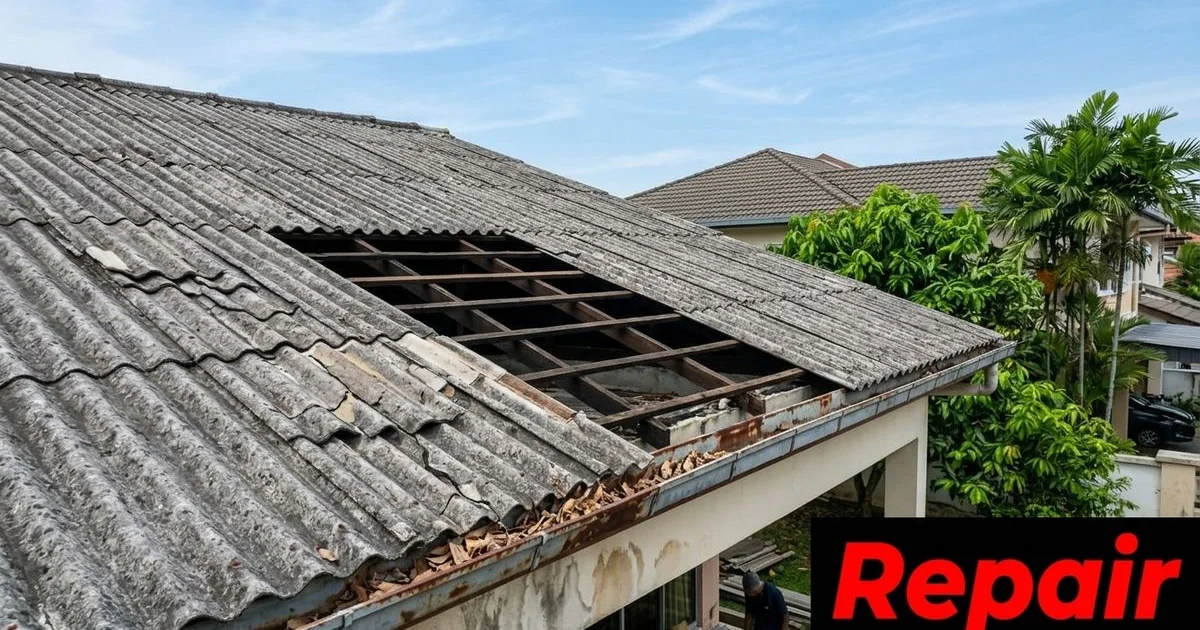
As a professional service team, we know how frustrating it is when a sudden monsoon downpour reveals a hidden leak in the ceiling. When facing Roof Repair for Terrace Houses vs Semi-D: What you do next determines the safety of your home. You are forced to scramble to identify the source before the drywall sustains major damage.
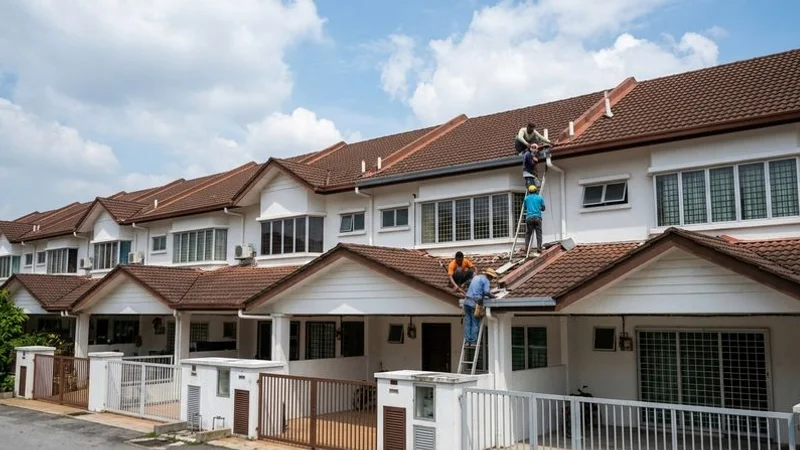
Both property types dominate neighborhoods across the Klang Valley, from established areas in Petaling Jaya and Shah Alam to newer developments in Rawang and Semenyih. Their distinct architectural designs dictate entirely different repair strategies.
Our team will break down the exact differences between these two structural styles. Let’s look at the data, what it actually tells us, and explore practical ways to respond.
Roof Repair for Terrace Houses vs Semi-D: What Sets Them Apart?
Typical Design
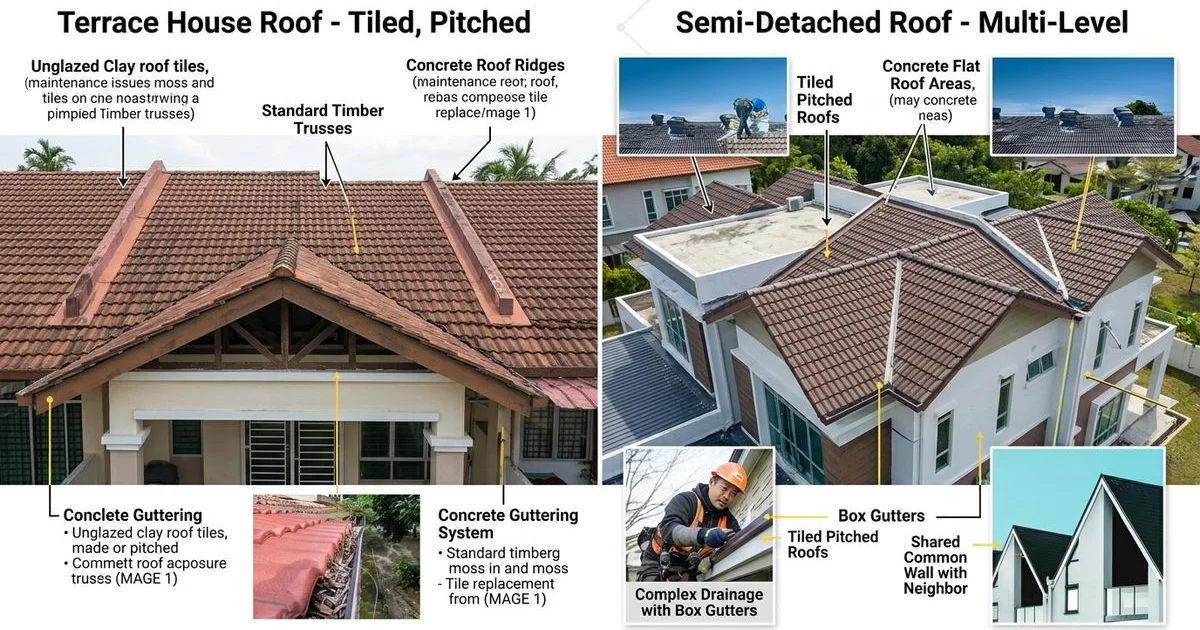
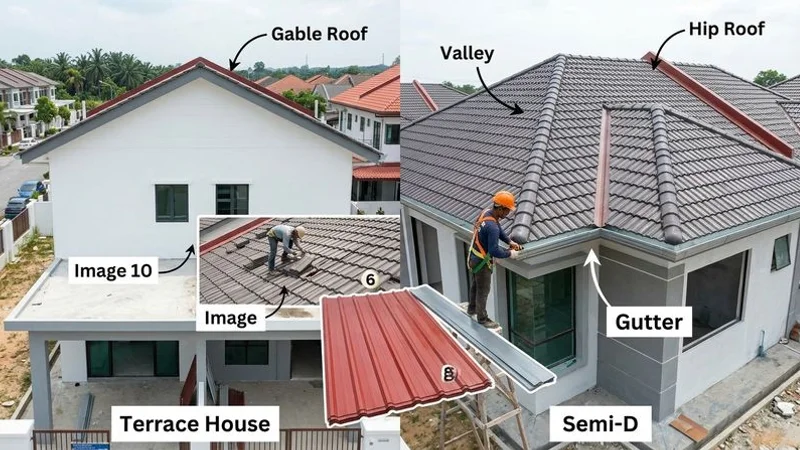
Our experience shows that Malaysian terrace houses feature relatively simple roof designs. These homes typically sport a straightforward gable or hip roof with a single ridge line. You will usually see concrete tiles like Monier Elabana covering a roof area of 60 to 120 square metres. A standard lot size of 20 feet by 65 feet, or 22 by 75 feet, dictates this compact layout.
Common Roof Problems in Terrace Houses
- Party wall junction leaks: Where your roof meets the shared wall with your neighbor is one of the most vulnerable points. Settlement and deteriorated flashing along this junction lead to significant water ingress. Our 2026 project data indicates that replacing party wall flashing costs between RM3,000 and RM5,000.
- Limited access constraints: Terrace houses sit side by side with minimal gaps. Erecting staging on the side elevations becomes a logistical puzzle. We often have to coordinate with your neighbors to access the workspace safely.
- Back extension flat roofs: Homeowners frequently extend the rear with flat concrete slab roofs. These flat sections are highly prone to water ponding. We highly recommend applying a torch-on membrane or PU injection grouting here to prevent costly leaks.
- Shared gutter overflow: Rainwater gutters are sometimes shared between adjacent units in older developments. Your property suffers immediately if a neighbor neglects their gutter maintenance.
Semi-Detached Home Roof Characteristics
Typical Design
We approach semi-detached homes knowing they present a larger, more intricate footprint. Lot sizes typically range from 35 by 80 feet up to 40 by 90 feet. Their roofs feature multiple ridges, deep valleys, and varied pitch angles. Our assessments usually measure a total roof area between 150 and 250 square metres.
Common Roof Problems in Semi-D Homes
- Valley gutter leaks: The multiple ridges create intersecting valleys that channel massive volumes of water. Debris accumulates quickly in these channels. We see frequent leaks here if the metal valley flashing is corroded or blocked.
- Greater wind exposure: Semi-D homes sit on larger lots with open space around them. Strong wind uplift forces easily dislodge older clay tiles during severe storms.
- Intricate sealing requirements: Varied geometry means there are dozens of joints and penetrations to secure. Each transition is a potential weak point that demands skilled roof repair.
- Larger flat roof vulnerabilities: Extensive flat sections above porches and car parks face severe ponding risks. We note that treating these spaces with premium roof waterproofing costs roughly RM8 to RM15 per square foot in 2026.
Key Differences That Affect Repair Cost and Approach
Access and Scaffolding
Our crews face distinct logistical hurdles depending on the property type. Terrace houses severely limit external access due to narrow shared boundaries. Contractors frequently carry materials directly through the interior living space. We save homeowners money here because a simple terrace layout rarely requires heavy staging.
Semi-D homes offer better exterior access from at least three sides. The challenge lies in the sheer height and structural demands of a 2.5 or 3-storey building. We must deploy extensive modular scaffolding for these larger jobs. This specialized access equipment typically adds RM1,000 to RM3,000 to the total project cost.
Repair Complexity
Terrace house repairs are generally straightforward and localized. The simple geometry points directly to common culprits like the party wall or a rear extension. We typically resolve these issues quickly with standard tile replacement or targeted sealant applications.
Semi-D structures require advanced diagnostic techniques to trace a leak. Water traveling down multiple valleys and internal slopes makes the true entry point difficult to spot. We often conduct extensive waterjet testing to isolate the exact source of the failure.
Cost Comparison
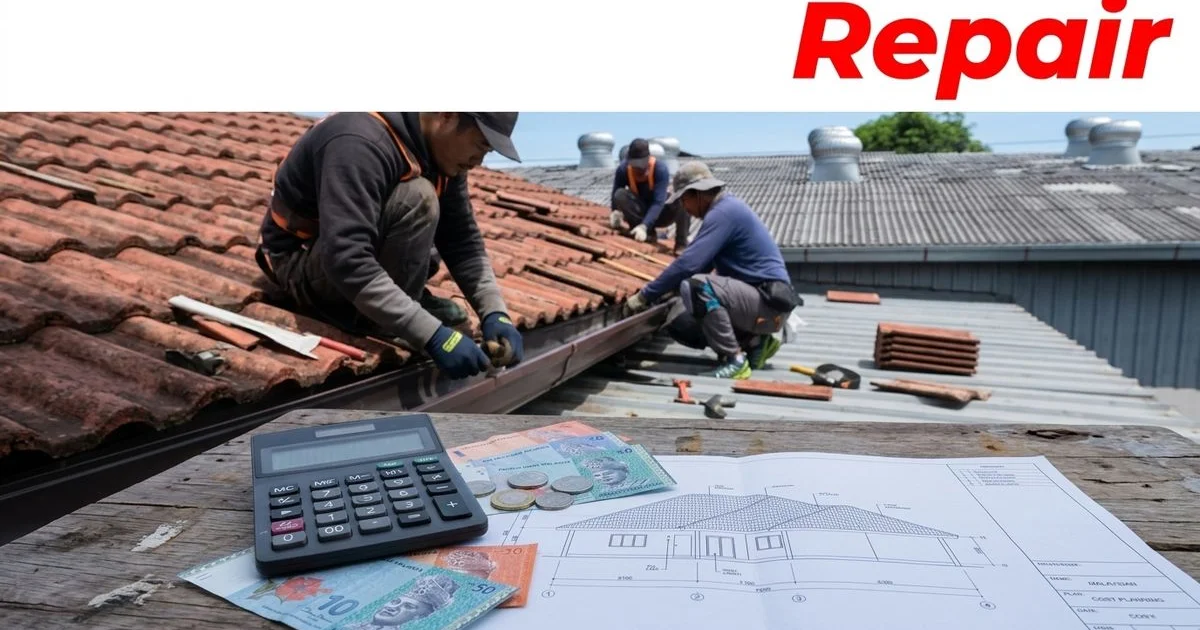
Our pricing data highlights the financial difference between these properties. Urban areas like Kuala Lumpur and Selangor currently see prices running 15% to 20% higher than rural regions.
| Repair Type | Terrace House (RM) | Semi-D (RM) |
|---|---|---|
| Minor tile replacement (5 to 10 tiles) | RM300 to RM800 | RM800 to RM1,500 |
| Ridge capping repair | RM600 to RM1,500 | RM1,000 to RM2,500 |
| Valley gutter repair | Not Applicable | RM1,500 to RM3,500 |
| Flat roof waterproofing | RM2,000 to RM4,000 | RM4,000 to RM8,000 |
| Full re-roofing | RM5,000 to RM14,000 | RM25,000 to RM45,000 |
Timeline
We complete moderate terrace house repairs in just one to three days. Major restorations or full re-roofing on a terrace takes about five to seven days.
Semi-D projects demand a longer commitment from our teams. Moderate valley or ridge work takes two to five days to finish properly. We schedule between seven and fourteen days for comprehensive re-roofing due to the intricate architectural lines.
Special Considerations for Each Property Type
For Terrace House Owners
- Coordinate with your neighbors: Party wall issues fall under shared responsibility. Communicate clearly before work begins and discuss splitting the repair costs.
- Address back extensions immediately: Flat concrete roofs at the rear are your biggest liability. Proper concrete slab waterproofing prevents the most common leaks we encounter in terrace layouts.
- Verify local council permits: Previous owners often modify roofs without authorization. You must ensure any structural changes hold official approval from your local PBT council.
For Semi-D Owners
- Prioritize valley maintenance: Schedule a professional inspection and cleaning before the monsoon season hits. Clearing debris from valleys prevents massive water overflow into your ceiling cavity.
- Upgrade to metal materials: We strongly suggest replacing heavy tiles with premium metal deck roofing like BlueScope Colorbond or Zincalume. Colorbond offers over 20 colors and excellent heat reflection, while Zincalume provides a highly durable, budget-friendly alternative.
- Invest in annual inspections: A large roof hides small defects until they become disasters. Spending RM300 to RM500 on a detailed annual inspection saves thousands in emergency restorations.
Choosing the Right Contractor for Your Property Type
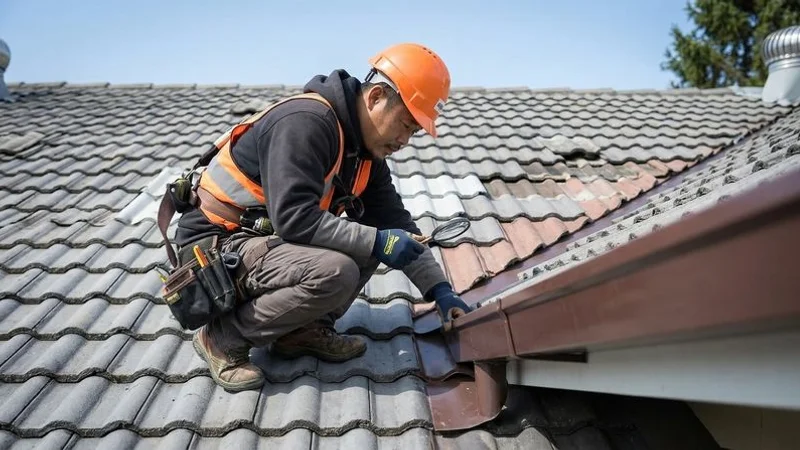
Our industry experience shows that not all contractors handle both property types effectively. You must verify their specific expertise before signing any agreements.
We advise asking potential hires about their approach to your home’s unique layout. A reliable professional will gladly provide specific details to protect your investment:
- Relevant portfolio examples: Ask to see completed work on your exact property type.
- Specific warranty terms: Secure a written agreement offering at least 30 days of coverage for minor leak repairs and up to two years for comprehensive waterproofing.
- Safety compliance: Always verify that they carry adequate insurance for high-rise residential scaffolding setups.
We know that ignoring a small water stain always leads to structural damage. When dealing with Roof Repair for Terrace Houses vs Semi-D: What matters most is taking immediate action to protect your family and preserve your property value.
Our teams are ready to restore the safety and integrity of your home.
Reach out to a certified roof repair specialist today to schedule your comprehensive site assessment.
Farah Hassan
Technical Writer & Project Coordinator
Technical writer and project coordinator specialising in roofing education.