Why Structural Inspections Matter
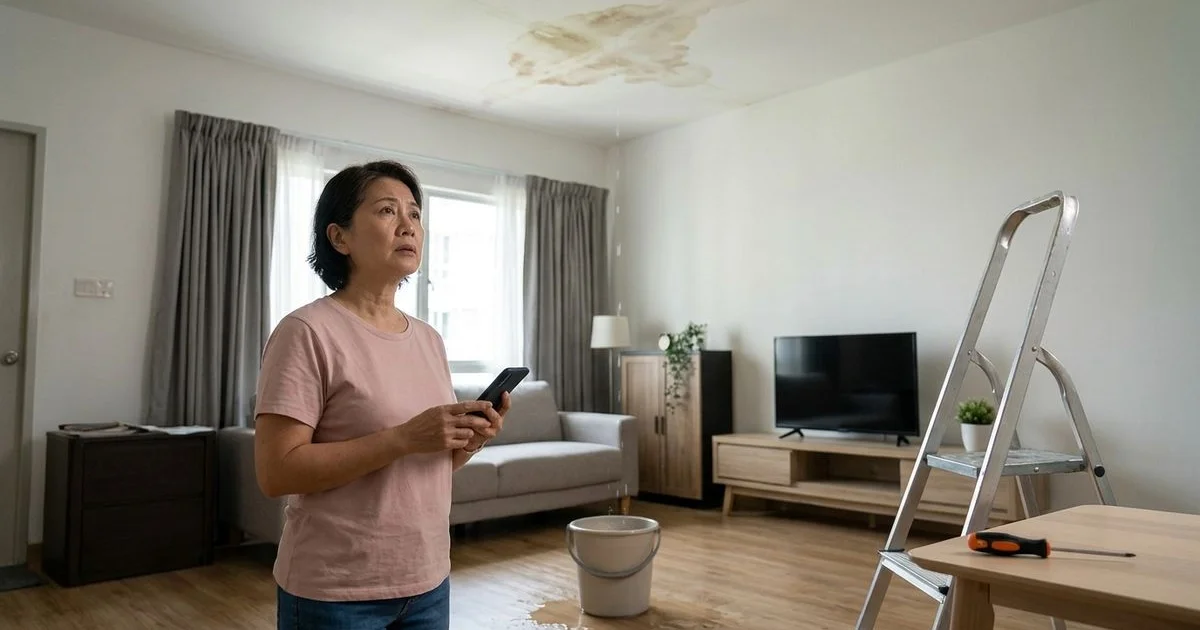
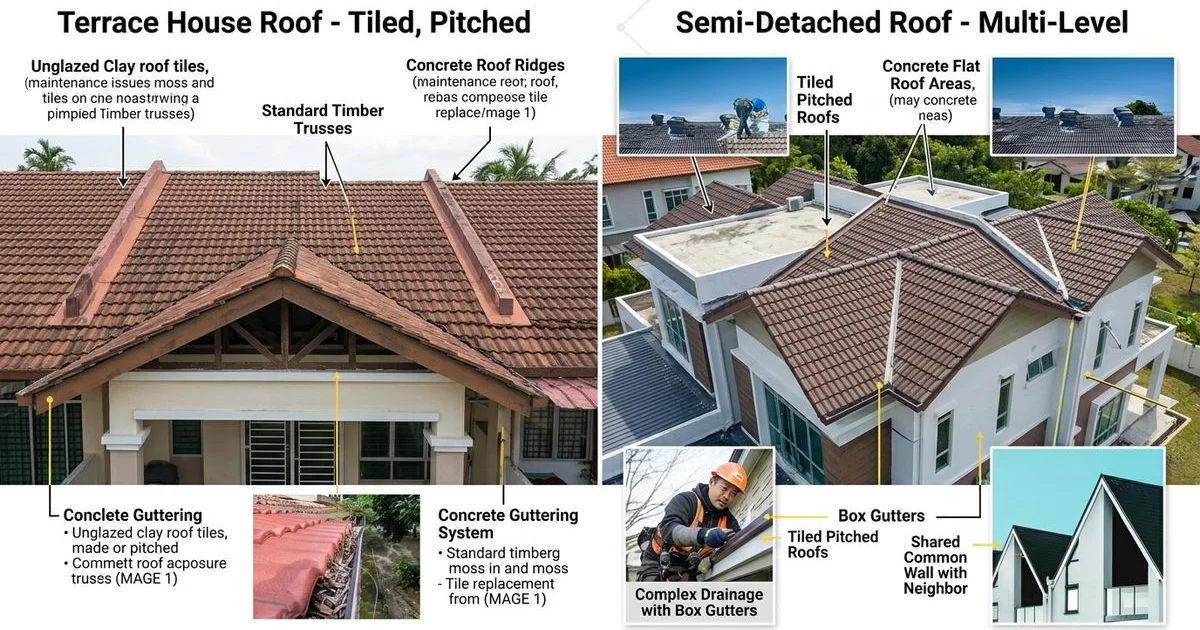
We constantly see property owners focusing entirely on the outer layer of their roofs. The common assumption is that intact tiles mean a perfectly secure system. A standard roof batten and truss inspection reveals the true health of your building.
Our team knows the hidden framework beneath those tiles holds the real vulnerabilities.
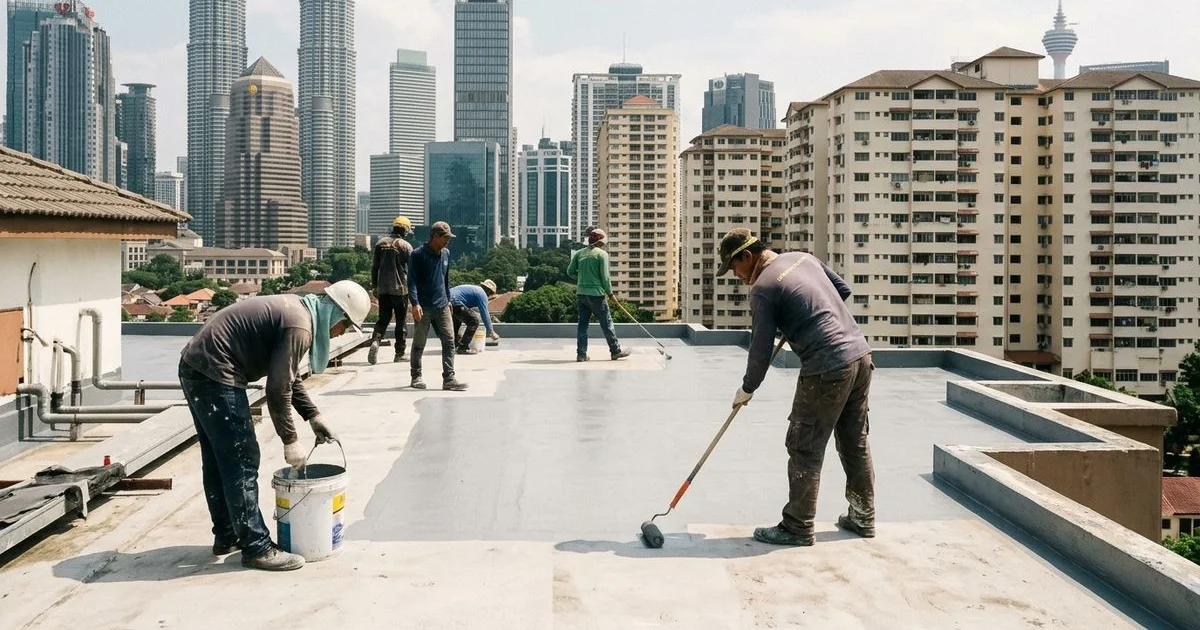
Minor structural issues quickly render premium membranes completely useless. Buildings in Malaysia face a daily battle against brutal UV exposure and heavy monsoon rainfall. We always prioritize checking for the aggressive termite colonies that seek out damp timber.
Catching these problems early stops minor wear from escalating into an expensive emergency. Our experts will now break down exactly what licensed contractors evaluate during a thorough assessment. Let us explore the specific details that professional roofers check to keep your property safe.
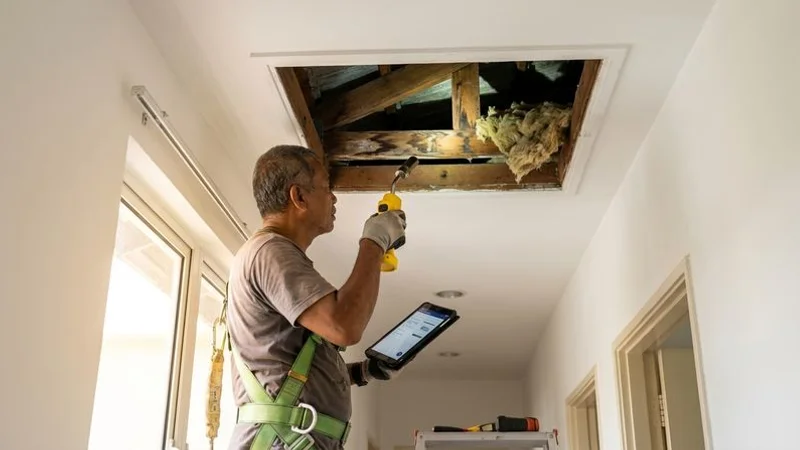
We find that many property managers vastly underestimate the forces acting upon their building’s uppermost framework. The battens and trusses supporting your concrete or clay tiles form the most critical components of your entire roofing system. Without solid support, expensive roof waterproofing membranes simply fail.
Our regional climate places immense stress on these timber components. Malaysian roofs endure intense UV exposure, relentless monsoon rains, and consistently high humidity.
We frequently encounter catastrophic damage caused by the Coptotermes gestroi termite. This specific subterranean species is responsible for over 80% of termite infestations in Malaysian buildings. Regular structural inspections catch these aggressive pests at an early stage.
A professional assessment identifies vulnerabilities while they are still affordable to fix. We want to help you avoid letting minor decay escalate into a structural emergency.
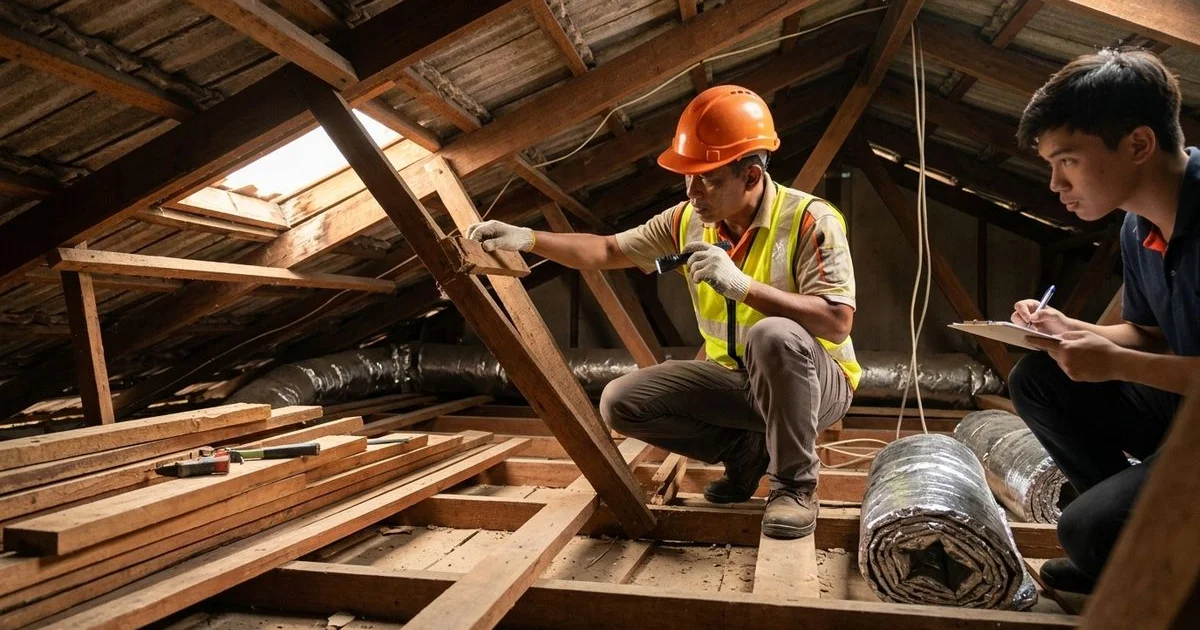
Truss Inspection: What Gets Checked
We examine the main load-bearing framework first. Structural integrity depends entirely on the condition of your heavy timber pieces.
1. Complete Geometry and Alignment
We start by assessing whether the trusses sit in their correct positions to maintain the intended roof shape. Trusses that shift out of place compromise the entire structural integrity of the property.
Our contractors specifically look for the following alignment factors:
- Plumbness: Are the vertical members standing perfectly straight, or have they tilted?
- Spacing consistency: Malaysian residential standards typically require 600mm or 900mm centres between trusses.
- Ridge alignment: The apex of all trusses must form a straight, level line.
- Sag or deflection: Visible bowing in the bottom chord indicates potential overloading.
Even a few millimetres of truss movement creates severe functional problems. Misaligned timber disrupts tile placement, ruins flashing performance, and impedes proper water drainage.
2. Timber Condition
Our team physically checks every accessible truss member for material degradation. Timber defects often hide beneath the surface, requiring hands-on evaluation.
We look closely for these specific issues:
- Termite damage: We probe the timber with a screwdriver to detect hollowed-out sections caused by Coptotermes gestroi.
- Rot and decay: Moisture heavily affects joints and wall plate connections.
- Splitting or cracking: Natural shrinkage frequently causes splits in common tropical hardwoods.
- Staining: Water marks clearly indicate past or active leaks that soften the wood.
Structural stability relies heavily on the heel joint where the truss meets the wall and the peak apex. We pay extremely close attention to these critical load points during every evaluation.
3. Connection Integrity
Our modern roofing installations rely on galvanised nail plates to connect timber members at the joints. Older properties might feature traditional carpentry joints or bolted connections.
We carefully inspect these connection methods:
- Nail plate condition: High local humidity causes ungalvanised plates to rust or separate from the wood.
- Bolt tightness: Timber shrinkage naturally loosens bolted connections over time.
- Bracket condition: Steel straps at critical load points must remain completely rigid.
- Wall plate anchorage: Trusses require secure fixation to the wall plate below.
Perfectly sound timber fails completely due to corroded joint connectors. Our team knows these metal connections are what allow the individual pieces of wood to function as an engineered system.
4. Bracing
Our inspectors evaluate the bracing systems that prevent the entire roof structure from twisting sideways. Missing bracing is one of the most frequent defects found during Malaysian property evaluations.
We verify the presence and condition of the following elements:
- Longitudinal bracing: Continuous timber running along the roof length to connect multiple trusses.
- Diagonal bracing: Angled supports that stop lateral movement.
- Bracing fixings: Secure nails securing the bracing to each truss member.
- Wind bracing: Essential reinforcements designed to withstand local wind loads.
Design standards reference the Malaysian Standard MS 1553:2002 for wind loading. This code accounts for basic wind speeds up to 33.5 meters per second in specific zones, making adequate wind bracing absolutely essential. Homeowners often mistakenly remove these vital supports during renovations or wiring installations.
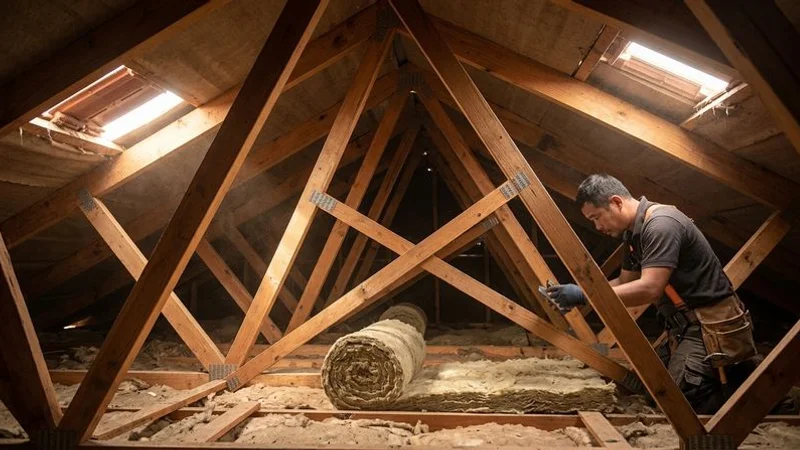
Batten Inspection: What Gets Checked
Roof battens are the horizontal pieces of timber sitting directly on top of the trusses to hold the tiles. We find that their smaller cross-section makes them highly vulnerable to rapid deterioration.
1. Batten Spacing and Size
Our specialists verify the precise physical dimensions of the batten layout. Correct sizing ensures the tiles overlap securely without leaving gaps for water entry.
We check for these specific parameters:
- Correctly spaced: Heavy concrete profiles like the BMI Monier Perspective Mineral series require precise batten spacing, typically between 320mm and 345mm.
- Adequate size: Standard battens for Malaysian concrete tile roofs usually measure 38mm x 38mm or 50mm x 25mm.
- Running straight: Warped battens create uneven tile lines and major functional drainage problems.
Undersized battens often sag under the immense weight of concrete tiles. We frequently replace damaged roof tiles and batten sections that fail to support heavy modern roofing materials.
2. Batten Condition
Our physical inspection covers every visible batten run across the roof cavity. Water penetrating the tile layer drips directly onto these horizontal wooden beams.
We evaluate the battens for several common threats:
- Rot: Persistent moisture quickly degrades the structural strength of the wood.
- Termite attack: Pests frequently target the smaller battens before eating into the larger truss components.
- Nail corrosion: Fasteners holding the battens can rust heavily in tropical humidity.
- Sagging: Dipping sections indicate weakened timber or overloaded roofing materials.
- Fungal growth: Dark mould signals severe, ongoing ventilation issues.
Moisture tends to pool along the top edges of the timber framework. Our technicians always check these vulnerable upper surfaces first.
3. Batten-to-Truss Connection
Our team assesses how the battens attach to the trusses to confirm adequate wind resistance. Strong uplift forces during monsoon storms can easily rip tiles and battens completely off the roof.
We focus on the quality of these connections:
- Nail type and condition: We require galvanised nails, as plain steel fasteners rust rapidly.
- Number of nails per connection: Each intersection needs at least one secure nail.
- Nail pull-out: Fasteners that have backed out lose their holding strength entirely.
Fasteners that have backed out lose their holding strength entirely. We follow strict wind loading requirements to ensure these connections survive extreme weather events.
Additional Inspection Points
A comprehensive evaluation extends beyond the basic timber components. We always factor in environmental and external variables that impact your framework.
Roof Cavity Ventilation
Our inspections include a thorough check of the airflow systems within the roof space. Proper ventilation prevents the severe moisture buildup that accelerates timber rot.
We ensure these components function correctly:
- Eave vents: The soffit vents must remain open and completely unblocked.
- Ridge ventilation: Hot air needs a clear pathway to escape at the roof peak.
- Insulation placement: Thermal barriers must never obstruct the critical airflow channels.
Record-breaking surface temperatures across Malaysia in 2025 regularly pushed poorly ventilated roof cavity heat well beyond 45 degrees Celsius. This trapped heat cooks the timber, causing rapid shrinkage and structural warping.
Evidence of Previous Repairs
Our contractors document any visible signs of past modification work. Understanding a building’s repair history helps predict future maintenance requirements.
We look for these telltale signs:
- Added timber: Sistered joists indicate localized damage from the past.
- Replaced battens: Fresh wood among older timber points to targeted leak repairs.
- Temporary supports: Leftover props suggest an unresolved structural weakness from a previous contractor.
- Pest treatment evidence: Drill holes reveal previous battles with termite infestations.
Leftover props suggest an unresolved structural weakness from a previous contractor. We use this information to determine if the root cause of the original damage was actually fixed.
Load Assessment
Our final structural check evaluates the weight currently resting on the roof framework. Many structures carry modern additions that the original architect never accounted for.
We look for these common heavy additions:
- Water tanks: Large polyethylene or stainless steel tanks placed without proper load distribution platforms.
- Solar panels: Popular additions in Kuala Lumpur that add roughly 20 kilograms per square metre of extra weight.
- Air conditioning units: Heavy outdoor compressor units mounted directly onto the roof structure.
- Storage: Boxes and personal items stashed randomly across the fragile ceiling joists.
Localized overloading easily causes individual battens and trusses to snap. We strictly warn clients about the dangers of placing heavy items on fragile ceiling joists.
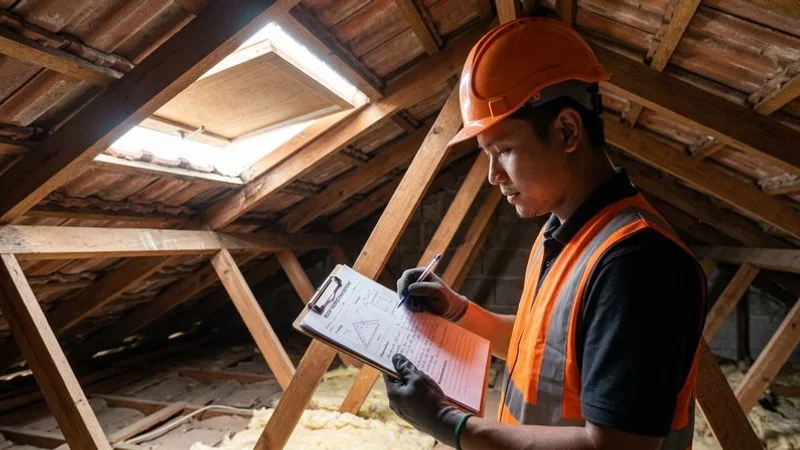
The Inspection Report
Our detailed assessments conclude with a comprehensive written document detailing the exact health of your roof. This report provides the hard data needed to make smart maintenance decisions.
We typically include these crucial elements in accordance with industry best practices:
- General condition rating: We grade the structure as good, fair, poor, or critical.
- Photographic evidence: High-resolution images of any defects or specific areas of concern.
- Detailed findings: A clear breakdown of the condition for each inspected truss and batten section.
- Prioritized recommendations: We rank required fixes by immediate, short-term, and long-term needs.
- Estimated costs: Accurate pricing for all recommended repair work.
- Follow-up schedule: Clear guidance on when the next routine check should occur.
These reports serve as valuable reference documents for insurance claims or future property sales.
When Should You Get an Inspection?
We recommend a proactive approach to structural roof maintenance. The intense Malaysian climate degrades building materials much faster than in temperate regions.
We suggest following this standard evaluation schedule:
| Situation | Recommended Inspection Frequency |
|---|---|
| Standard property maintenance | Every 3 to 5 years |
| After severe monsoon storms | Within 1 to 2 weeks |
| Before purchasing real estate | Mandatory part of due diligence |
| Following termite treatments | Immediately, then again at 6 months |
| Roof systems over 20 years old | Every 2 to 3 years |
| Before adding solar panels | Prior to finalizing the installation |
| After major ceiling renovations | Before and after the construction work |
A professional roof truss inspection is a very small investment that prevents catastrophic financial surprises later on. We strongly encourage scheduling an assessment right now if you have absolutely no record of your last structural check.
Invest in Knowledge, Not Just Repairs
Our goal is to give property owners the data they need to protect their investments proactively. Understanding the precise condition of the framework above your ceiling eliminates the stressful guesswork of building maintenance.
We want you to budget wisely and sleep soundly during heavy storms. Take action before a minor leak becomes a major structural failure requiring expensive roof repair.
We encourage you to schedule your structural assessment today and secure the long-term safety of your property.

Razif Ibrahim
Licensed Roofing Contractor
Lead roofing contractor with 20+ years of experience serving the Klang Valley.