The Monsoon Gutter Problem Every Malaysian Homeowner Faces
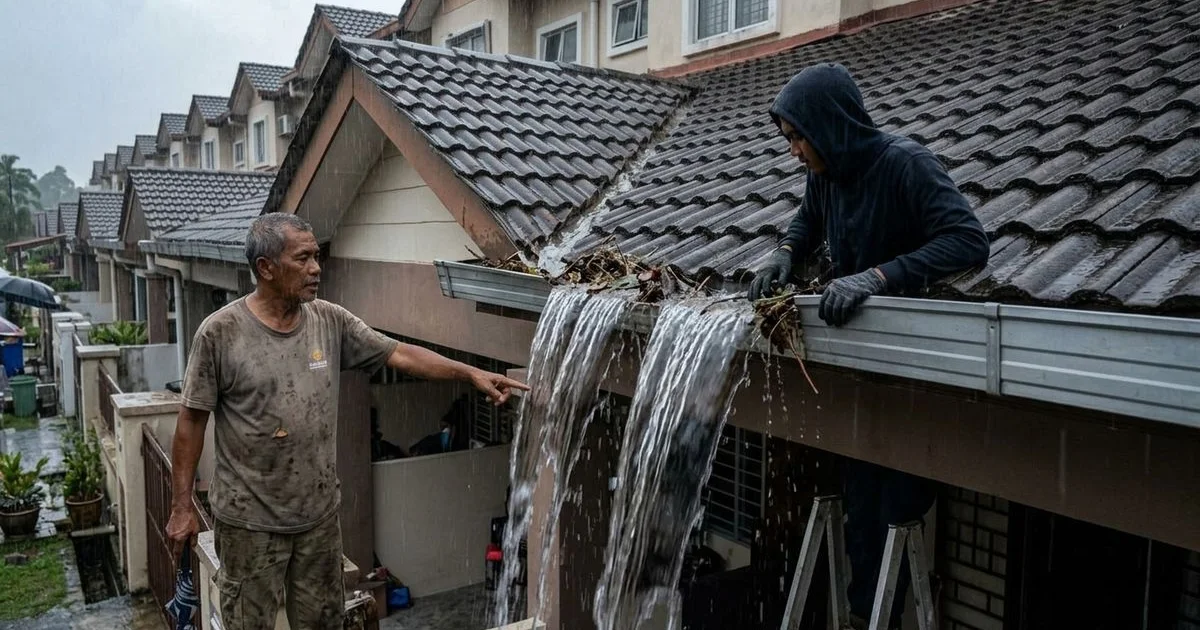
We have all watched that familiar cascade of water spilling over the roofline during a heavy downpour. It is a common sight across the Klang Valley between October and March. Our teams have inspected hundreds of properties where these drainage systems fail during the Northeast Monsoon.
The Malaysian Meteorological Department frequently predicts five to seven episodes of continuous heavy rain per season. We know this intense volume turns a small blockage into a major leaking roof issue. Consider the data, what it tells us, and how to fix the issue permanently.
1. Debris Accumulation and Blockages
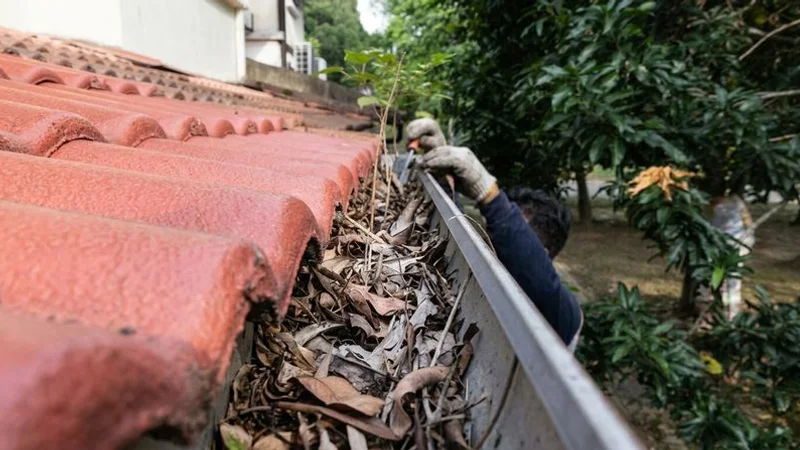
Organic matter builds up rapidly in our tropical environment. We consistently extract huge volumes of fallen leaves, seed pods, and even bat droppings from residential rooflines. Heavy shedding from common street trees like the Angsana makes this problem worse. Our technicians find that all this material accumulates at downpipe entries and bends.
A partially blocked channel can handle light rain but overflows instantly during heavy downpours. We see fully blocked channels become troughs of standing water that eventually spill over both sides.
Water ponding in these blockages also creates an ideal breeding ground for Aedes mosquitoes. Our primary recommendation is to clear the setup before the rainy season begins.
What to do:
- Schedule gutter cleaning at least twice a year, ideally before the monsoon starts in October and again in January
- Install aluminium or TPE gutter guards to reduce debris entry significantly
- Trim overhanging tree branches within two metres of your roofline
- Consider professional rain gutter services for thorough cleaning and inspection
2. Incorrect Gutter Slope
Gutters must be installed with a slight gradient so that water flows steadily towards the downpipe outlets. We strictly follow the Uniform Building By-Laws (UBBL) principles, which recommend a minimum fall of 1:500. This equates to a slope of about 2 to 3 millimetres per metre of length. Our daily site visits often reveal older systems where this gradient has flattened over time.
Water pools in flat sections instead of draining away. We know this standing water adds immense weight to the metal, causing brackets to sag further and worsening the issue. A setup with a poor gradient simply cannot move water fast enough during monsoon intensity. Our clients often mistake this specific overflow problem for an undersized pipe.
Signs of slope problems:
- Water standing in sections long after rain has stopped
- Visible sagging between the mounting brackets
- Overflow occurring at specific low points rather than the entire length
- Green algae or moss growth inside the channel
What to do:
- Have a professional realign the brackets with the correct 3mm per metre fall
- Add or replace sagging brackets to support the water weight
- Reinstall the entire system with a proper gradient from the start in severe cases
3. Undersized Gutters and Downpipes
Malaysian properties built between the 1970s and 1990s feature configurations sized for moderate rainfall. We frequently replace these standard half-round profiles because modern monsoon events easily exceed their capacity. A typical five-minute critical storm in the Klang Valley delivers massive water volumes. Our calculations show a standard terrace house roof can channel over 6 litres per second into the drainage channel.
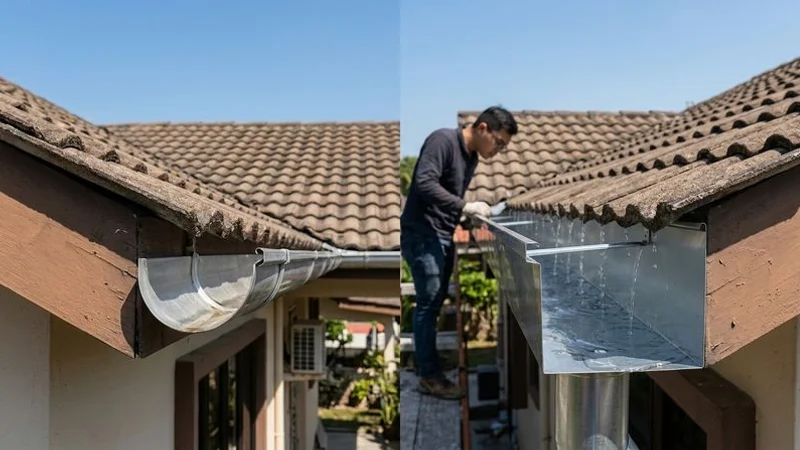
The traditional half-round shape handles approximately 3.5 litres per second. We advise property owners that this leaves nearly double the capacity unaccounted for during peak downpours. Upgrading the profile shape is often the most effective solution. Our experts recommend square-line profiles because a rectangular cross-section instantly provides about 10 percent more capacity.
Comparing Gutter Profiles
| Gutter Profile | Average Capacity | Best Use Case |
|---|---|---|
| Traditional Half-Round | ~3.5 litres/second | Older terrace houses, light rain areas |
| K-Style / Square-Line | ~5.0 litres/second | Modern residential properties |
| Custom Box Gutter | 6.0+ litres/second | Commercial buildings, complex rooflines |
What to do:
- Upgrade to larger square-line or deep-flow profiles
- Add extra downpipes to reduce the distance water must travel
- Consider seamless aluminium fabricated to suit your exact roof dimensions
- Consult a rain gutter services specialist to calculate the correct size using local ARI (Average Recurrence Interval) rainfall data
4. Damaged or Corroded Gutter Sections
Constant moisture exposure naturally degrades building materials over time. We see severe corrosion on galvanised steel and zinc setups across older neighbourhoods, often leading to clogged and leaking gutters. MetMalaysia data confirms that urban rainwater often drops to a pH of 4.4 or below, classifying it as acid rain. Our teams constantly patch holes created by this slightly acidic tropical rain.
These weak spots allow water to leak straight through rather than flowing to the downpipes. We prefer replacing these failing metals with modern materials that offer longer lifespans. Unplasticized Polyvinyl Chloride (UPVC) variants typically last 10 to 15 years in direct sun. Our highest recommendation is aluminium, which resists rust and performs reliably for 20 to 25 years.
Signs of severe damage:
- Visible rust patches or holes in metal surfaces
- Cracks or splits in UPVC joints
- Water dripping from the body rather than spilling over the top edge
- Stains on walls directly below the connecting joints
What to do:
- Patch small holes with high-temperature silicone sealant as a temporary fix
- Replace corroded sections with upgraded UPVC or aluminium
- Reseal all joints with weather-resistant sealants
- Invest in a full replacement if the existing material is heavily rusted
5. Roof Design and Valley Concentration
Complex roof designs create natural concentration points where large volumes of water converge. We regularly identify overflow issues at roof valleys, hip intersections, and extension junctions. These specific trouble spots deliver water at rates that overwhelm standard capacities during intense rain. Our installers solve this by integrating custom drainage features.
Common problem areas:
- Valley sections where two steep roof planes meet
- The junction between a main building and a lower extension
- Inside corners of L-shaped or U-shaped floor plans
- Areas directly below dormer windows
What to do:
- Install larger internal box variants for high-volume areas
- Add splash guards at valley discharge points to prevent water from overshooting
- Place an additional downpipe directly beneath heavy concentration zones
- Ensure valley flashings properly direct flow straight down into the channel
Preventing Monsoon Gutter Overflow: A Practical Checklist
Taking proactive steps before November arrives is always less expensive than dealing with indoor water damage. We provide this practical pre-monsoon checklist to keep your property safe. Routine cleaning might cost between RM100 and RM200, whereas foundation repairs run into the thousands. Our clients save significant money by performing these basic checks annually.
- Clean all channels and downpipes thoroughly to remove organic debris
- Flush the system with a garden hose to confirm water flows freely
- Check all joints and seals for signs of leakage or separation
- Inspect brackets for rust, looseness, or severe sagging
- Test the gradient by pouring water at the highest point and watching it travel
- Examine ground-level connections to ensure drainage flows away from the foundation
- Trim vegetation overhanging the roofline by at least two metres
When to Call a Professional
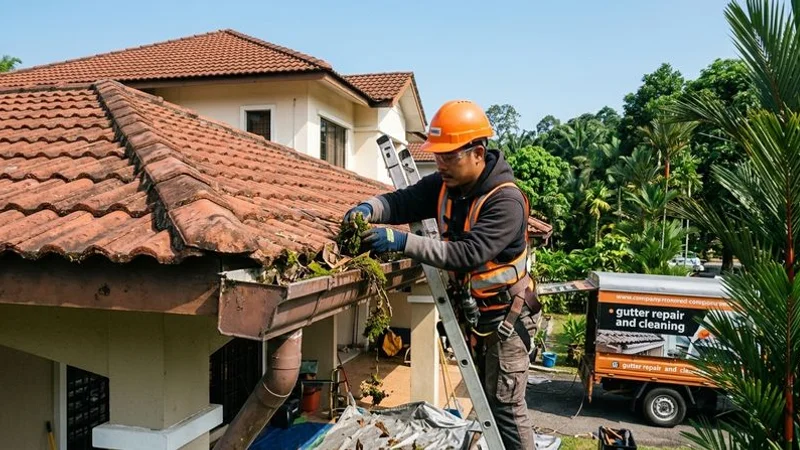
Basic clearing is a task some homeowners comfortably tackle themselves on a single-storey porch. We highly advise bringing in professionals for anything requiring tall ladders. Working at heights above three metres carries significant safety risks without proper fall arrest equipment. Our certified technicians carry the right tools to diagnose complex structural issues safely.
Situations requiring expert help:
- Multi-storey properties where ladder access is dangerous
- Systems that spill over despite being completely clean, indicating slope or sizing faults
- Visible structural damage to the fascia board
- Persistent leaks at joints that basic sealant cannot fix
- Planning a permanent upgrade to a seamless aluminium system
Do Not Wait for the Monsoon to Reveal the Problem
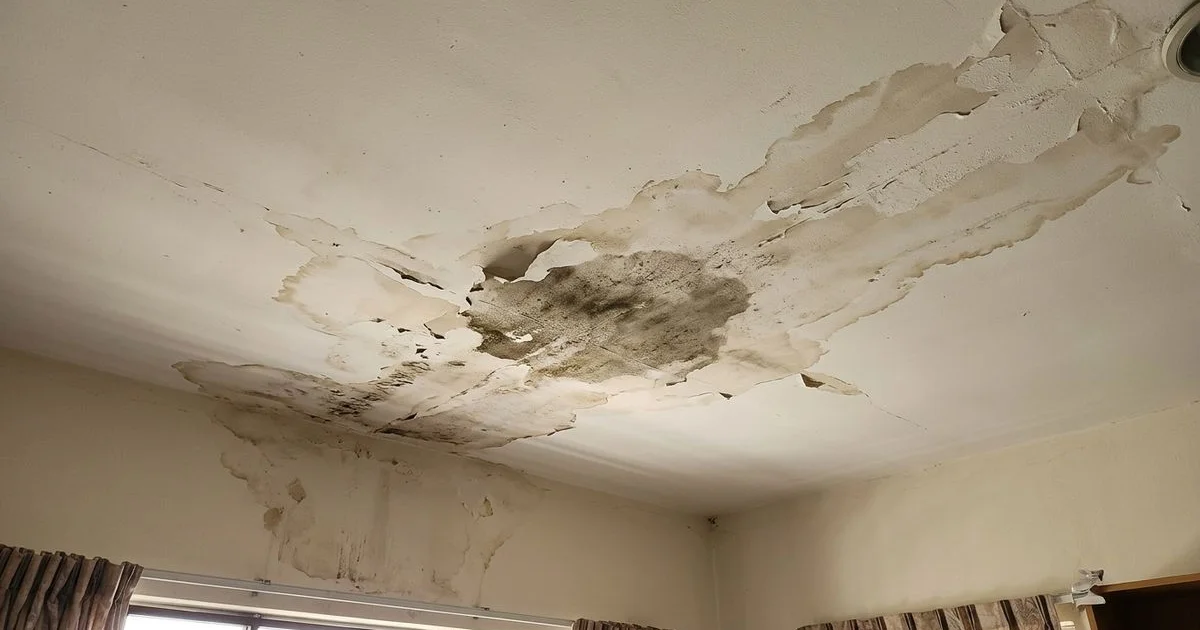
Overflowing water causes severe complications, including stained walls, eroded foundations, and rapid mould growth. We have seen minor drips escalate into expensive structural damage in just one season. Addressing these vulnerabilities right now is a smart home maintenance investment. Our final piece of advice is to act before the heavy rains begin.
Take action today to protect your property. Inspect your roofline this weekend and call a local specialist if you spot any warning signs.

Farah Hassan
Technical Writer & Project Coordinator
Technical writer and project coordinator specialising in roofing education.