We constantly see facility managers and homeowners battling the intense Malaysian climate, trying to stop persistent roof leaks.
If you are weighing Metal Deck vs Clay Tiles: Best Roofing Material for Malaysia, your roof replacement choice often dictates whether you will face another repair bill next monsoon season.
Our service teams handle these two materials across the Klang Valley daily, witnessing exactly how they perform over decades.
Let’s review the hard data, compare the real-world costs for 2026, and pinpoint the perfect roofing solution for your specific property.
Understanding Each Material
Metal Deck Roofing
We install thousands of square feet of metal deck annually, and the manufacturing technology has advanced significantly.
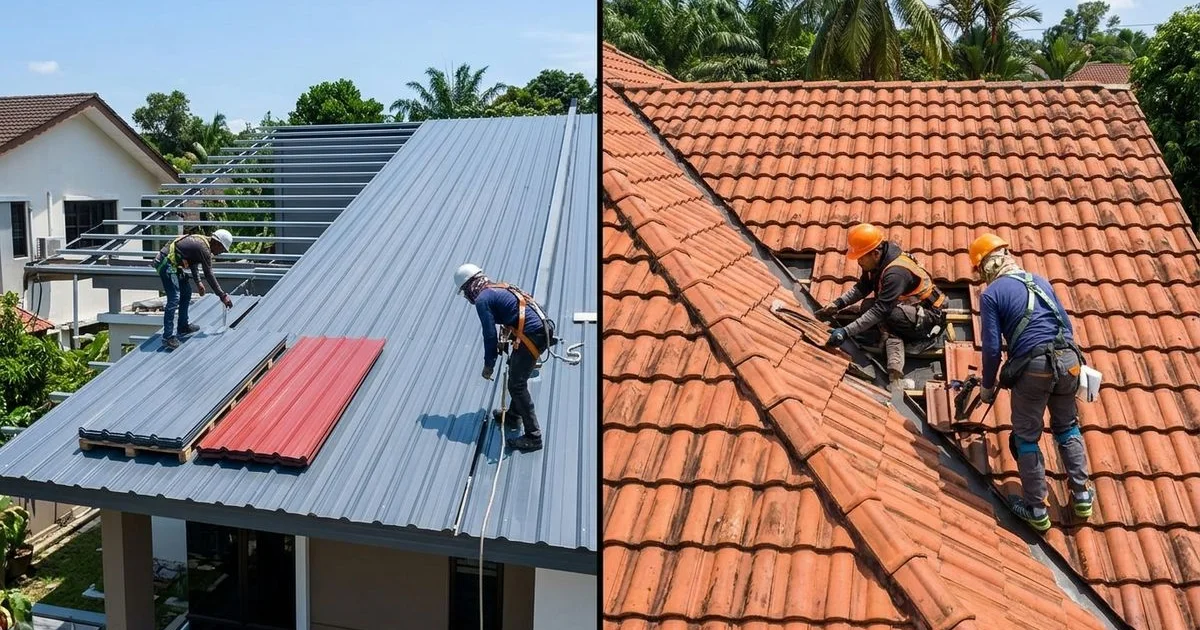
Profiled steel sheets coated with zinc-aluminium alloys, like BlueScope’s Zincalume or baked-on Colorbond finishes, dominate modern Malaysian developments as part of metal deck roofing systems.
Our clients often prefer this material for residential use because of its lightweight nature and rapid installation timeline.
The continuous long-span sheets run from the ridge to the eave without horizontal joints, secured firmly with self-drilling screws.
We highly recommend concealed fastener systems, often called clip-lock profiles, to eliminate exposed screw holes entirely.
Clay Tiles
Clay tiles offer a completely different structural approach, manufactured from natural clay that is fired in kilns at extreme temperatures.
Our restoration projects frequently involve these traditional tiles, particularly on colonial-era architecture where visual appeal is paramount.
Leading brands in Malaysia, such as BMI Monier, offer modern profiles ranging from flat interlocking designs to classic S-Pantile shapes.
We must evaluate your roof framing carefully, as these heavy tiles require a much stronger supporting timber or steel structure.
A minimum roof pitch of 20 degrees is strictly required to prevent water from blowing upward under the tiles during heavy thunderstorms.
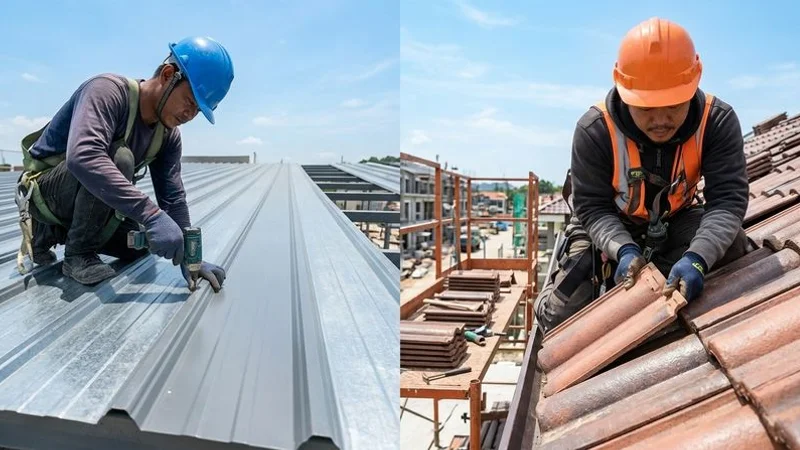
Head-to-Head Comparison Table
| Feature | Metal Deck | Clay Tiles |
|---|---|---|
| Lifespan | 20 to 36 years (Colorbond) | 50+ years |
| Weight | 5 to 7 kg per sq m | 40 to 60 kg per sq m |
| Complete Replacement Cost | RM 25 to RM 40 per sq ft | RM 40 to RM 80 per sq ft |
| Thermal performance | Conducts heat (needs PU foam) | Natural thermal mass (cooler) |
| Rain noise | Louder (needs Rockwool) | Naturally quiet |
| Minimum roof pitch | 5 degrees (pierced fix) | 20 degrees |
| Structural requirement | Lighter framing | Stronger framing |
Detailed Performance Comparison
Durability and Lifespan
Our maintenance crews notice that budget-grade metal with thinner coatings often shows rust within 10 years, particularly at cut edges.
Metal deck roofing in Malaysia typically lasts 20 to 30 years, but premium options perform much better.
We actively source materials like BlueScope Colorbond, which now offers up to a 36-year warranty against perforation by corrosion in Malaysia.
The primary ageing mechanism is coating degradation, where the protective zinc-aluminium layer thins due to oxidation and acid rain.
We routinely inspect clay roofs that have protected local homes for over 50 years without severe material degradation.
Properly fired clay is virtually impervious to weathering, making it one of the most durable materials on the market.
Thermal Performance
We consider thermal management critical, as roof surface temperatures in Malaysia routinely exceed 60 degrees Celsius.
Uninsulated metal deck acts as a thermal conductor, transmitting heat directly into the living space and forcing air conditioning units to work harder.
Our preferred solution is installing factory-bonded Polyurethane (PU) foam metal sheets, which can reduce indoor ceiling temperatures by up to 5 degrees Celsius.
Other highly effective heat mitigation methods include:
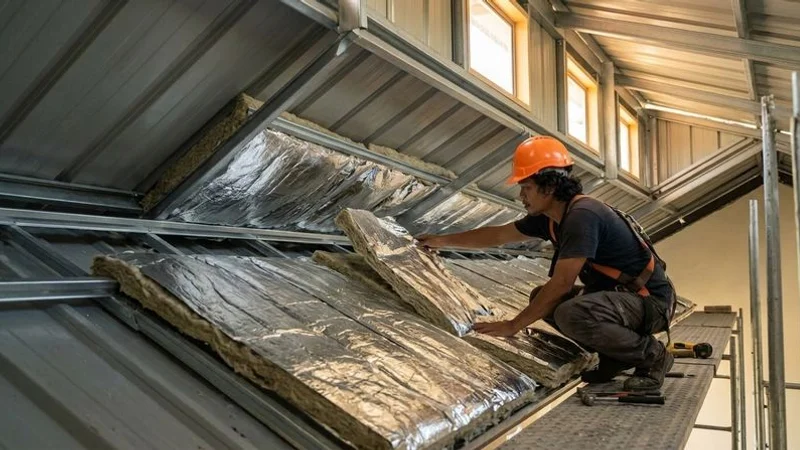
- Adding 50mm Rockwool insulation batts.
- Installing double-sided aluminium radiant barriers.
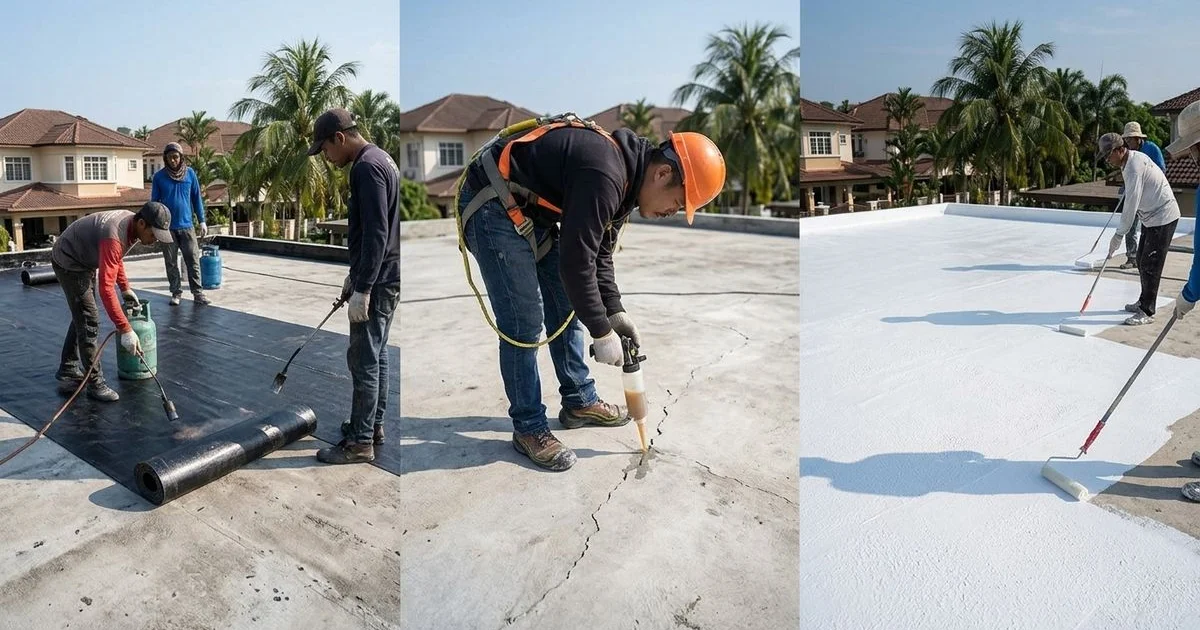
- Applying heat-reflective white elastomeric roof coatings.
We find that clay tiles naturally excel in this category due to their high thermal mass.
They absorb heat slowly throughout the day, keeping the attic space cooler during peak afternoon sun.
Noise Performance
Our residential clients frequently ask about rain noise, a very valid concern during intense tropical downpours.
Thin metal sheets amplify the sound of raindrops, sometimes reaching 70 decibels indoors without proper acoustic dampening.
We install thick acoustic insulation layers to dampen this effect, though metal will always remain slightly louder than masonry options.
Clay tiles naturally absorb sound through their dense mass and the air gap between the tile and the underlay.
We highly recommend clay for homes with upper-floor bedrooms where a perfectly quiet environment is essential.
Installation Speed and Disruption
Time on site varies drastically between these two systems, directly impacting your daily routine.
We can typically replace a standard 1,200-square-foot terrace house metal roof in just two to three days.
Long-span continuous sheets cover large areas rapidly, keeping labor costs down and minimising household disruption.
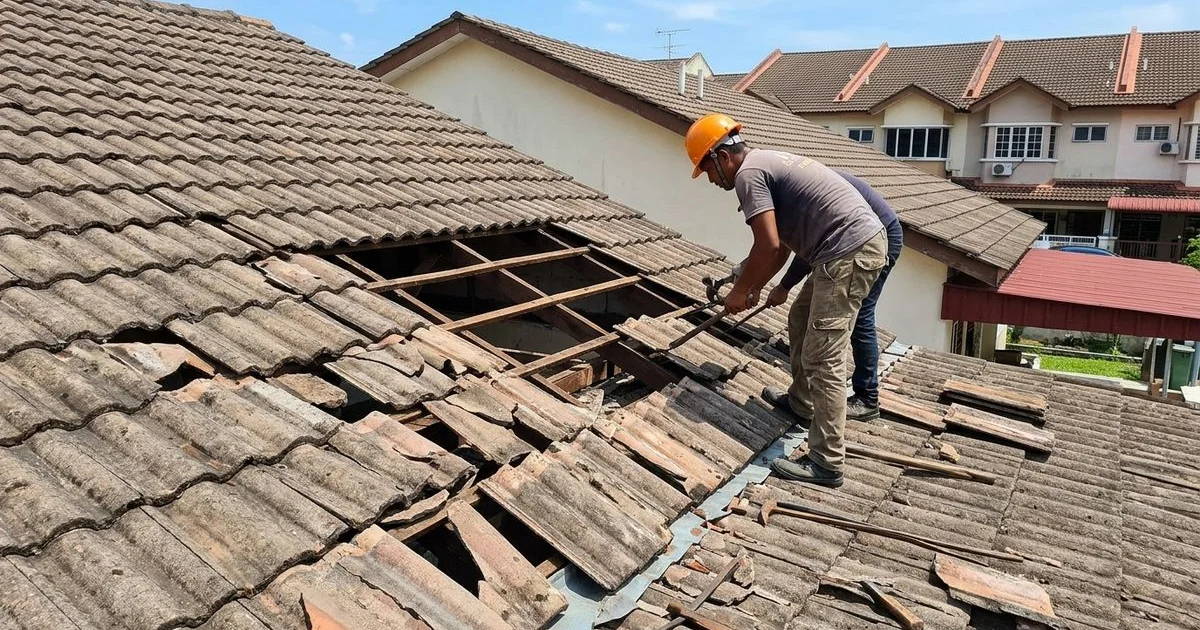
Our installation teams require five to seven days for clay tile projects because each piece must be individually aligned.
The heavier weight also means the supporting timber may need reinforcement, adding further time to the schedule.
Wind and Storm Resistance
We secure metal decks mechanically to the purlins, making them highly resistant to storm winds when the correct screw pattern is applied.
The continuous sheets are locked down tight, though an extreme wind lifting a single edge can expose a large panel area.
Our experience shows that clay tiles resist wind primarily through their heavy weight and interlocking profiles.
Modern fixing systems include hidden clips and wires to secure the perimeter tiles against severe uplifts.
We easily replace the few individual damaged roof tiles that might become dislodged by falling debris without affecting the rest of the roof.
Cost Comparison for 2026
Accurate budgeting requires looking at the total installed cost for a typical 1,200-square-foot double-storey terrace house in the Klang Valley.
Metal Deck (Complete Replacement)
Our estimates for a complete metal installation represent the more budget-conscious approach.
- Premium Materials (Colorbond/Zincalume): RM 9,000 to RM 14,000
- PU Foam or Rockwool Insulation: RM 3,000 to RM 5,000
- Professional Labour and Fixings: RM 6,000 to RM 9,000
- Total Investment: RM 18,000 to RM 28,000
This system provides excellent value for commercial structures or residential flat-roof extensions.
Clay Tiles (Complete Replacement)
We see much higher upfront costs for clay due to the heavy material weight and strict structural demands.
- Premium BMI Monier Clay Tiles: RM 18,000 to RM 26,000
- Heavy-Duty Underlay and Steel Battens: RM 5,000 to RM 8,000
- Professional Labour and Fixing Clips: RM 10,000 to RM 15,000
- Structural Roof Truss Reinforcement: RM 5,000 to RM 10,000
- Total Investment: RM 38,000 to RM 59,000
Clay tile replacement costs roughly 80 to 100 per cent more than metal deck for the exact same property.
We always remind clients that the 50-year lifespan of clay significantly narrows this annualised cost difference over time.
Which Should You Choose?
The right choice depends entirely on your architectural style, specific structural limits, and long-term financial plans.
Choose Metal Deck If:
We strongly advise selecting a modern metal roof if:
- Your renovation budget is strictly capped.
- The existing roof trusses are lightweight timber.
- The property requires a low pitch below 20 degrees.
- Fast installation is a priority to protect exposed interiors.
Choose Clay Tiles If:
Traditional clay remains the superior option if:
- Long-term durability exceeding 40 years is the primary goal.
- Thermal comfort and a cooler attic space are absolute priorities.
- Acoustic dampening during heavy rain is required for bedrooms.
- The property features colonial or heritage architectural elements.
A Third Option: Concrete Tiles
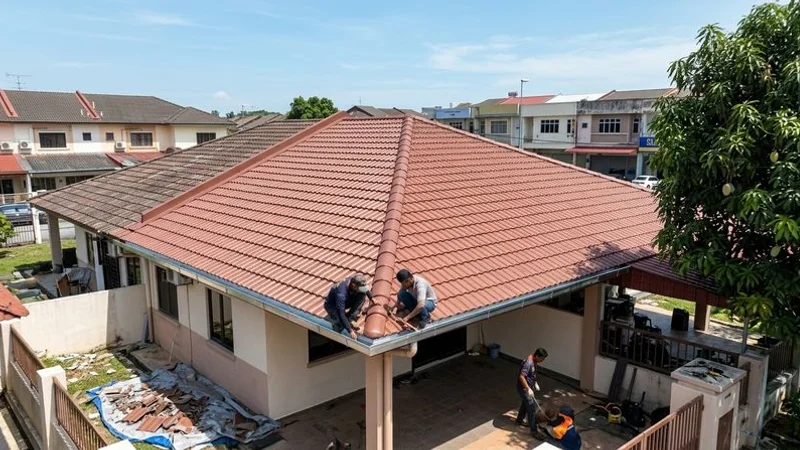
We often install concrete tiles as a highly effective middle ground for suburban homes.
Brands like BMI Monier manufacture durable concrete options that cost less than natural clay while remaining heavier and quieter than metal.
Our crews handle countless roof replacement projects on 1970s terrace houses where concrete tiles serve as the practical, default replacement material.
These heavy tiles offer a solid 25 to 35-year lifespan, making them a very balanced investment for many Malaysian homeowners.
Metal Deck vs Clay Tiles: Best Roofing Material for Malaysia
We know that choosing the right roofing material fundamentally shapes the comfort and safety of your home for decades.
Both metal deck and clay tiles perform exceptionally well in Malaysia’s tropical climate when matched to the correct structural framework.
Our core philosophy is that a well-installed standard roof easily outperforms a poorly installed premium system every single time.
Consult a qualified roof replacement specialist to accurately assess your load-bearing capacity before ordering any materials.
We invite you to contact our team today for a complete structural assessment, ensuring you choose the true Metal Deck vs Clay Tiles: Best Roofing Material for Malaysia for your exact needs.

Farah Hassan
Technical Writer & Project Coordinator
Technical writer and project coordinator specialising in roofing education.