When discussing metal deck rust treatment for industrial buildings, the process and options available can feel overwhelming. Our team has inspected hundreds of industrial facilities across Malaysia. High humidity, heavy rainfall, and intense UV exposure create the perfect storm for accelerated corrosion.
This constant battle against the elements is something every maintenance professional understands.
We know that left unchecked, rust rapidly compromises the structural integrity of these essential structures, transforming minor surface issues into massive operational risks.
A proactive approach to metal deck roofing focuses on early intervention and strategic maintenance. Let us walk you through the real causes of this deterioration and the exact treatment steps our specialists use to halt it.
The Rust Problem on Industrial Metal Deck Roofs
Metal deck roofing serves as the durable backbone for manufacturing plants across the Klang Valley. Our experience shows that these cost-effective structures are highly vulnerable to Malaysia’s punishing tropical climate. High temperatures, salt-laden air, and constant moisture attack the steel components daily.
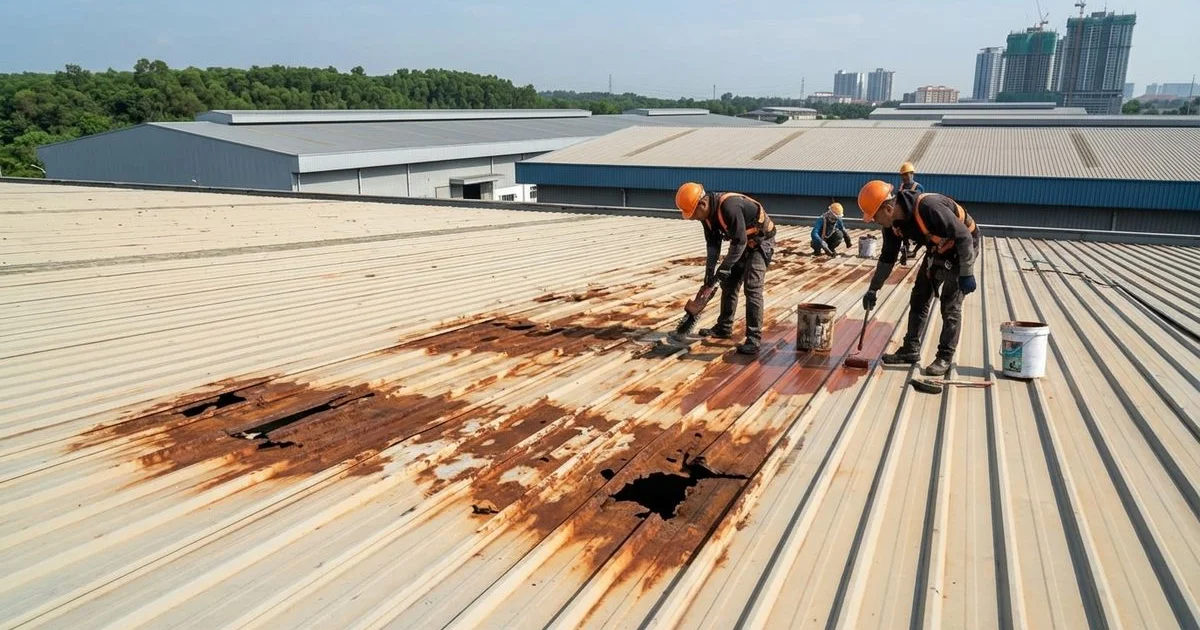
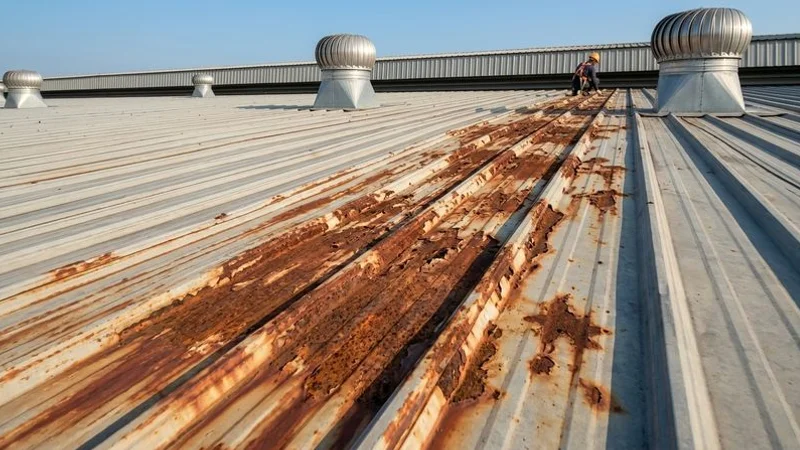
We observe that corrosion is far more than just an ugly cosmetic flaw. Left untreated, rust rapidly eats through the metal sheets to create dangerous leak points that require rusted roof repair. Our maintenance crews often find that these leaks compromise the structural integrity of the entire roofing system.
Protecting the building and the costly operations inside requires a proactive stance. Facility managers must understand the decay process to defend their valuable assets properly.
How Rust Develops on Metal Deck Roofs
Understanding the root causes of corrosion helps prevent expensive recurrence after a repair project. We constantly see a combination of environmental factors and mechanical wear driving this deterioration. Coastal industrial zones like Port Klang face an incredibly aggressive environment due to salt-laden air.
Our inspections in these regions often reveal severe oxidation on standard panels within just five to seven years. Upgrading to specialised materials, like NS BlueScope Malaysia’s COLORBOND ULTRA steel with an AZ200 coating class, becomes a necessity rather than a luxury. We also find that internal operational factors play a massive role in roof decay. Chemical fumes from heavy manufacturing processes settle on the ceiling, silently eating away at the underside coatings.
This unseen damage is worsened by Malaysia’s typical 80 to 90 per cent relative humidity. We know that moisture trapped between layers accelerates the conversion of bare iron into iron oxide. The most common deterioration factors include:
- Scratched or damaged coating: Foot traffic during routine servicing often exposes bare metal to the elements.
- Standing water: Flat or low-slope sections allow rain to pool instead of draining away effectively.
- Chemical exposure: Fumes from heavy manufacturing processes act as a powerful catalyst for oxidation.
- Salt air: Facilities located near the coast suffer from rapid salt-induced degradation.
- Age: Even premium protective coatings naturally degrade after 10 to 15 years of intense sun exposure.
- Condensation: Extreme temperature shifts between the interior and exterior trap moisture underneath the panels.
The Professional Rust Treatment Process
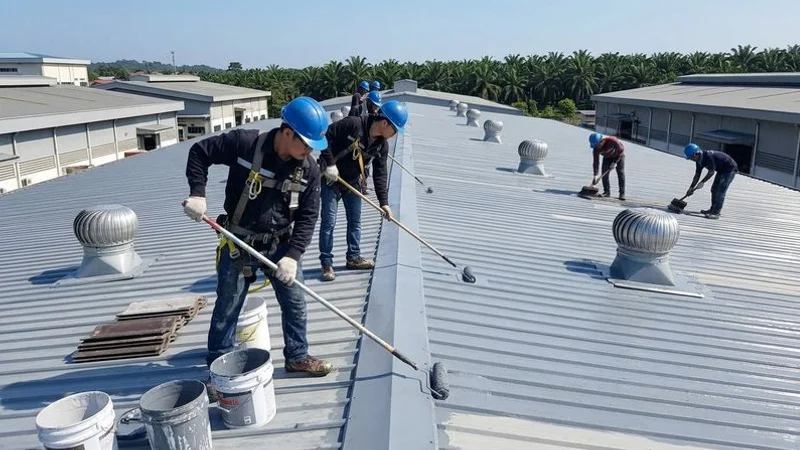
A comprehensive remediation strategy requires a highly systematic approach. Our technicians follow a strict protocol to ensure long-lasting, reliable results. This process prevents premature coating failures and protects your initial investment. We break this down into four essential phases.
Step 1: Assessment and Documentation
Before any physical work begins, a thorough site evaluation is absolutely mandatory. We use advanced diagnostic tools like ultrasonic thickness gauges to measure the remaining healthy steel accurately. This precise data removes the guesswork from our structural recommendations.
Our teams document everything with high-resolution photography and drone footage to map the surface safely. The resulting report details the exact scope of work required. This pre-work assessment clearly identifies:
- The exact ratio of surface rust versus deep structural pitting.
- Specific panels requiring full replacement versus localised treatment.
- The underlying condition of the purlins and structural supports.
- The integrity of existing fixings, screws, and sealant lines.
- Any active leaks demanding immediate emergency patching.
Step 2: Surface Preparation
This phase dictates the absolute success or failure of the entire project. We cannot overstate the importance of proper cleaning before applying any new protective layer. If the substrate remains compromised, the new topcoat will simply peel away within months.
Our specific preparation method depends heavily on the site’s safety restrictions and fire hazards.
- Mechanical wire brushing: Technicians use power wire brushes to clear away light flaking paint and loose debris.
- Abrasive disc grinding: Angle grinders equipped with flap discs effectively strip moderate corrosion right down to the bare metal.
- High-pressure water blasting: Equipment running at 4,000 PSI removes contaminants without generating dangerous sparks.
- Chemical rust converters: Specialised chemical agents neutralise remaining rust spots by turning iron oxide into a stable compound.
Step 3: Primer Application
Once the surface is completely stripped and dried, an industrial primer must seal it immediately. We work quickly because flash rusting can occur in just a few hours in our humid Malaysian climate. The choice of primer directly impacts the longevity of the final protective system.
Our primary application options include:
- Zinc-rich primer: This acts as a sacrificial layer, corroding first to protect the underlying steel base.
- Epoxy primer: The exceptional adhesion and chemical resistance make this perfect for factories with heavy emissions.
- Red oxide primer: This remains a reliable, highly cost-effective baseline choice for standard warehousing spaces.
Step 4: Topcoat Application
The final barrier shields the repaired substrate from brutal UV rays and heavy rainfall. We always recommend a two-coat system for commercial applications to guarantee optimal durability. Many modern topcoats also feature thermal reflective properties to lower internal building temperatures.
Our standard protective finishes include:
- Acrylic roof paint: This budget-friendly option offers basic weather protection lasting roughly 5 to 8 years.
- Polyurethane coating: This premium upgrade delivers superior UV defence and chemical resistance for 8 to 12 years.
- Silicone-based coating: The extreme flexibility of silicone easily accommodates thermal expansion and contraction without cracking.
- Elastomeric coating: This thick, rubberised barrier bridges small gaps and provides exceptional waterproofing alongside corrosion defence.
Treatment Options Compared
Financial planning requires clear data on expected costs and lifespans. We track current market rates to help facility managers budget accurately for 2026. These standard figures represent typical baseline pricing across the industry.
Our clients find this side-by-side comparison incredibly helpful for clear decision-making. Complex site logistics or steep roof pitches can increase the final labour costs by RM2 to RM4 per square foot.
| Treatment Strategy | Estimated Cost (per sq ft) | Expected Lifespan | Best Application Scenario |
|---|---|---|---|
| Spot treatment + acrylic | RM2 to RM4 | 3 to 5 years | Minor localised rust or tight maintenance budgets |
| Full treatment + PU coating | RM5 to RM9 | 8 to 12 years | Moderate corrosion on standard factory units |
| Full treatment + elastomeric | RM7 to RM12 | 10 to 15 years | Heavy corrosion and highly exposed coastal areas |
| Panel replacement + coating | RM12 to RM25+ | 15 to 25 years | Severely compromised panels beyond safe repair |
When to Treat vs When to Replace
Deciding between remediation and a complete roof replacement requires highly objective criteria. We always evaluate the remaining structural integrity before recommending a complete overhaul. Spending thousands on coating a fundamentally weakened structure is a terrible financial investment.
Our hybrid approach often provides the best value by saving good sections and swapping out the dangerous ones.
Treatment Is Appropriate When:
- Corrosion remains strictly on the surface without penetrating the metal sheet.
- Ultrasonic testing confirms the panel thickness remains within safe structural limits.
- The supporting purlins and battens underneath show no signs of rot or rust.
- Damaged areas cover less than 30 to 40 per cent of the total roof structure.
- Capital expenditure budgets tightly restrict full-scale replacement options.
Replacement Is Necessary When:
- Rust has completely eaten through the substrate and created visible daylight holes.
- Structural deformation or sagging is clearly visible from the factory floor below.
- Over half of the entire surface area exhibits severe, deep-pitted corrosion.
- The existing building materials have exceeded their 20-year designed lifespan.
- Ongoing water ingress is actively damaging expensive internal machinery or inventory.
This nuanced evaluation process prevents wasted spending. We highly recommend consulting a metal deck roofing specialist to conduct a formal structural audit before making a final call.
Preventing Rust Recurrence
Post-treatment care is the only reliable way to maximise your maintenance investment. We train facility management teams on simple, proactive steps to keep the new coating perfectly intact. A tiny scratch from a dropped tool can easily restart the oxidation cycle within days.
Our preventative maintenance checklist keeps these frustrating issues at bay.
- Schedule bi-annual inspections: Catching tiny coating failures early prevents massive remediation bills later.
- Clear debris promptly: Wet leaves and accumulated dirt act like a sponge against the surface.
- Fix drainage bottlenecks: Ensure all gutters and downpipes flow freely to eliminate standing water ponds.
- Address internal condensation: Upgrade ventilation fans in the ceiling cavity to stop moisture buildup from below.
- Protect high-traffic zones: Install dedicated rubber walkway pads for technicians servicing rooftop HVAC units.
- Repair scratches immediately: Touch up any accidental scrapes with a dab of primer before the next rainstorm.
Choosing a Contractor for Industrial Rust Treatment
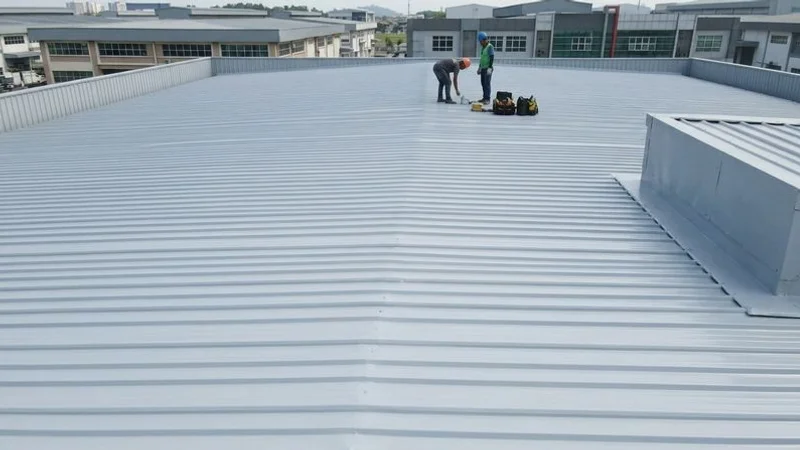
Partnering with the right execution team is vital for a safe and durable outcome. We strongly advise against hiring standard residential roofers for heavy commercial roofing operations. Large factories require specialised safety harnesses, elevated work platforms, and commercial-grade spray equipment.
Our strict vetting process for our own internal technicians focuses on several non-negotiable standards.
- Industrial-scale track record: Verify their portfolio includes continuous building spans exceeding 50,000 square feet.
- CIDB registration and safety compliance: Ensure strict adherence to working-at-height regulations and proper insurance coverage.
- Advanced product knowledge: Demand clear technical explanations for why a specific chemical primer suits your environment.
- Strategic operational planning: Request a phased work schedule that minimises noise and disruption to your daily factory output.
- Comprehensive written warranties: Secure legally binding documents covering both material failure and application defects.
Typical remediation for a standard Malaysian industrial building takes roughly 3 to 7 days, depending entirely on the severity of the corrosion. We structure most of our work phases so the facility can remain operational throughout the project.
Take Action Before Rust Spreads
Delaying necessary roof maintenance is the most expensive mistake a facility manager can make. We have seen countless minor patch jobs turn into massive structural overhauls simply due to a few months of hesitation.
Rust accelerates exponentially once it successfully breaches the factory’s protective outer layers.
Taking decisive action today locks in your repair costs at current 2026 rates and safely secures your operations. We urge you to seek professional guidance immediately if you notice discolouration or spreading patches.
Early intervention effectively extends your roof’s lifespan by 10 to 15 years at a tiny fraction of a full replacement cost. Reach out to a certified inspector this week to schedule a comprehensive assessment, ensuring your metal deck rust treatment for industrial buildings: process and options are matched to your facility.
Razif Ibrahim
Licensed Roofing Contractor
Lead roofing contractor with 20+ years of experience serving the Klang Valley.