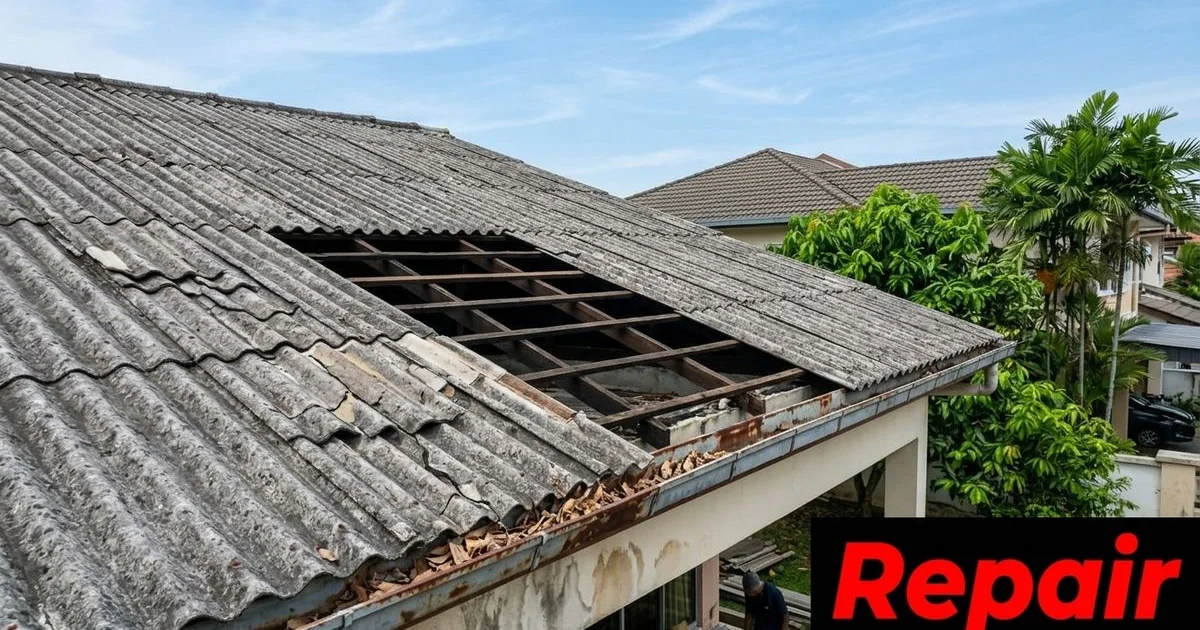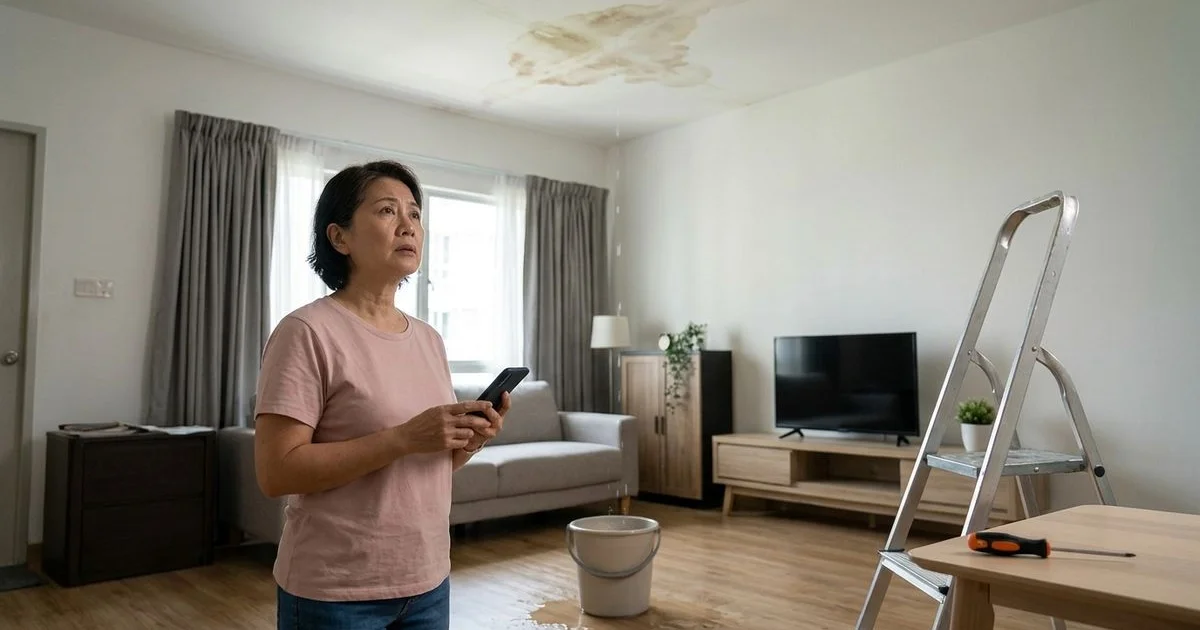
We know the anxiety of discovering a massive water stain on the ceiling right after a heavy storm hits. Most property owners only think about the tiles above their heads when water is actively pouring into the living room.
MetMalaysia recently forecasted five to seven continuous heavy downpour episodes for the 2025/2026 Northeast Monsoon alone.
This volume of water turns minor cracks into expensive structural failures overnight. Our goal is to outline exactly how often you should inspect your roof in Malaysia to prevent these disasters. Let’s look at the specific weather triggers, what a professional check entails, and how to build a maintenance calendar that works.
The Inspection Schedule Most Malaysian Homeowners Ignore
Ask most property owners about their maintenance routine, and you will likely receive a blank stare. The reality is that building tops are out of sight until a major failure happens. By then, fixing the damage costs thousands of ringgit instead of a minor repair fee.
Our service teams constantly handle emergency calls that a simple biannual check could have prevented. The Malaysian tropical climate is incredibly harsh on exterior materials. Surface temperatures easily exceed 35°C daily, which rapidly degrades the waterproofing membranes on flat concrete roofs.
This intense UV exposure combined with high humidity causes materials to age prematurely. A tile that lasts 30 years in a temperate climate often shows severe degradation after just 15 years in the Klang Valley.
The Recommended Inspection Schedule
Based on extensive fieldwork, here is the standard maintenance timeline.
Twice a Year Minimum
Every residential and commercial building needs a visual check at least twice annually.
Our specialists advise timing these checks around the major weather shifts.
- Before the Northeast Monsoon (August-September): This is the critical preparation phase. Clear the gutters, patch cracked concrete tiles, and secure loose flashing before the heavy November rains arrive.
- After the Monsoon Season (March-April): Assess the wear and tear from sustained downpours. Even without visible indoor leaks, continuous water flow often loosens mortar and degrades sealants.
After Major Weather Events
MetMalaysia warns that the inter-monsoon transition phase brings severe thunderstorms and strong winds. You should perform a quick ground-level check after these specific events:
- Severe thunderstorms with high wind speeds.
- Prolonged heavy rainfall exceeding three consecutive days.
- Hail events (rare but highly destructive when they occur).
Our crews frequently find displaced tiles right after these severe inter-monsoon storms.
Annual Professional Inspection
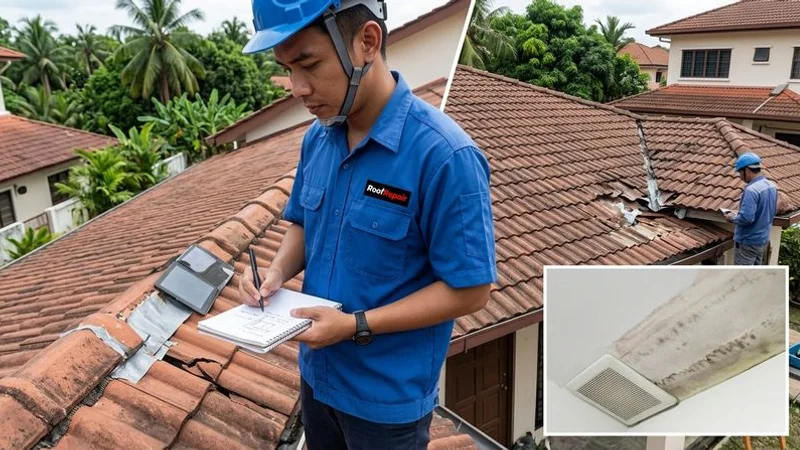
Homeowners can easily spot obvious damage from the driveway. A qualified contractor must perform a comprehensive annual check.
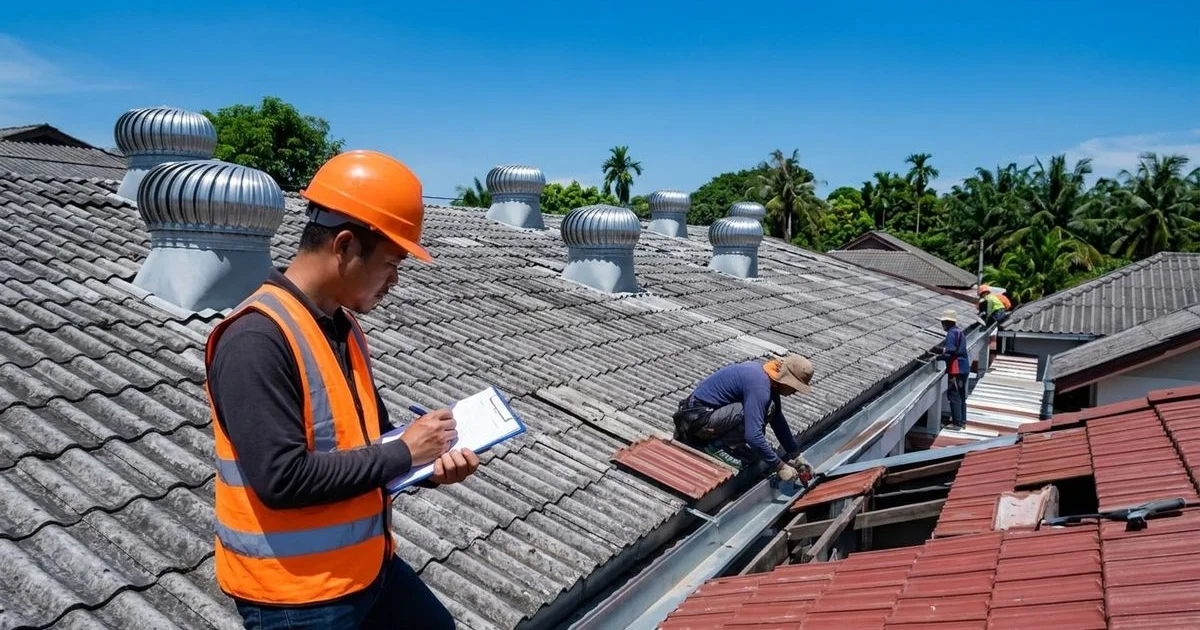
Our inspectors access the high points safely and evaluate the cavity from the inside.
A professional inspection typically costs between RM200 and RM400 depending on the property size. It is a highly cost-effective way to identify microscopic cracks before they ruin the plasterboard below.
What to Check During a Roof Inspection
From Ground Level (Homeowner Inspection)
You can spot many warning signs without climbing a ladder.
Our advice is to grab a pair of binoculars and scan for these specific issues:
- Visual scan of the surface: Look for chipped, displaced, or missing tiles. Darker patches often indicate trapped moisture.
- Gutters and downpipes: Ensure the rain gutter drainage channels are clear of leaves and securely attached to the fascia.
- Fascia and soffit boards: These timber components rot quickly when exposed to water. Look for peeling paint or dark stains.
- Interior ceiling check: Walk through the top-floor rooms and scan the plasterboard corners for yellow stains or bubbling paint.
- Attic or cavity: Shine a torch into the dark spaces. Look for daylight piercing through the tiles or signs of subterranean termite mud tubes on the timber trusses that may require roof truss repair.
Professional Inspection Checklist
A certified team will evaluate the structural integrity in detail.
Our technicians look for the hidden vulnerabilities that cause long-term damage.
- Tile condition: Checking for hairline fractures and proper overlapping.
- Batten and truss condition: Inspecting timber for rot, moisture damage, and structural stress.
- Flashing integrity: Testing the seals around chimneys, vents, and wall joints.
- Waterproofing membrane: Measuring the degradation of flat concrete surfaces and assessing the need for roof waterproofing.
- Ventilation adequacy: Confirming the cavity has enough airflow to prevent condensation.

Special Inspection Triggers for Malaysian Homes
Age of Property and Legal Protections
The age of your building dictates the level of scrutiny required.
Our general rule is that older materials require closer monitoring.
- Under 2 years old: The developer’s Defect Liability Period (DLP) under the Housing Development Act covers structural flaws for 24 months from Vacant Possession. Check thoroughly before this period expires.
- 2-15 years old: Stick to the twice-yearly visual checks and the annual professional review.
- 15-25 years old: Materials like Monier concrete tiles begin showing significant wear. Increase inspections to three times annually.
- Over 25 years old: Plan for a comprehensive roof repair or full replacement.
Solar Panels and Renovations
The recent extension of the NEM Rakyat programme into 2025 has caused a massive surge in residential solar installations across Malaysia. Adding panels places heavy stress on older trusses.
Our engineers mandate a full structural assessment before any solar brackets are mounted.
You must schedule an inspection within the first month after installing new equipment like solar panels, air conditioning condensers, or water tanks. Renovation work on upper floors also alters drainage patterns, making a follow-up check essential.
The Cost of Neglecting Inspections
Skipping maintenance directly leads to massive repair bills.
Our commercial clients track these costs closely, and the data is clear.
This comparison table outlines the financial reality of delayed maintenance:
| Service Type | Estimated Cost (RM) | Prevention Value |
|---|---|---|
| Annual Professional Inspection | RM200 - RM400 | Highly Recommended |
| Minor Flashing or Tile Repair | RM500 - RM1,500 | Prevents interior leaks |
| Emergency Monsoon Leak Repair | RM2,000 - RM5,000 | Reactive and stressful |
| Water-Damaged Ceiling Replacement | RM3,000 - RM8,000 | Destroys interior finishes |
| Full Replacement (Tiles/Metal) | RM12,000 - RM50,000+ | Major structural project |
The numbers clearly show the financial benefit of routine care. Spending RM400 to catch a minor fault easily saves RM10,000 in water damage during a heavy storm.
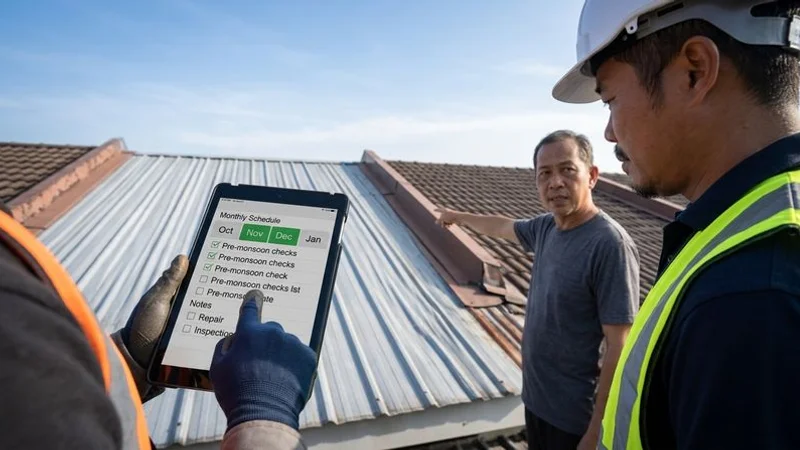
Creating Your Roof Maintenance Calendar
Setting a consistent routine protects your property value.
Our recommended schedule keeps you ahead of the severe weather cycles.
- January: Post-monsoon visual check from the ground.
- March-April: Inter-monsoon professional inspection.
- June-July: Clear the gutters and check the downpipes.
- August-September: Pre-monsoon professional check and execute any roof repair work.
- Post-Storm: Quick visual scan after any major wind event.
Set recurring reminders on your phone today. A few hours of scheduled maintenance each year will extend the life of your materials and prevent massive repair bills. Your ceiling is quite literally the most important barrier between your family and the elements. Treat it with the regular attention it deserves.

Razif Ibrahim
Licensed Roofing Contractor
Lead roofing contractor with 20+ years of experience serving the Klang Valley.