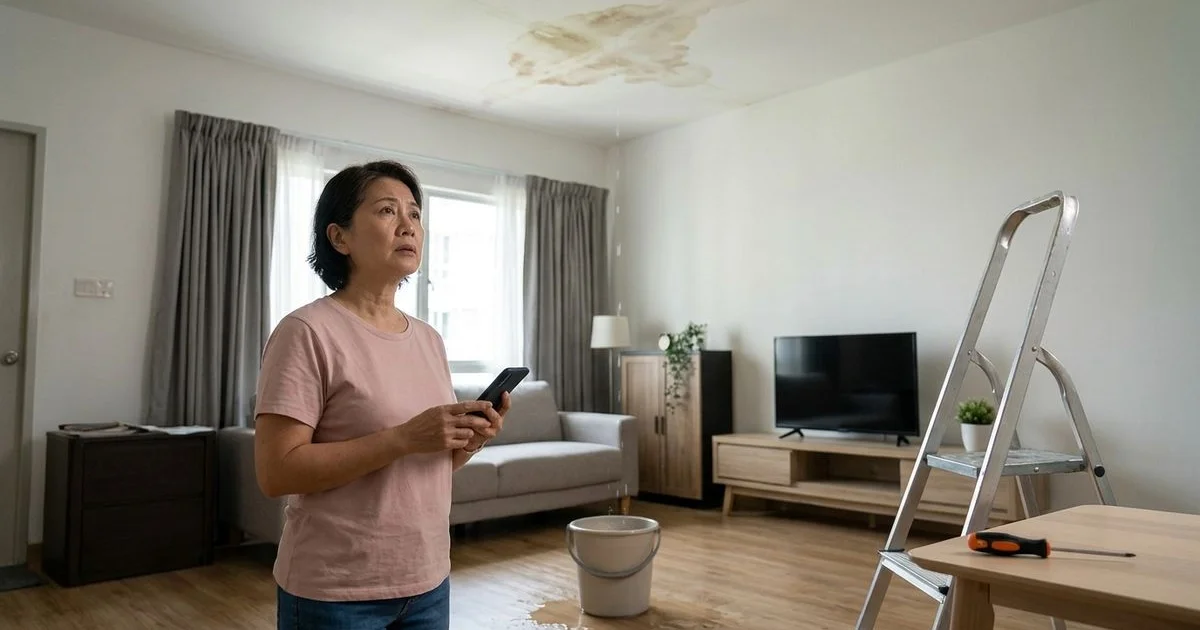
Our team knows how frustrating it is to spot a water stain spreading across your ceiling.
This familiar sight often sparks a major debate. You might ask, Can you fix a roof leak yourself or should you hire a roofer?
We see facility managers and homeowners frequently misjudge the actual entry point of the water. Rainwater travels deceptively along rafters and battens in Malaysia’s tropical climate.
Our experience shows that the drip is rarely directly below the actual breach.
Determining when a DIY approach is reasonable requires a clear understanding of the risks. Calling a professional for roof repair is often the smarter choice.
We will look at the data and explore a practical strategy to make the right call. Facts and specific guidelines help you avoid costly mistakes.
When DIY Roof Fixes Might Work
Our team wants you to understand when minor interventions make sense. There are a few situations where a competent homeowner with basic tools can address minor issues.
Simple fixes save money if executed correctly and safely. We agree that certain scenarios are generally safe for a confident DIYer. Replacing a single cracked or slipped tile is a perfect example.
1. Replacing a Single Cracked or Slipped Tile
We suggest handling this only if you can clearly see the displaced concrete tile from ground level. Replacing a single piece is a manageable task on a gentle pitch.
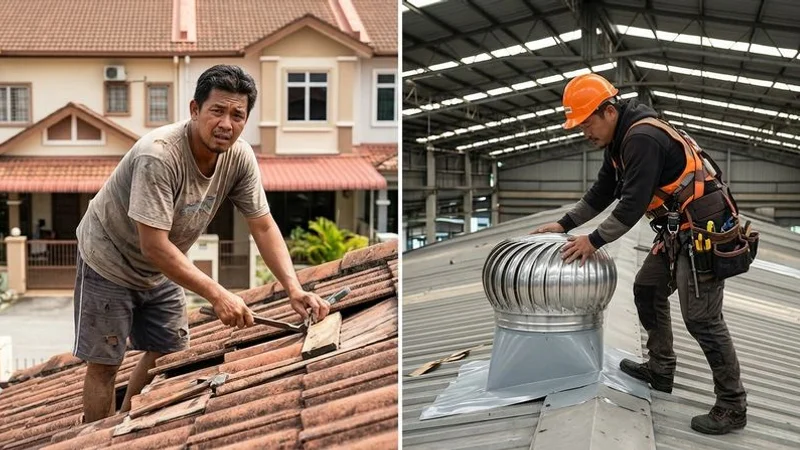
Concrete roof tiles used on most Malaysian terrace houses, like the popular Monier Elabana profile, are widely available at hardware shops for between RM3 and RM15 per piece. Our installers must emphasize matching the exact profile of your existing tiles. Incorrect shapes create overlapping gaps that invite wind-driven rain right into your ceiling.
2. Clearing Clogged Gutters
We often find that clearing clogged and leaking gutters prevents artificial leaks. Blocked channels are a frequent cause of water overflow that mimics a genuine roof breach.
Cleaning out debris is a straightforward job if your gutters are accessible with a standard ladder. Our maintenance crews highly recommend using a plastic gutter scoop rather than a metal trowel for this task. Metal tools easily scratch the PVC or zinc lining of your gutters, which rapidly accelerates rust.
We advise flushing the channel with a hose afterwards to confirm proper drainage.
3. Applying Temporary Sealant
Applying temporary sealant is another option for small cracks in exposed concrete surfaces. A tube of polyurethane roof sealant provides a fast, temporary fix.
Our suppliers note that popular options like Pentens T-200H retail for approximately RM25 to RM45. These products are easy to brush onto clean, dry surfaces.
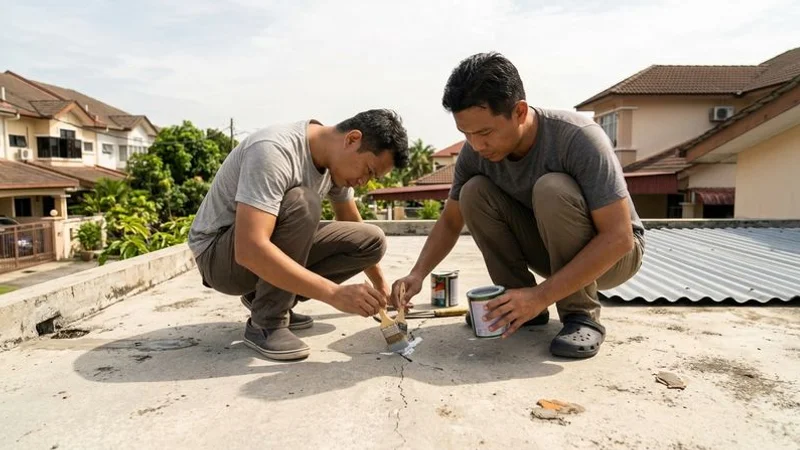
We always remind property owners that this is merely a stopgap measure. Sealant degrades quickly in Malaysia’s intense UV conditions. You will likely need a permanent replacement within 6 to 12 months.
When You Absolutely Need a Professional
Our technicians absolutely draw the line at situations requiring specialized expertise and equipment. Attempting complex jobs as DIY projects risks severe personal injury and further property damage.
1. Persistent or Recurring Leaks
We strongly advise stepping back when you encounter persistent or recurring leaks. A patched leak that returns during heavy rain means the underlying cause has not been resolved. A professional contractor uses systematic methods like thermal imaging to trace the exact source of water ingress.
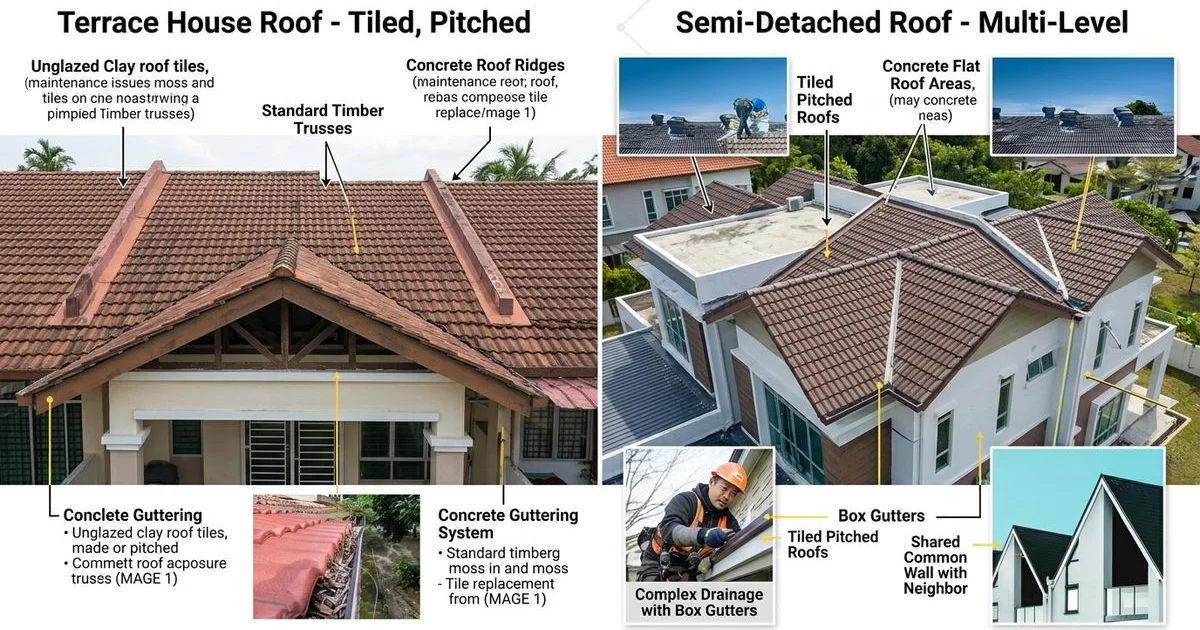
Our experts understand exactly how water behaves on complex Malaysian roof structures. Advanced diagnostic tools reveal hidden pooling that remains completely invisible to untrained eyes.
2. Structural Damage to Roof Timbers
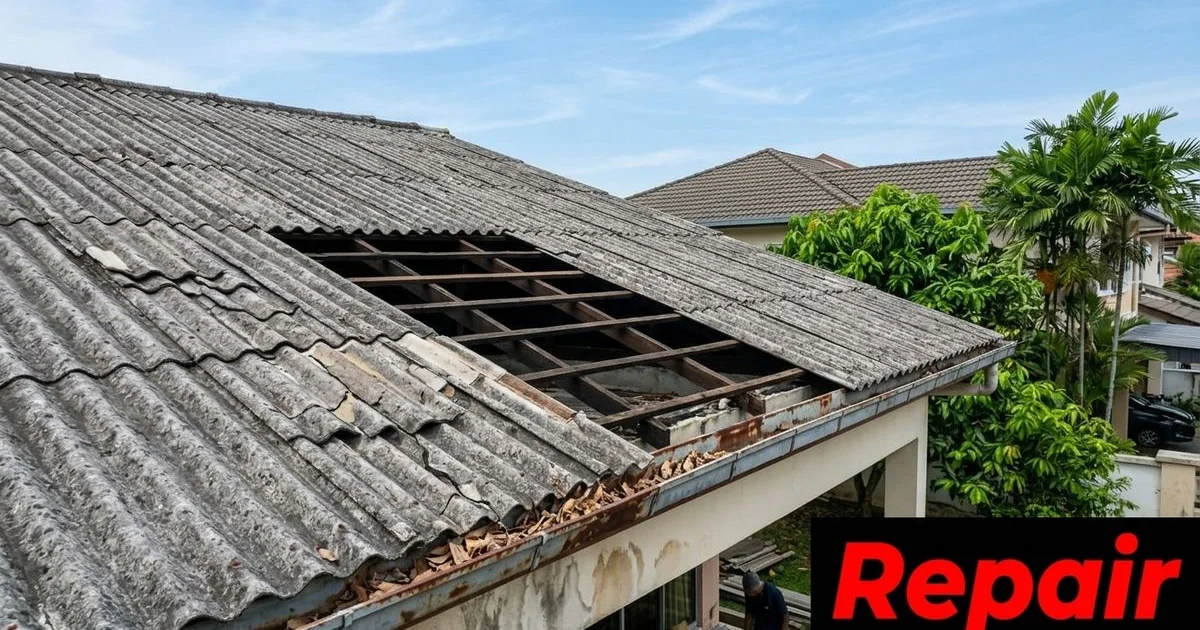
We look for structural damage to roof timbers during every inspection. Sagging profiles, creaking sounds during strong winds, or soft wood in your ceiling cavity indicate severe structural decay that may require roof truss repair. This dangerous scenario requires immediate assessment by a qualified contractor who understands load-bearing requirements.
Our safety protocol warns every client to never walk on a surface where structural integrity is compromised.
3. Flat Roof or Concrete Slab Waterproofing
Flat roof or concrete slab waterproofing also demands professional intervention. We know that flat concrete slab roofs require specialized roof waterproofing techniques.
Torch-on applied membranes or PU injections are standard industry solutions. These application methods require professional-grade equipment and extensive technical knowledge to execute correctly.
Our repair teams frequently fix poorly applied DIY liquid membranes that fail within months. A botched application wastes your money and traps moisture against the slab.
4. Large-Scale Tile Replacement
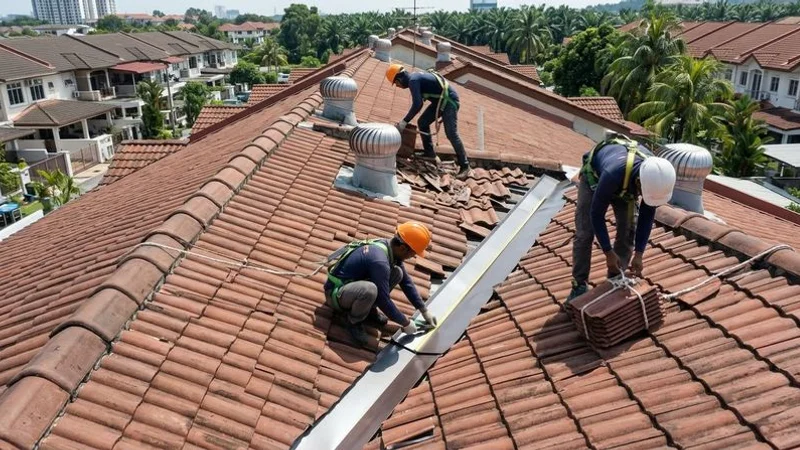
We consider large-scale tile replacement a massive undertaking. Replacing more than 10 to 15 tiles demands professional safety harnesses and scaffolding. Working at height across a broad area without proper fall protection is exceptionally dangerous.
Our safety records align with the Department of Occupational Safety and Health (DOSH) Malaysia statistics. DOSH data reveals that falls from height account for nearly 32% of fatal occupational accidents.
5. Valley and Flashing Repairs
We also classify valley and flashing repairs as high-risk DIY projects. Roof valleys and the metal flashing around pipe penetrations are critical vulnerable points. Repairing these intersections correctly requires specific folding techniques and industrial-grade fastening materials.
Our foremen state that incorrect valley work is a leading cause of chronic water damage in Klang Valley properties. Improper DIY sealing redirects water straight into the ceiling.
The Hidden Costs of DIY Gone Wrong
We constantly witness the hidden costs of DIY gone wrong. Many property managers attempt amateur repairs to save money. Botched jobs escalate quickly into structural emergencies.
Our audits show that these mistakes cause severe financial impact.
- Falls from roofs result in devastating hospital bills and lengthy rehabilitation.
- We ensure that professional contractors carry necessary public liability insurance and utilize proper DOSH-compliant safety gear.
- Incorrect sealing often worsens structural damage by redirecting water to new, previously dry areas of your home.
- Unapproved interventions can completely void developer defect liability claims if your property is relatively new.
Our clients sometimes find that most home insurance policies deny claims for water damage resulting from amateur, undocumented repair work. A systematic assessment prevents these costly mistakes.
Can You Fix a Roof Leak Yourself or Should You Hire a Roofer? The Decision Framework
We utilize a simple evaluation to help you decide. You need to answer a few specific questions before climbing a ladder. The table below outlines the boundaries of safe home maintenance.
Our guide highlights exactly when to call for help. Clear parameters protect both your safety and your wallet.
| Assessment Factor | DIY Approach is Safe When | Professional Required When |
|---|---|---|
| Visibility & Reach | Problem is clearly visible from a stable, low ladder | Issue requires walking on the roof or traversing steep pitches |
| Scope of Damage | Single, isolated issue exists like one cracked tile | Multiple areas, valleys, or extensive sections of battens are affected |
| Frequency | First-time, newly discovered minor drip appears | Leak is persistent, recurring, or previously patched |
| Material Type | Clearing a simple PVC gutter or swapping a standard concrete tile is needed | Structural timber, concrete slab waterproofing membranes, or metal flashing are involved |
How to Choose the Right Roofing Professional
We want you to know how to choose the right roofing professional. Selecting a reliable contractor in the Klang Valley requires due diligence. You need verifiable proof of their competence and safety standards.
Our top recommendation is verifying their registration with the Construction Industry Development Board (CIDB) Malaysia.
Legitimate companies hold valid CIDB certifications, ensuring they meet national construction standards.
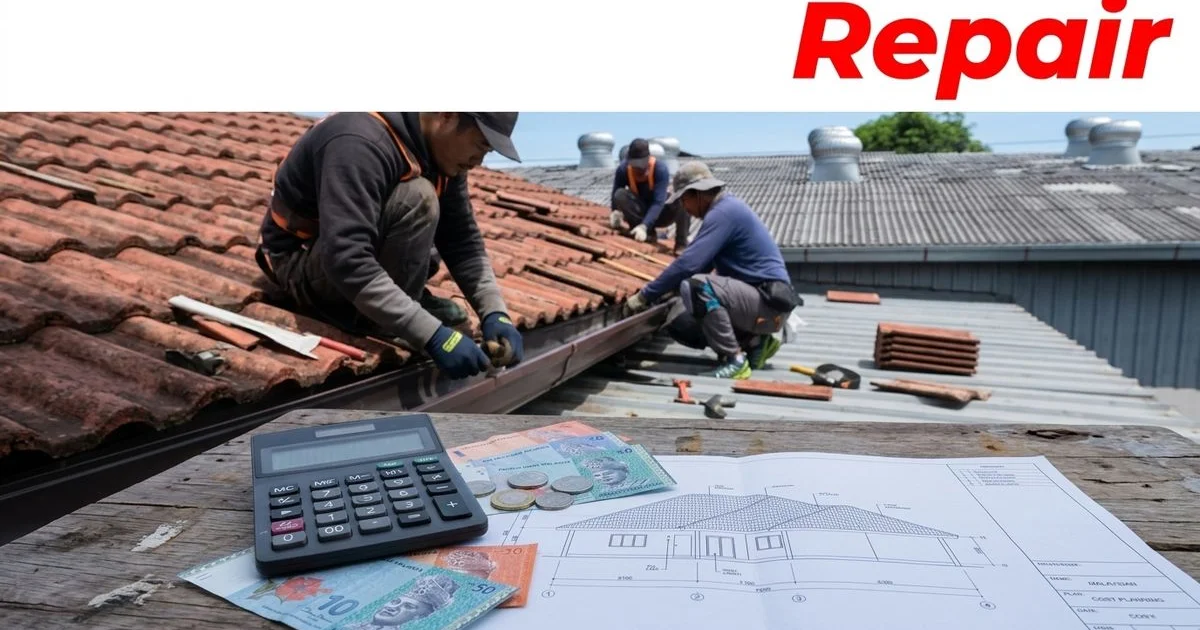
We suggest requesting at least three written quotations with itemized breakdowns for materials and labor. Successful client relationships begin with full transparency regarding costs and timelines. Always confirm their insurance coverage includes both public liability and worker compensation.
Our team checks Google Business Profiles for recent, localized reviews from other homeowners. A reputable roof repair contractor will readily provide references from recent projects in your neighborhood.
We advise moving on to the next candidate immediately if a company hesitates to share this documentation.
The Bottom Line
Minor, clearly visible issues like a single cracked Monier tile or a clogged gutter are manageable. A careful DIY approach works for these highly specific scenarios.
Our firm maintains that anything involving persistent leaks, structural concerns, flat slab waterproofing, or significant height demands an expert. Hiring a professional is the safest and most economically sound choice for long-term property maintenance.
We confirm that answering the question of “Can you fix a roof leak yourself or should you hire a roofer?” comes down to risk management. The eventual cost of medical bills, denied insurance claims, and extensive water damage far outweighs the initial price of professional remediation.
Call a qualified, CIDB-registered roofer today to schedule a comprehensive inspection and secure your property.
Our mission is to keep your building safe and dry. Act quickly at the first sign of water damage to protect your investment.
Farah Hassan
Technical Writer & Project Coordinator
Technical writer and project coordinator specialising in roofing education.