Why Commercial Roofs Need Planned Maintenance
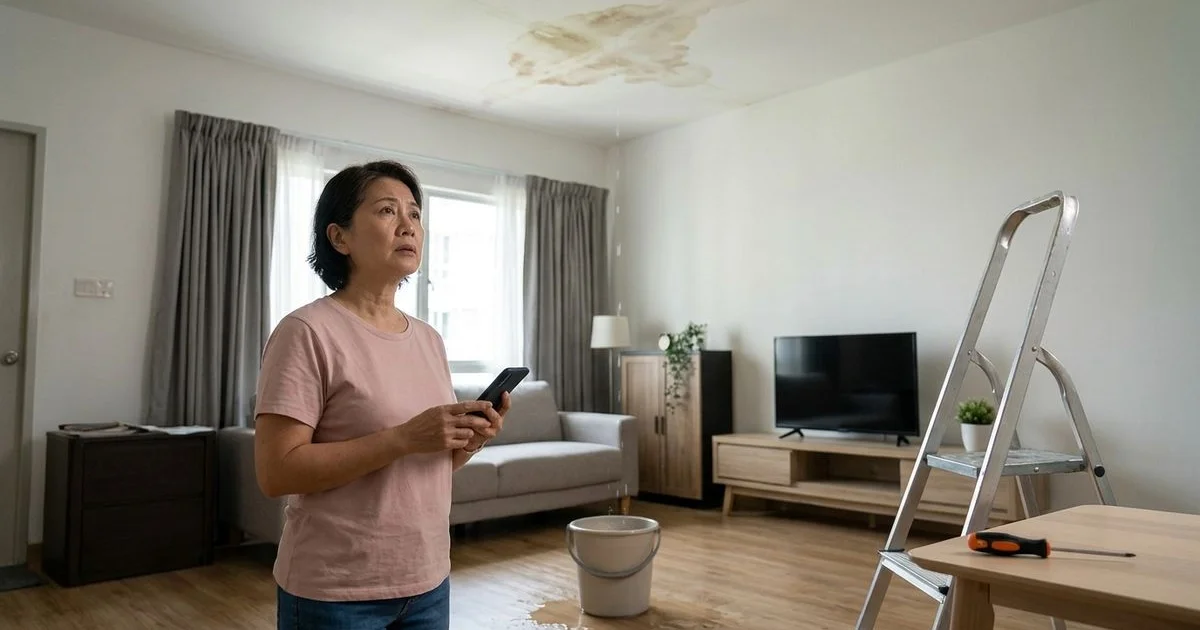
We often see facility managers treating commercial roof maintenance programmes as a background task until a sudden leak stops production entirely. You probably know how quickly a minor issue turns into a major operational nightmare.
The latest 2024 analysis using METMalaysia data shows a troubling increase in hourly extreme rainfall events during inter-monsoon seasons.
Our professional service team approaches a preventative plan as a strategic necessity rather than a basic repair schedule. This proactive strategy identifies vulnerable areas before they fail under the pressure of intense tropical storms. The following guide breaks down exactly what professional contractors do and highlights the real financial difference between preventative care and emergency response.
What Comprehensive Commercial Roof Maintenance Programmes Include
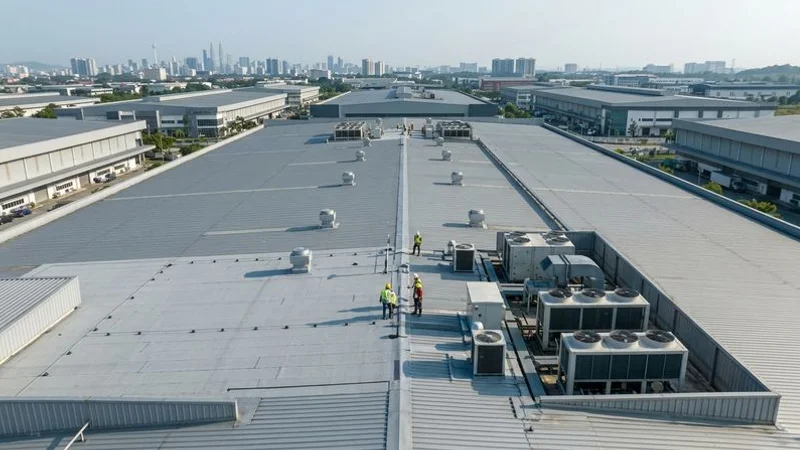
We structure typical commercial roofing maintenance programmes to cover several critical zones during scheduled visits throughout the year. Consistent monitoring is the only reliable way to protect your building assets. The inspection checklist below outlines the primary focus areas for a professional contractor.
1. Visual Inspection of the Entire Roof Surface
Our technicians always begin every site visit with a systematic visual sweep of the entire surface area. A proper inspection looks for cracks, blisters, or punctures in the membrane that might allow moisture penetration. Standing water indicates immediate slope or drainage problems that require urgent correction.
We look for a few specific warning signs during this walk-through. The most critical indicators include:
- Unsealed or lifted flashing at edges and joints.
- Debris accumulation blocking primary water paths.
- Physical damage caused by HVAC technicians or other service personnel.
These daily wear factors deteriorate your waterproofing layer long before the material actually expires.
2. Drainage System Maintenance
Our experience shows that drainage failure is the number one cause of commercial roof emergencies in Malaysia. Standard gravity drains easily become overwhelmed during the Northeast Monsoon between November and March. Large facilities increasingly use siphonic roof drainage systems, which rely on specialized baffles to block air and pull water at high velocity.
We strongly recommend scheduling drain clearing based on your specific surroundings. The primary drainage focus areas include:
- Clearing specialized siphonic baffles of leaf litter.
- Flushing standard downpipes and addressing clogged and leaking gutters to ensure unobstructed flow.
- Testing overflow provisions and scupper drains.
A blocked system under heavy rain creates tonnes of standing water weight that threatens the structural steel.
3. Flashing and Sealant Inspection
Our data indicates that flashing failures account for a massive portion of reported water ingress. High temperatures and constant UV exposure cause standard sealants to degrade rapidly in this climate. Many contractors recommend switching to high-performance polyurethane sealants, such as Sikaflex, which offer superior flexibility and UV resistance.
We closely inspect all perimeter flashing along parapet walls and edges. Technicians verify the integrity of counter-flashing where the roof meets vertical structures. Expansion joint covers also require tight seals to accommodate natural building movement.
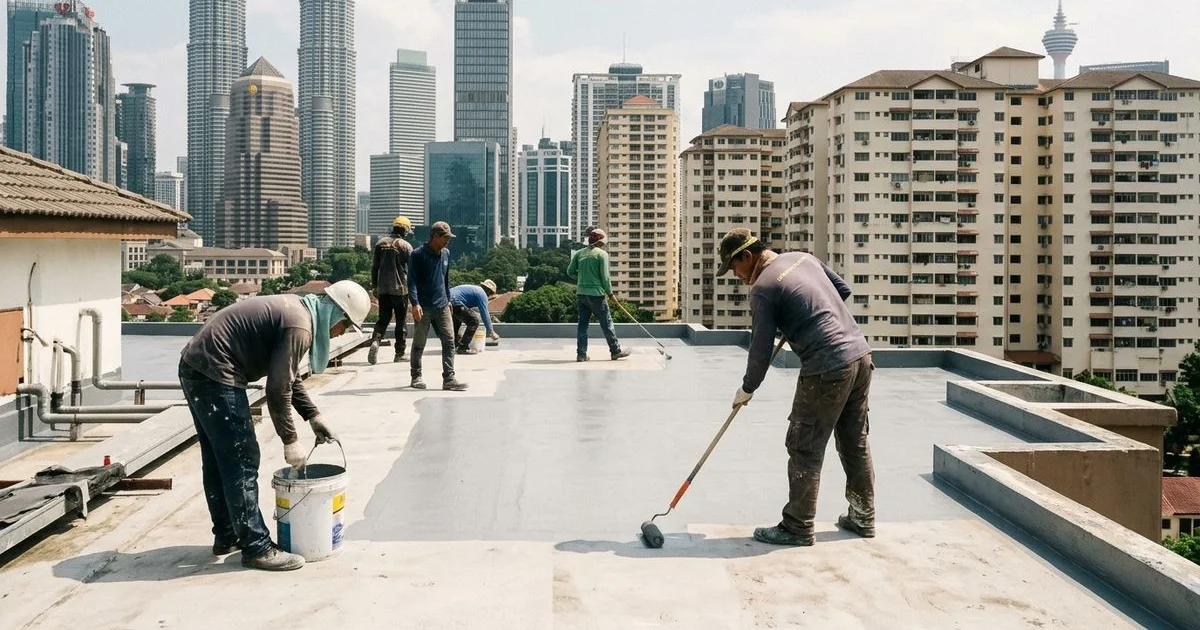
4. Membrane and Coating Assessment
Our maintenance team evaluates the primary waterproofing layer to determine its remaining functional lifespan. A Torch-on Bitumen system typically lasts 15 to 20 years, whereas newer TPO membranes might perform well for up to 30 years. The material eventually loses elasticity and becomes brittle under constant thermal cycling, signalling the need for professional roof waterproofing.
We test the adhesion strength to confirm the membrane remains firmly bonded to the underlying substrate. Assessors also check several specific wear factors:
- The thickness of liquid-applied coatings in high-traffic zones.
- The elasticity of the material after severe thermal cycling.
- The condition of all sealed seams and overlaps.
Documenting these variables helps property managers budget accurately for eventual renewals.
5. Rooftop Equipment Checks
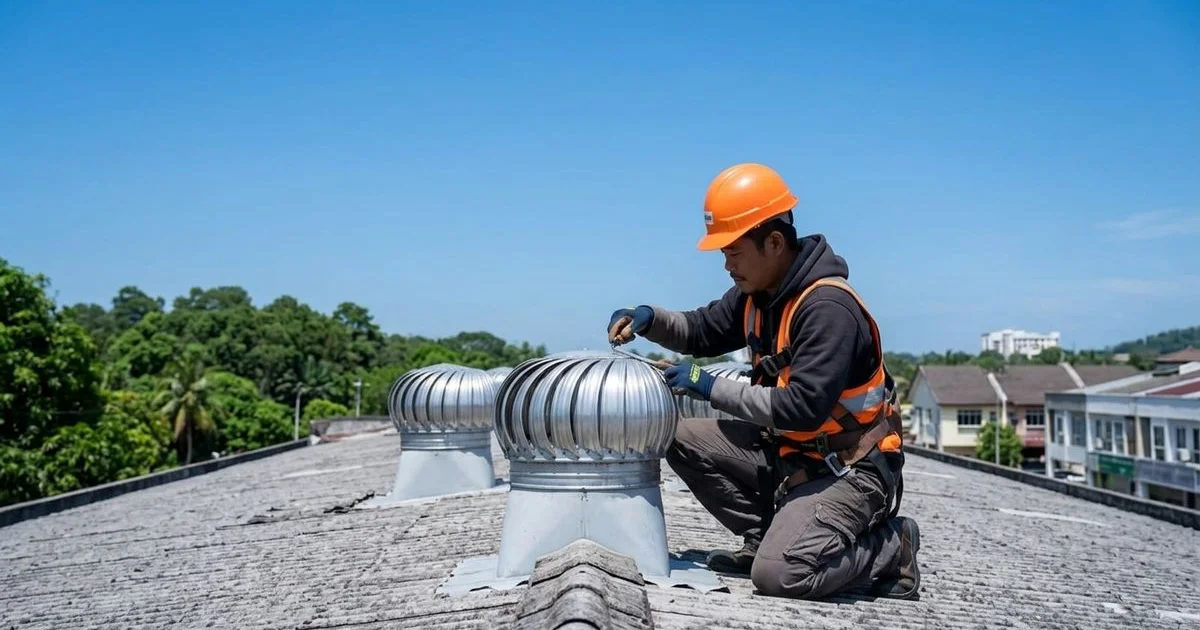
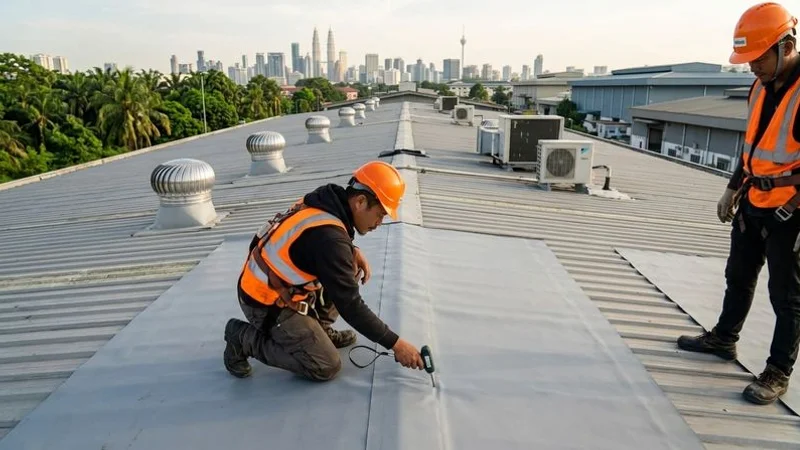
We frequently trace persistent leaks back to improperly mounted rooftop machinery. Commercial buildings host massive air conditioning units, exhaust fans, and intricate cable trays. Heavy Variable Refrigerant Volume (VRV) systems transfer constant vibration directly into the roofing surface.
Our technicians check equipment mounting pads to ensure they effectively absorb this kinetic energy. Key inspection points around machinery include:
- Condensate drain lines from HVAC units.
- Intricate cable penetrations and their protective seals.
- Safety rails and access points for visiting contractors.
Securing these elements prevents constant vibration from destroying your waterproof membrane.
6. Structural Observations
We train our inspectors to spot critical structural warning signs that require immediate engineering review. Malaysia’s Uniform Building By-Laws (UBBL) 1984 mandate strict load-bearing capacities for commercial properties. Visible sagging in the roof deck or cracks in parapet walls indicate potential foundation shifts or overload conditions.
Our reports flag any rust forming on the underside of metal deck installations. The primary structural warning signs include:
- Visible sagging in the main roof deck.
- Cracks forming along the parapet walls.
- Water stains visible from the interior ceiling.
A qualified structural engineer must investigate these movement indicators to prevent catastrophic collapse.
How Often Should Maintenance Be Performed?
We base our recommended service intervals on the severe weather patterns specific to this region. The Northeast Monsoon hits hard between November and March, making pre-season preparation vital. Properties with aging systems or heavy foliage coverage face higher risks and demand stricter timelines.
Our suggested baseline schedule applies to most standard commercial setups. Following this timeline prevents minor wear from escalating into severe damage. A consistent approach minimizes sudden disruptions to your daily business operations.
| Maintenance Type | Frequency | Best Timing |
|---|---|---|
| Full inspection | Twice yearly | Before and after the November-March monsoon |
| Siphonic & Gravity Drain clearing | Quarterly | Monthly if surrounded by dense trees |
| Emergency check | After severe weather | Following intense convective rainstorms |
| Detailed report | Annually | Prior to budget planning cycles |
We adjust these frequencies if your facility handles highly sensitive inventory like electronics or pharmaceuticals. Older buildings often benefit from bi-monthly drain inspections. High-traffic roofs require more frequent checks to monitor physical wear and tear.
The Cost of Maintenance vs the Cost of Neglect
Our pricing data from 2026 shows a preventative care programme in the Klang Valley averages between RM2,500 and RM10,000 annually. A complete roof replacement costs drastically more, easily exceeding RM50,000 for a medium-sized factory. Emergency leak repairs often run from RM3,000 to RM8,000 per single incident due to urgent callout fees and structural patching.
We constantly warn clients that the true cost of neglect includes massive inventory loss and production downtime. According to commercial roofing lifecycle studies, spending RM1 on preventative care saves roughly RM5 to RM10 in delayed replacements. A well-maintained surface easily lasts 25 years, while ignored properties often fail completely within 12 years.
Our cost-benefit analysis highlights several severe financial penalties for skipping maintenance:
- Operational downtime forces staff to stop working while emergency crews secure the area.
- Unplanned capital expenditure destroys annual facility budgets.
- Insurance providers deny water damage claims without proof of regular upkeep.
Protecting your asset value requires a consistent strategy. Smart managers treat this service as a fundamental utility.
What to Look for in a Maintenance Provider
We advise clients to verify that any prospective contractor holds a valid Construction Industry Development Board (CIDB) registration. Operating without this mandatory certification in Malaysia violates legal safety standards and voids most warranties. The firm must possess either a G1 to G7 grade license that matches your specific project value.
Our team emphasizes the importance of demanding detailed reporting after every single visit. A professional contractor must provide:
- High-resolution photographs of all inspected areas.
- Moisture meter readings for suspected leak zones.
- Actionable repair timelines for aging materials.
Residential roofers usually lack the specialized training needed to service large-scale TPO membranes.
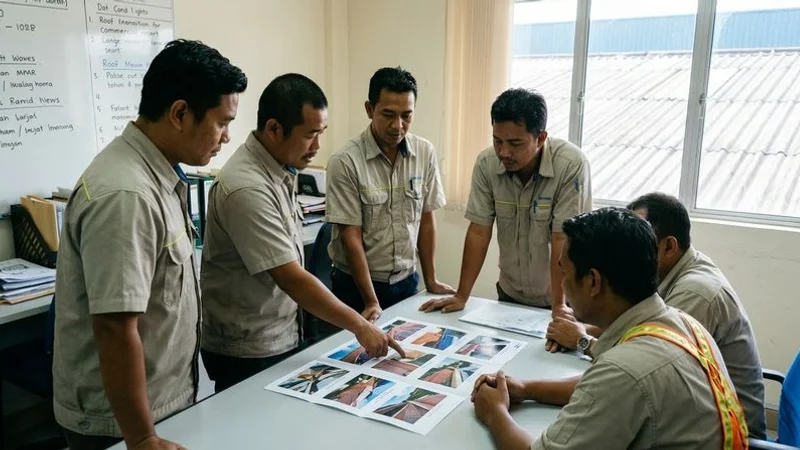
We suggest filtering candidates based on their emergency response capability. A reputable provider offers priority dispatching to their contracted maintenance clients during severe storms. Workplace safety compliance requires proper fall protection gear and substantial liability insurance coverage.
Getting Started
Our most urgent advice is to establish a commercial roofing maintenance programme before the next monsoon season arrives. Booking a comprehensive baseline inspection establishes the exact current condition of your waterproofing system.
This initial assessment flags critical vulnerabilities that demand immediate patching.
We consider structured commercial roof maintenance programmes to be the smartest financial move a facility manager can make. Regular care effectively doubles the lifespan of your roof and shields your interior assets from water destruction.
Secure your property today by scheduling a certified CIDB contractor for an initial site assessment.

Farah Hassan
Technical Writer & Project Coordinator
Technical writer and project coordinator specialising in roofing education.