The Frustration of a Leak That Won’t Stay Fixed
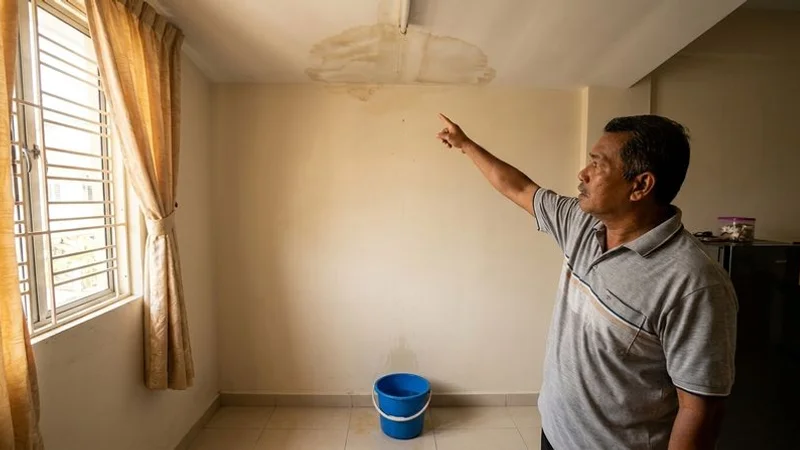
Our team frequently encounters homeowners frustrated by roofs that leak repeatedly, even after multiple repairs. Many property owners assume a quick silicone patch is a permanent fix. This common misconception leads to wasted money and ruined ceilings.
We understand exactly why your ceiling keeps leaking even after patching, and how to fix it for good. The reality is that water ingress is rarely straightforward.
Let’s examine the structural reasons behind these recurring failures and outline a permanent resolution strategy.
The 6 Most Common Reasons Your Leak Keeps Coming Back
Our field technicians find that recurring water damage usually stems from one of six distinct diagnostic failures. Identifying the exact source is the critical first step before any materials are applied.
1. The Source Was Misidentified
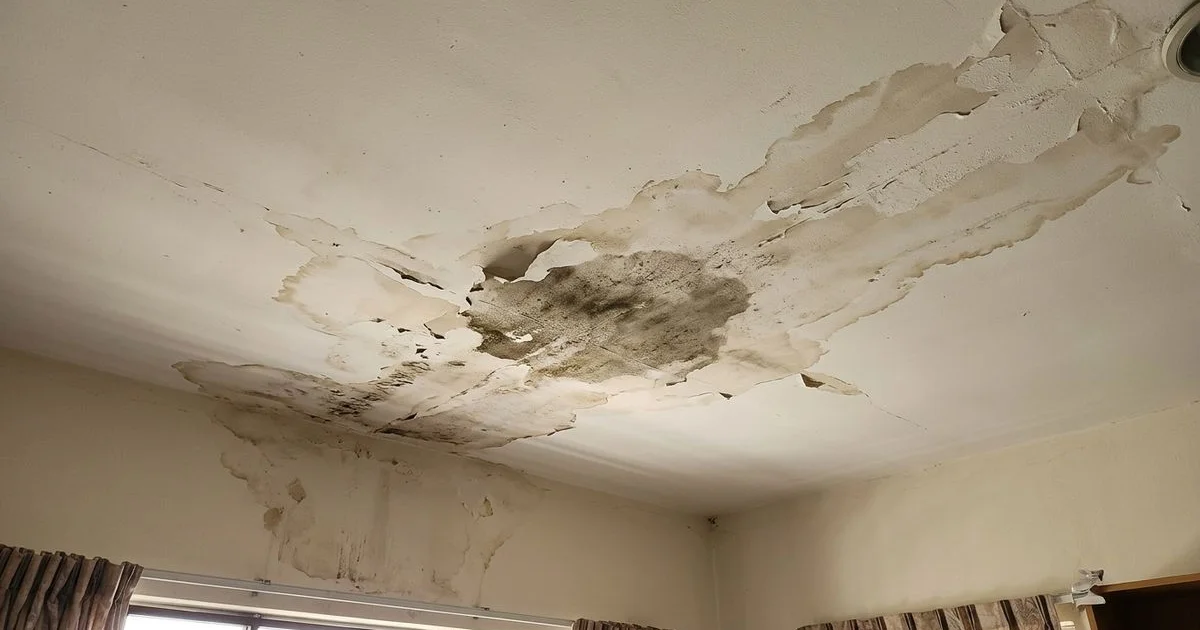
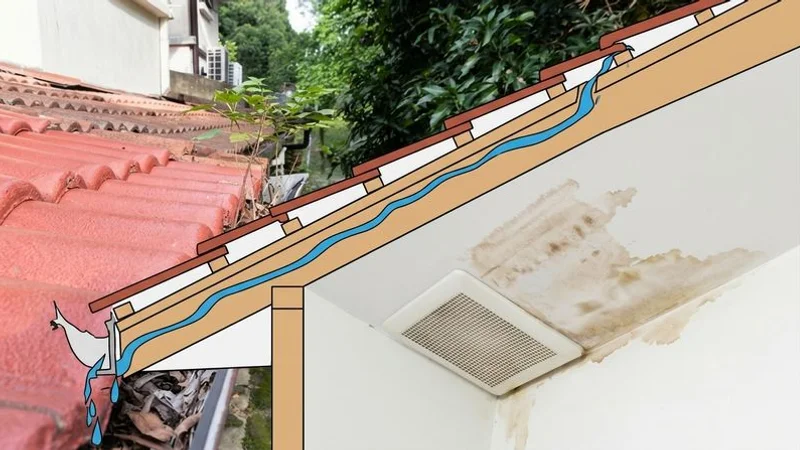
We often discover that the visible wet spot on your plasterboard is miles away from the actual roof defect. Water routinely travels along rafters, battens, and structural beams before dropping down to the lowest point. A contractor fixing the tiles directly above the stain is just treating a symptom.
Our diagnostic process relies on thermal imaging cameras, like FLIR systems, to trace moisture paths invisibly. Systematic water tracking dye tests are also used during dry spells to map out the exact entry points. Proper leak detection requires this methodical approach to guarantee accuracy.
2. The Repair Was Cosmetic, Not Structural
Our climate punishes consumer-grade sealants at an astonishing rate. Recent 2026 climate data shows that unshaded Malaysian roof surfaces can reach blistering temperatures of 64.2°C in direct sunlight. This intense thermal load, combined with daily tropical downpours, causes standard silicone to crack and peel within months.
We always recommend upgrading from basic sealants to professional roof waterproofing systems. Polyurethane (PU) coatings or torch-on membranes offer the structural flexibility needed to survive these massive temperature swings.
3. Multiple Entry Points Exist
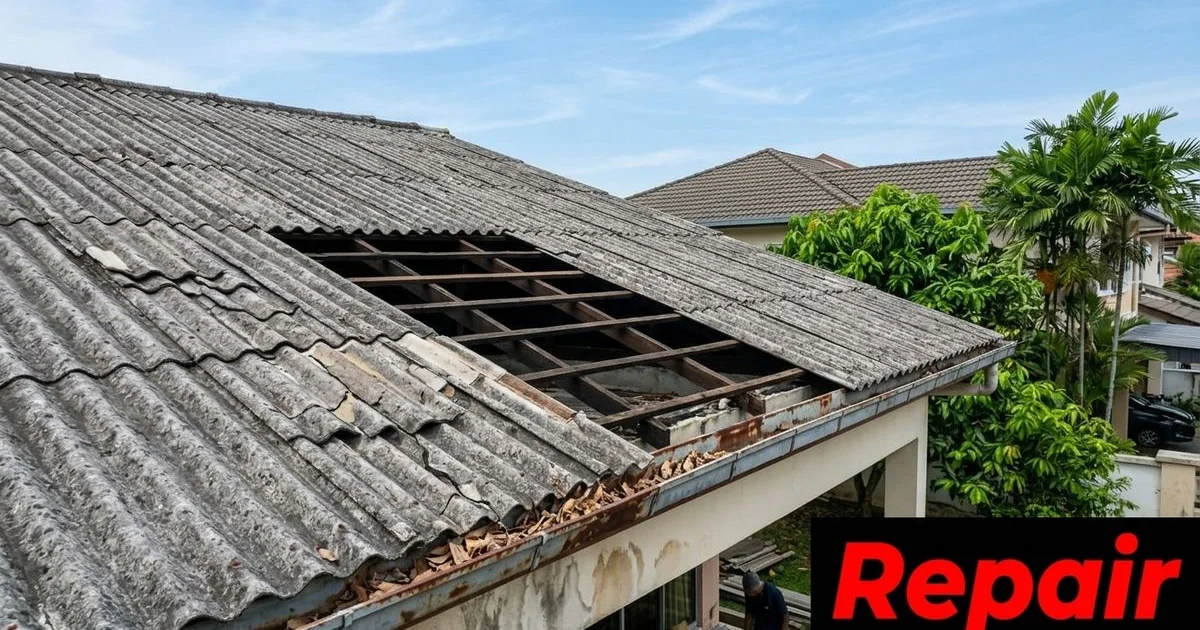
Our inspections frequently reveal that older properties suffer from systemic degradation rather than a single broken tile. Homes in the Klang Valley using older concrete tiles, such as classic Monier profiles, often develop micro-cracks across entire sections. Capillary action can then pull rainwater upward and under these compromised tiles.
We see contractors replace one obvious broken piece while leaving dozens of weakened tiles nearby untouched. The underlying wooden battens may also be rotting, providing zero secondary defence against seepage.
4. The Flat Roof Section Needs Waterproofing, Not Patching
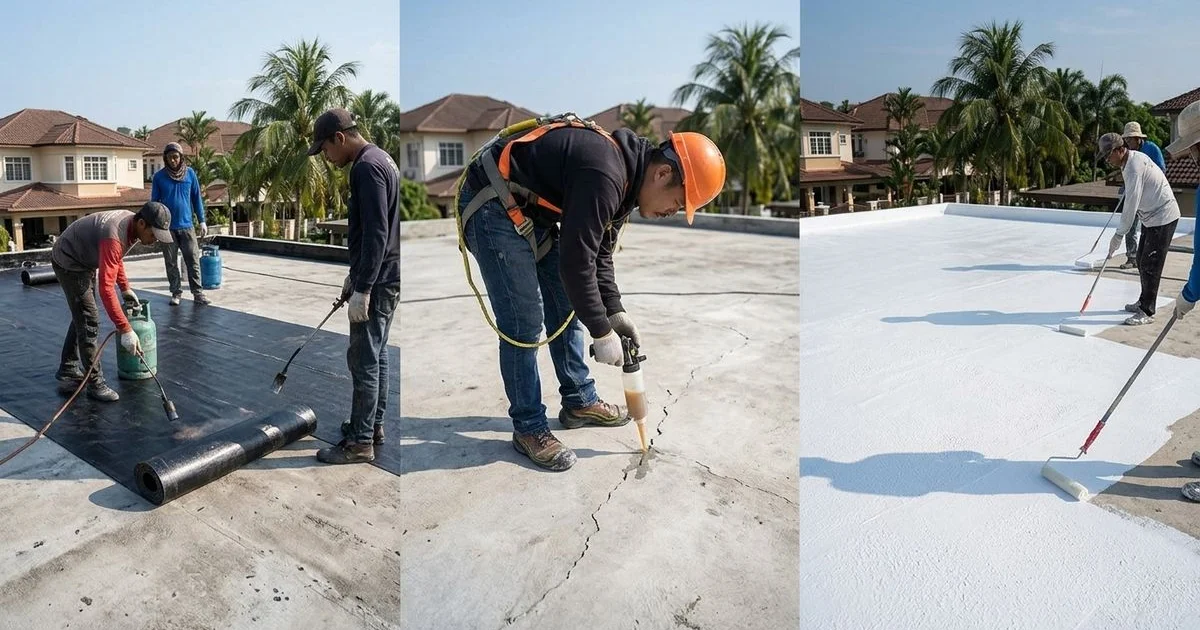
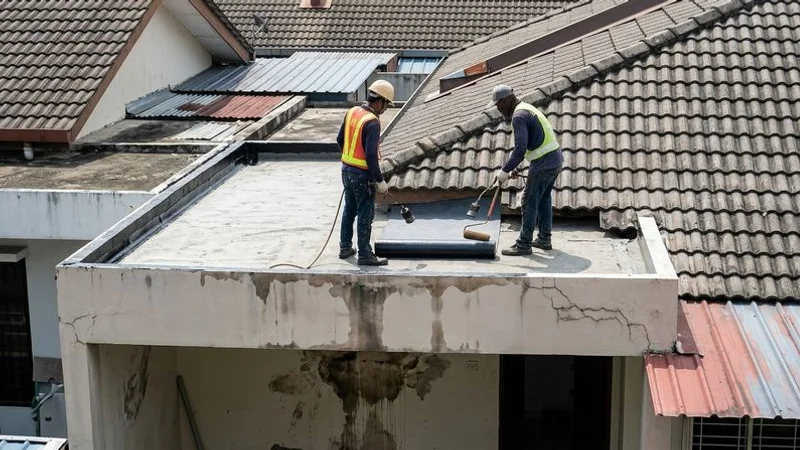
We explicitly warn clients against using spot repairs on concrete flat roofs, balconies, or rear extensions. Flat surfaces in our tropical weather face constant water pooling, which exploits tiny hairline cracks caused by thermal expansion. Spot patching these micro-fissures is a waste of resources.
Our commercial projects utilize complete APP-modified bitumen torch-on membranes or high-pressure PU injection grouting treatments for these areas. These comprehensive systems create a seamless barrier that expands and contracts naturally with the concrete slab.
5. Poor Workmanship on the Previous Repair
Our industry suffers when inexperienced workers cut corners during the application process. Fixing a roof requires strict adherence to manufacturer guidelines. We align our practices with the Construction Industry Development Board (CIDB) standards to avoid these frequent workmanship failures:
- Inadequate surface preparation: Applying liquid membranes over dusty or damp concrete guarantees premature peeling.
- Incompatible materials: Using standard silicone instead of high-grade polyurethane for structural joints.
- Insufficient overlap: Failing to overlap new tiles correctly, allowing wind-driven rain to enter.
- Skipping primer coats: Neglecting the required bonding base layer for waterproofing systems.
- Rushed work: Not allowing adequate curing time before testing the seal.
6. Condensation Is Mistaken for a Leak
We sometimes arrive at a site only to discover the roof is perfectly intact. The actual culprit is severe condensation forming on poorly insulated components. Malaysia’s high humidity causes moisture to collect rapidly when warm cavity air hits cold metal. You can identify condensation rather than a leak by looking for these signs:
- Dripping occurs steadily even during extended dry periods.
- The moisture appears evenly spread across the ceiling rather than expanding from a central spot.
- The problem intensifies significantly in heavily air-conditioned rooms.
- There are no corresponding water stains or rotted timber on the roof structure above.
We solve this by installing thick PE (polyethylene) foam insulation around AC ducts and improving roof cavity ventilation.
How to Permanently Fix a Persistent Leak
Our methodology for stopping water ingress focuses on long-term structural integrity. The correct approach requires a clear sequence of professional actions.
Step 1: Get a Proper Diagnosis
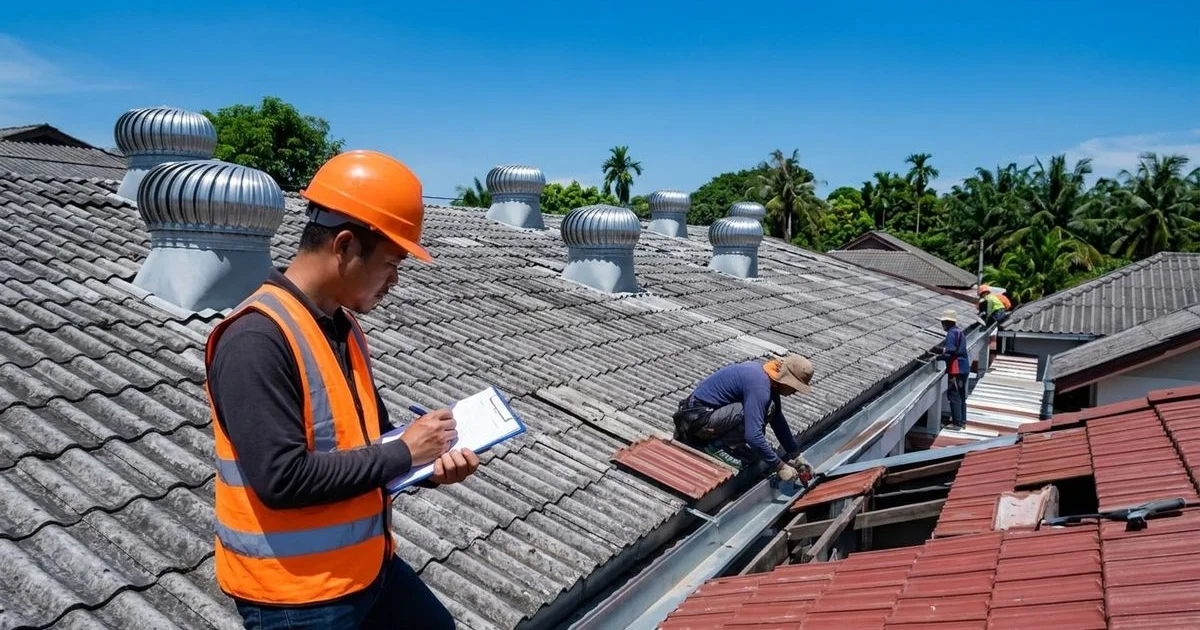
We start every project with a comprehensive structural assessment. A reputable contractor must look beyond a quick glance at your plasterboard. This diagnostic phase should include:
- Internal inspection of the roof cavity and trusses.
- Systematic water testing with tracking dyes on the exterior surface.
- Assessment of all potential entry points utilizing thermal imaging cameras.
- Evaluation of the overall roof condition by measuring moisture levels in adjacent zones.
Step 2: Address the Root Cause
We formulate a specific solution based on the hard data collected during the diagnosis. The contractor should recommend a system that fixes the fundamental failure:
- For tile and flashing failures: Complete replacement of damaged components, avoiding quick sealant patches.
- For flat roof leaks: Full waterproofing system installation, such as torch-on APP membranes or PU injection.
- For structural issues: Timber treatment or total replacement of rotted battens.
- For condensation: Enhanced roof cavity ventilation and upgraded ceiling insulation.
Step 3: Compare Costs and Repair Methods
We advise clients to evaluate the financial difference between constant patching and a permanent solution. The table below outlines typical 2026 industry rates in Malaysia.
| Repair Method | Best Used For | Typical Cost (RM) | Expected Lifespan |
|---|---|---|---|
| Basic Silicone Patching | Temporary emergency stops | 200 to 500 per trip | 3 to 6 months |
| Localized PU Injection | Active cracks in concrete slabs | 45 to 60 per point | 1 to 3 years |
| Full Elastomeric Coating | Aging metal or tile surfaces | 6 to 15 per sq ft | 2 to 5 years |
| Heavy-Duty Membrane | Flat roofs and balconies | 1,500 minimum | Up to 10 years |
Step 4: Address Adjacent Vulnerabilities
We always inspect the surrounding perimeter while working on the primary leak source. Fixing three minor vulnerabilities during a single visit is far more logical than paying for separate emergency callouts later. This proactive strategy prevents future disruptions.
Step 5: Implement Preventive Measures
Our final step involves establishing a maintenance routine to protect the new repair. Take these actions to prevent future problems:
- Schedule regular inspections: Request a professional check at least twice yearly, specifically before the monsoon season.
- Keep gutters clear: Blocked drainage channels force water to back up and overflow into the eaves. Professional rain gutter services prevent this common issue.
- Trim overhanging vegetation: Tree branches trap moisture on your tiles and accelerate organic degradation.
- Monitor the repaired area: Check the ceiling below after the next major downpour to verify the fix holds completely.
When to Consider a Comprehensive Solution
Our financial models show that paying for repeated minor repairs quickly exceeds the cost of a proper overhaul. If you have called a technician three times in two years for the same spot, a fundamental upgrade is necessary. Applying a complete roof waterproofing treatment provides absolute certainty during the monsoon season.
We find that professional, full-surface applications consistently deliver a 10-year lifespan. This longevity eliminates the annual panic of repainting water-stained ceilings and replacing damaged furniture. The upfront investment protects your property’s underlying concrete and timber structures from irreversible rot.
The Right Contractor Makes All the Difference
Our commitment to quality means we urge every property owner to verify their chosen technician’s credentials. The Malaysian construction sector is regulated for your protection. You must ensure your contractor holds a valid CIDB registration (Grade G1 through G7) before they step onto your property.
We also recommend verifying that all on-site workers possess a valid CIDB Green Card, which proves they have passed mandatory safety training. Hiring unregistered workers carries a severe penalty under Section 33, so verifying credentials protects you legally as well. A reputable firm will always provide a written workmanship warranty of at least one to two years for any roof repair project.
We encourage you to stop wasting money on temporary patches that wash away in the next storm. Protect your home or commercial facility by investing in a structural, long-lasting solution today. Contact a certified roofing professional to schedule a comprehensive thermal inspection and secure your investment.
Razif Ibrahim
Licensed Roofing Contractor
Lead roofing contractor with 20+ years of experience serving the Klang Valley.